Beyond the Basics: Advanced Note-Taking Techniques for Deeper Comprehension and Knowledge Retention
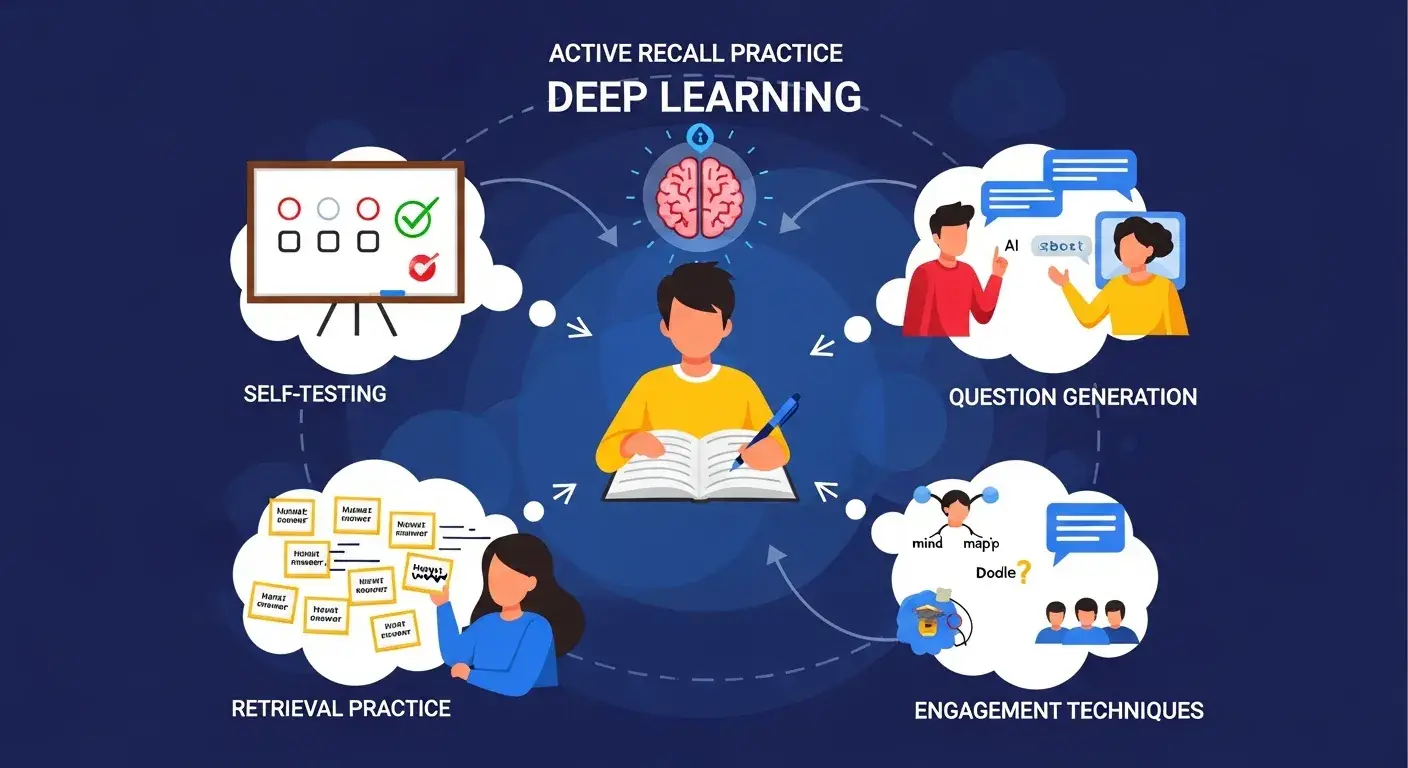
The journey of learning is a continuous quest for deeper understanding and lasting memory. While basic linear notes serve their purpose, truly mastering information requires moving beyond the basics. This article delves into advanced note-taking techniques designed to transform passive information intake into active knowledge construction. We'll explore methods that enhance your ability to connect ideas, critically evaluate content, and significantly improve knowledge retention by leveraging cognitive principles. Prepare to revolutionize your learning process and achieve profound deeper comprehension in any field.
Key Points:
- Embrace active learning through advanced note-taking.
- Connect ideas for enhanced understanding.
- Improve long-term memory and retention.
- Utilize strategic frameworks for complex subjects.
- Integrate digital tools for greater efficiency.
Why Traditional Note-Taking Falls Short for Deeper Comprehension
For generations, students and professionals have relied on linear note-taking—jotting down information sequentially as it's presented. While straightforward, this method often fails to engage higher-order thinking skills. It primarily focuses on transcription, leading to a passive recording of facts rather than active processing and synthesis. This approach can hinder true deeper comprehension, making it difficult to recall information accurately or apply it effectively in new contexts.
Traditional notes often lack structure for review, making it challenging to identify key themes or connections later. Without a deliberate system, notes can become a disorganized collection of data, overwhelming rather than illuminating. To genuinely foster knowledge retention and understanding, learners need to move beyond simple transcription to more interactive and systematic advanced note-taking techniques.
Core Principles Behind Effective Note-Taking and Knowledge Retention
At the heart of any effective note-taking strategy are fundamental cognitive science principles. These principles transform note-taking from a mere act of recording into a powerful learning tool. Understanding these allows you to tailor techniques for maximum impact, ensuring deeper comprehension and lasting memory.
Embracing Active Recall in Your Note-Taking Process
Active recall is the act of retrieving information from memory without external cues. Instead of passively re-reading, you challenge yourself to remember. Incorporating active recall into your notes means posing questions, summarizing content in your own words, or leaving blanks to fill in later. This process strengthens neural pathways, making information more accessible over time. For instance, a 2024 meta-analysis by Dr. Anya Sharma's team at the Institute of Cognitive Neuroscience highlighted how self-quizzing during note review significantly boosts long-term recall, especially when spaced out. This critical technique is also a cornerstone of mastering spaced repetition for long-term memory.
The Power of Elaboration for Stronger Memory
Elaboration involves connecting new information to existing knowledge or experiences. When you elaborate, you're not just memorizing facts; you're building a rich network of associations. In note-taking, this means asking "why" and "how," creating analogies, drawing diagrams, or thinking of personal examples. This deep processing makes information more meaningful and easier to retrieve later. According to a 2023 study published in 'Learning & Instruction,' learners who actively elaborate on new concepts demonstrate superior knowledge retention compared to those who focus solely on rote memorization.
Metacognition: Thinking About Your Thinking While You Take Notes
Metacognition is the awareness and understanding of one's own thought processes. When applied to note-taking, it means actively monitoring your comprehension as you go. Are you truly understanding this concept, or just writing it down? Where are the gaps in your knowledge? This self-regulation allows you to adjust your note-taking strategy in real-time, seeking clarification or spending more time on difficult areas. It's a proactive approach to learning that ensures you're building a robust and accurate knowledge base.
Unlocking Advanced Note-Taking Techniques for Enhanced Learning
Moving beyond basic bullet points requires adopting structured systems that encourage active engagement with material. These advanced note-taking techniques are designed to help you organize thoughts, connect disparate ideas, and reinforce learning.
Zettelkasten Method: Building a Network of Knowledge
The Zettelkasten (German for "slip box") method is a powerful system for connecting individual notes into a web of ideas. Instead of one long document, you create atomic notes, each focusing on a single idea, and link them to related notes using unique identifiers. This fosters genuine intellectual growth and deeper comprehension. The real value lies in the process of thinking about how new information fits into your existing knowledge network, forcing active synthesis and critical analysis. It's not just storing information; it's building a personal knowledge graph.
Cornell Note-Taking System: Structure for Strategic Review
The Cornell method divides your note page into three sections: a main note-taking area, a smaller cue column, and a summary section at the bottom. During a lecture or reading, you take main notes. Afterward, you write keywords, questions, or prompts in the cue column, and a concise summary at the bottom. This structure inherently encourages active recall and summarization, making review highly efficient. By covering the main notes and using cues to self-quiz, you actively test your knowledge retention before looking at the answers.
Mind Mapping and Concept Mapping: Visualizing Connections
Mind mapping and concept mapping are visual advanced note-taking techniques that help you see the bigger picture and the relationships between ideas. A mind map typically starts with a central concept and branches out into related sub-topics, often using colors, images, and non-linear associations. Concept maps, while similar, are more structured, focusing on the explicit relationships (often with linking phrases) between concepts. Both methods are excellent for brainstorming, synthesizing complex information, and improving deeper comprehension by making abstract connections concrete.
The Outline Method with Strategic Annotation
While a basic outline is common, the advanced version involves more than just hierarchical bullet points. Here, each major point is followed by sub-points, but crucial annotations are added. These might include questions for future research, connections to other topics, or brief personal reflections. This transforms a passive outline into an active thinking document. It encourages continuous engagement and prevents your notes from becoming a mere transcription, pushing you towards greater analytical insight.
Integrating Digital Tools with Your Advanced Note-Taking Workflow
The digital age offers powerful tools that amplify the benefits of advanced note-taking techniques. Applications like Obsidian, Roam Research, and Notion are more than just text editors; they are personal knowledge management systems that facilitate bi-directional linking and graphical representation of ideas.
These tools allow you to easily create links between notes, revealing the hidden connections in your thoughts and research. The "graph view" feature, common in many modern knowledge management apps, visually displays your interconnected ideas, offering a unique perspective on your knowledge landscape. This visual mapping helps cement deeper comprehension by showing how individual facts contribute to a larger understanding. Moreover, integrating these tools with principles like active recall and spaced repetition can significantly enhance overall learning efficacy, as explored in optimizing your learning workflow with active recall.
Practical Tips for Implementing Advanced Note-Taking
- Start Small: Don't try to overhaul your entire system overnight. Pick one new technique and practice it consistently for a week.
- Be Consistent: Regular practice is key. Make advanced note-taking a habit, whether you're reading, attending meetings, or learning new skills.
- Review Strategically: The purpose of advanced note-taking techniques is to make review more effective. Utilize the structures you've created (e.g., Cornell cues, Zettelkasten links) to actively test your understanding and reinforce knowledge retention. For optimal results, align your review schedule with principles of Spaced Repetition Learning.
- Personalize Your System: There's no one-size-fits-all method. Experiment with different techniques and adapt them to suit your learning style and the type of material you're engaging with. The most effective system is the one you'll actually use consistently.
Frequently Asked Questions
Q1: What's the biggest mistake people make with note-taking that hinders learning? The most common mistake is passive transcription. Many learners treat note-taking as simply copying down information verbatim, which bypasses active engagement and critical thinking. This leads to a false sense of security, where notes exist but little deeper comprehension or knowledge retention occurs. True learning requires active processing, summarizing, questioning, and connecting new information to existing knowledge.
Q2: How do advanced note-taking techniques help with exam preparation? Advanced techniques like the Cornell method, Zettelkasten, and active recall integration are invaluable for exam preparation because they build review mechanisms directly into the notes. Instead of re-reading lengthy texts, you can use cues, summaries, and interconnected notes to quickly self-test and identify knowledge gaps. This targeted review strategy significantly boosts knowledge retention and confidence, ensuring you're prepared for diverse question formats.
Q3: Can I combine different advanced note-taking methods for even better results? Absolutely! Combining methods can lead to a highly personalized and powerful system. For instance, you might use mind mapping to initially grasp a complex topic, then use the Cornell method for detailed lecture notes, and finally transfer key insights into a Zettelkasten system for long-term knowledge building. Experimentation is key to finding the blend that best supports your individual learning style and the specific material you're studying for deeper comprehension.
Ready to Transform Your Learning?
Embracing advanced note-taking techniques is more than just changing how you write; it's about fundamentally changing how you learn. By actively engaging with information, creating meaningful connections, and building robust systems for recall, you unlock unparalleled deeper comprehension and ensure lasting knowledge retention. Start experimenting with one new method today, and observe the profound impact on your understanding and academic or professional performance.
Share your experiences in the comments below – which technique are you most excited to try? Your insights can inspire others on their learning journey.
Further Reading:
- Diving Deeper into Active Recall: Explore the neuroscience behind memory retrieval.
- The Science of Learning: Understand the cognitive principles that underpin effective study strategies.
This information is current as of late 2025 and will be regularly updated to reflect new research in cognitive science and learning methodologies.
Expandable Subtopics for Future Updates:
- Visual Note-Taking Beyond Mind Maps: Sketchnoting and Graphic Recording.
- Ethical Considerations in Digital Note-Sharing and Collaborative Learning.
- Note-Taking for Specific Disciplines: Tailored Approaches for STEM vs. Humanities.