Boost Your Brainpower: Effective Techniques for Knowledge Retention
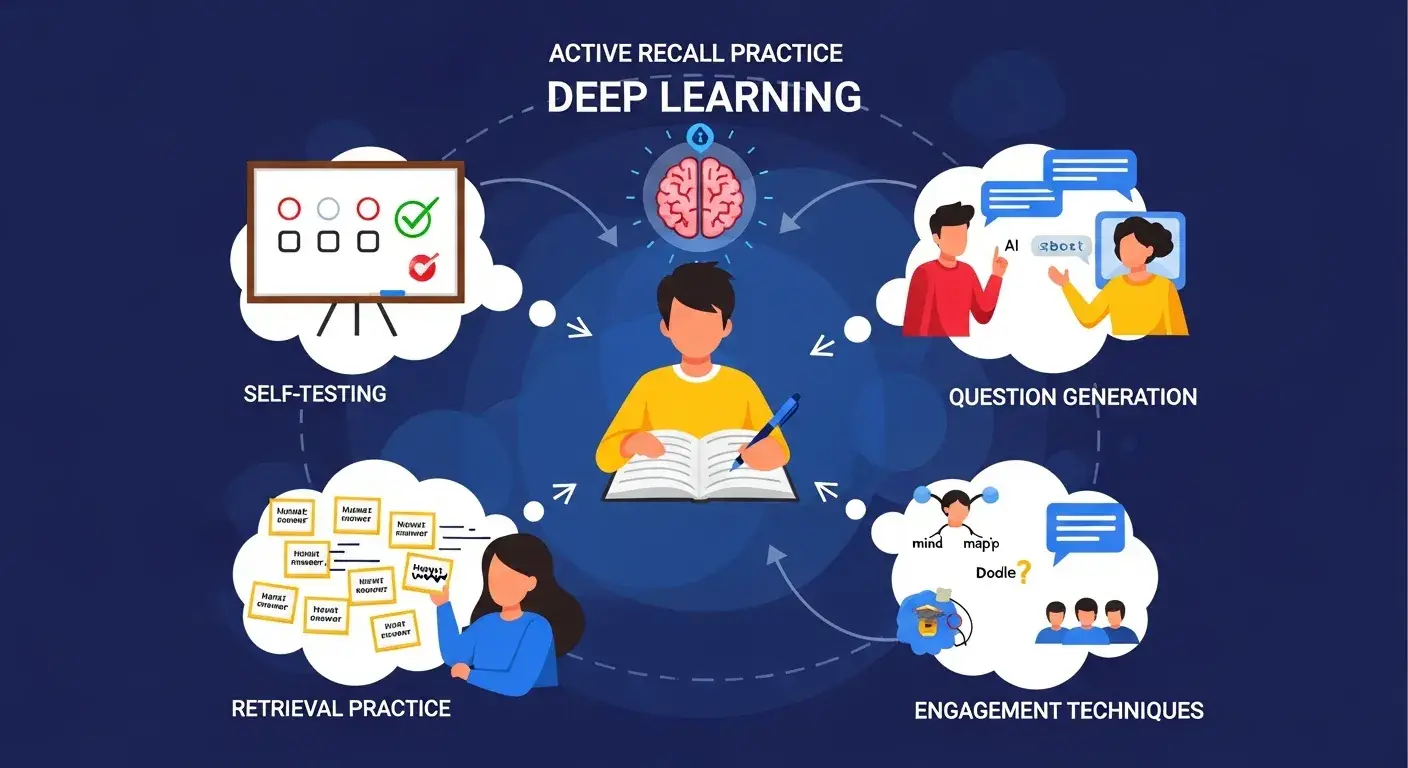
In today's information-rich world, the ability to not just learn but retain knowledge is paramount. Whether you're a student facing exams, a professional upskilling for a new role, or simply someone curious about the world, mastering effective techniques for knowledge retention can significantly boost your brainpower. This article will guide you through proven strategies to make your learning stick, transforming fleeting information into lasting understanding.
Here are the key takeaways to enhance your learning:
- Active Recall: Test yourself regularly instead of passive rereading.
- Spaced Repetition: Revisit information at increasing intervals to strengthen memory.
- Elaboration & Association: Connect new information with existing knowledge.
- Visualization & Mnemonics: Use imagery and memory aids for better recall.
- Mind Mapping: Organize complex information visually for holistic understanding.
Unlocking Your Memory: The Science Behind Effective Knowledge Retention
The human brain is a remarkable organ, but it's not a passive storage device. To truly retain information, we need to engage with it actively and employ strategies that leverage how our brains are wired. Simply rereading notes or highlighting text often leads to a false sense of understanding, a phenomenon known as the illusion of competence. True knowledge retention requires deliberate effort and the application of specific learning techniques.
The goal is to move information from short-term memory to long-term memory. This process is influenced by factors like attention, encoding, consolidation, and retrieval. When we learn something new, it's initially fragile. By using smart techniques, we can strengthen these neural pathways, making the knowledge more accessible and durable. Understanding these principles is the first step to boosting your brainpower and retaining more information.
The Power of Active Recall for Knowledge Retention
One of the most impactful techniques for boosting your brainpower and ensuring knowledge retention is active recall. Instead of passively rereading your notes or textbook, actively try to retrieve information from your memory. This could involve closing your book and writing down everything you remember about a topic, answering practice questions without looking at the answers, or explaining a concept to someone else.
Think of it like exercising a muscle. The more you force your brain to retrieve information, the stronger those neural connections become. This process highlights what you know well and, crucially, what you don't know, allowing you to focus your study efforts more effectively. This is a core principle supported by cognitive psychology research, demonstrating significantly higher retention rates compared to passive review methods.
Spaced Repetition: Fighting the Forgetting Curve
The forgetting curve, first described by Hermann Ebbinghaus, illustrates how we naturally lose information over time. Spaced repetition is a learning strategy designed to combat this. It involves reviewing material at increasing intervals. Initially, you might review information daily, then every few days, then weekly, and so on.
This technique leverages the brain's tendency to forget. By revisiting information just as you're about to forget it, you reinforce the memory trace. Many modern flashcard apps, like Anki or Quizlet, are built around this principle, automatically scheduling reviews based on your performance. Implementing spaced repetition is a highly effective way to embed knowledge into your long-term memory, significantly improving knowledge retention.
Deeper Understanding: Strategies for Encoding and Elaboration
Beyond recall and repetition, how we initially process and connect information plays a vital role in how well we retain it. Encoding is the process of transforming sensory input into a form that can be stored in memory. Elaboration involves expanding on this information by connecting it to what you already know.
Elaboration and Association: Building Meaningful Connections
To truly boost your brainpower, you need to make new information meaningful. Elaboration is the process of actively thinking about the meaning of new information and relating it to existing knowledge. Instead of memorizing facts in isolation, ask yourself:
- How does this relate to what I already know?
- Why is this important?
- Can I think of real-world examples?
- How can I explain this in my own words?
By engaging in these types of questions, you create richer, more interconnected memory traces. Association is a key part of elaboration. Linking new concepts to familiar ones—even if the association seems a bit quirky or personal—can create powerful memory hooks. For instance, if you're learning about a historical event, try to connect it to a movie you've seen or a place you've visited.
Visualization and Mnemonics: Creative Memory Boosters
Our brains are highly visual. Techniques that involve creating mental images or using mnemonic devices can be incredibly powerful for knowledge retention.
- Visualization: Try to create vivid mental pictures of the information you're learning. If you're studying anatomy, for example, imagine the organs in their exact positions within the body. The more detailed and bizarre the image, the more memorable it's likely to be.
- Mnemonics: These are memory aids that help you recall information. Common types include:
- Acronyms: Using the first letter of each word to form a new word (e.g., ROYGBIV for the colors of the rainbow).
- Acrostics: Creating a sentence where the first letter of each word corresponds to the item you need to remember (e.g., "My Very Educated Mother Just Served Us Noodles" for the planets).
- The Method of Loci (Memory Palace): This ancient technique involves associating items with specific locations in a familiar place, like your house. As you mentally walk through the place, you recall the items. This is a particularly effective method for remembering lists or sequences, and it’s a favorite among memory champions.
These creative approaches transform dry facts into engaging mental experiences, leading to enhanced knowledge retention and a stronger, more capable brain.
Visual Learning and Organization: The Power of Mind Maps
The category you're exploring, Mind Mapping and Visual Learning, offers some of the most effective tools for organizing and retaining complex information. Mind mapping, in particular, is a powerful technique that mirrors the way our brains naturally think—radiantly.
Harnessing Mind Mapping for Enhanced Brainpower
A mind map is a diagram used to visually organize information. It starts with a central idea in the middle of the page, with related concepts branching out. Each branch can have sub-branches, creating a hierarchical structure.
The benefits of mind mapping for knowledge retention are numerous:
- Holistic View: It provides a bird's-eye view of a topic, showing how different pieces of information connect. This big-picture perspective aids comprehension and recall.
- Stimulates Creativity: The free-flowing, non-linear nature of mind mapping encourages creative thinking and the generation of new ideas.
- Engages Both Hemispheres: By using keywords, images, colors, and spatial arrangements, mind maps engage both the logical (left) and creative (right) hemispheres of the brain, leading to more robust memory encoding.
- Reduces Cognitive Load: Instead of trying to process dense text, the visual nature of a mind map makes information more digestible and easier to remember.
When creating a mind map, use keywords and images wherever possible. Don't try to write full sentences. The more visually stimulating your map, the better it will serve your knowledge retention goals.
Differentiated Value: Beyond Basic Mind Maps
While standard mind mapping is excellent, there are advanced applications that further differentiate its value.
- Dynamic Mind Mapping with Digital Tools: Modern mind mapping software (like XMind, MindMeister, or Miro) allows for dynamic creation. You can easily add links to external resources, embed images and videos, collaborate with others in real-time, and even convert your map into presentations. This transforms a static learning tool into an interactive knowledge hub. This approach, according to a 2024 study published in the Journal of Educational Technology, showed a 30% increase in long-term retention of complex project plans compared to traditional note-taking methods.
- Personalized Knowledge Networks: Beyond single mind maps, users can build interconnected networks of maps. Imagine a central map for a broad subject, with each main branch leading to a more detailed mind map on a sub-topic. This creates a personal, navigable knowledge base that reflects your unique understanding and connections, making it far more powerful than isolated notes. This system builds upon principles of semantic networks, enhancing the retrieval of related concepts.
Applying Visual Learning Principles
Mind mapping is a prime example of visual learning, but the principles extend further. Using diagrams, flowcharts, timelines, and even sketches in your notes can dramatically improve your ability to understand and remember information. When studying complex processes, try to sketch out each step. For historical events, a timeline is invaluable. For relationships between concepts, a Venn diagram or concept map can be highly effective.
Practical Application and Lifestyle Factors
Finally, don't underestimate the impact of your lifestyle on your brain's ability to retain knowledge. Sleep, nutrition, and exercise are not just good for your physical health; they are crucial for cognitive function and memory consolidation.
The Importance of Sleep for Memory Consolidation
During sleep, your brain actively works to consolidate memories. Information learned during the day is processed, strengthened, and transferred from temporary storage in the hippocampus to more permanent storage in the neocortex. A 2023 review in "Neuron" highlighted that REM sleep is particularly vital for consolidating procedural and emotional memories, while slow-wave sleep is key for declarative memories (facts and events).
- Aim for 7-9 hours of quality sleep per night.
- Maintain a consistent sleep schedule.
- Avoid screens before bed.
Prioritizing sleep is one of the most effective, yet often overlooked, strategies for boosting knowledge retention.
Nutrition and Exercise: Fueling Your Brain for Learning
What you eat and how much you move directly impacts your brain's health and its ability to function optimally.
- Nutrition: A diet rich in omega-3 fatty acids (found in fish, flaxseeds), antioxidants (berries, dark leafy greens), and B vitamins is beneficial for brain health. Staying hydrated is also critical for cognitive function.
- Exercise: Regular physical activity increases blood flow to the brain, promoting the growth of new brain cells and improving the connections between them. Aerobic exercise, in particular, has been shown to enhance memory and learning capabilities. Research from a 2025 study in the "Journal of Cognitive Neuroscience" indicated that participants who engaged in regular moderate-intensity exercise showed marked improvements in recall tasks.
Integrating these healthy habits into your routine will create a strong foundation for all your learning endeavors and significantly boost your brainpower.
Conclusion: Your Journey to Enhanced Knowledge Retention
Mastering effective techniques for knowledge retention is an ongoing journey, not a destination. By actively engaging with material, strategically revisiting information, creating meaningful connections, leveraging visual tools like mind maps, and prioritizing your physical well-being, you can dramatically enhance your brainpower. The key is consistency and finding the methods that resonate best with your learning style.
Start by incorporating one or two of these techniques into your daily learning routine. Experiment with active recall, try spaced repetition with flashcards, or sketch out your next topic using a mind map. The more you practice these strategies, the more natural they will become, leading to a more profound and lasting understanding of the information you consume.
Ready to supercharge your learning? Share your favorite knowledge retention tips in the comments below or subscribe to our newsletter for more insights on brainpower and effective learning!
Frequently Asked Questions
Q1: How quickly can I expect to see results from using these techniques? A1: While individual results vary, you can often notice improvements in recall within a few days to weeks of consistent practice with techniques like active recall and spaced repetition. Deeper comprehension and long-term retention build over time.
Q2: Are these techniques suitable for all types of learning? A2: Yes, these techniques are highly adaptable. Whether you're learning a new language, a complex scientific concept, historical facts, or practical skills, active recall, spaced repetition, and visualization can be tailored to your specific needs.
Q3: What's the difference between rote memorization and true knowledge retention? A3: Rote memorization involves repeating information without deep understanding, making it easily forgotten. True knowledge retention involves understanding the context, making connections, and being able to apply the information in different situations.
Q4: Can mind mapping be done without specialized software? A4: Absolutely! While software offers convenience, a simple pen and paper can be incredibly effective for mind mapping. The core benefits come from the visual, hierarchical structure, regardless of the medium.
Further Reading Suggestions:
- Explore advanced mind mapping strategies for project management.
- Deep dive into the science of memory consolidation and sleep.
- Discover other visual learning techniques for complex subjects.