Boosting Academic Performance: Essential Tips for Students
Boosting Academic Performance: Essential Tips for Students
Achieving academic excellence is a common goal for students at all levels, yet the path to success can often feel overwhelming. This comprehensive guide provides actionable strategies designed to significantly improve your study habits and overall learning experience. By implementing these essential tips, you can unlock your full potential, reduce stress, and consistently achieve higher grades. We'll explore everything from effective study techniques to crucial well-being practices, all aimed at boosting academic performance and fostering a more productive educational journey.
Key Points for Academic Success:
- Strategic Study Habits: Implement active learning and spaced repetition.
- Effective Time Management: Prioritize tasks and create a balanced schedule.
- Prioritize Well-being: Ensure adequate sleep, nutrition, and stress management.
- Leverage Resources: Utilize technology and academic support systems.
- Growth Mindset: Embrace challenges as opportunities for learning.
Understanding the Foundations of Academic Success
True academic success goes beyond rote memorization; it involves a deep understanding of concepts and the ability to apply knowledge effectively. Building a strong foundation requires a proactive approach to learning and a commitment to continuous improvement. Understanding your personal learning style is the first step towards tailoring strategies that work best for you.
Cultivating a Growth Mindset for Learning
A growth mindset is crucial for boosting academic performance. This perspective views challenges and failures not as roadblocks, but as opportunities for growth and learning. Students with a growth mindset are more resilient, persistent, and open to trying new study methods. They understand that intelligence and abilities can be developed through dedication and hard work.
Embracing this mindset helps you tackle difficult subjects with confidence. Instead of saying "I can't do this," you'll find yourself asking, "How can I learn to do this better?" This shift in thinking is fundamental for long-term student success. For more insights into developing resilience, readers can explore related articles on psychological well-being.
Mastering Effective Study Strategies for Better Grades
Effective study strategies are the bedrock of improving grades and retaining information. Moving beyond passive reading, active learning techniques engage your brain more deeply, leading to better comprehension and recall. These methods are proven to be more efficient than traditional study approaches.
Implementing Active Recall and Spaced Repetition
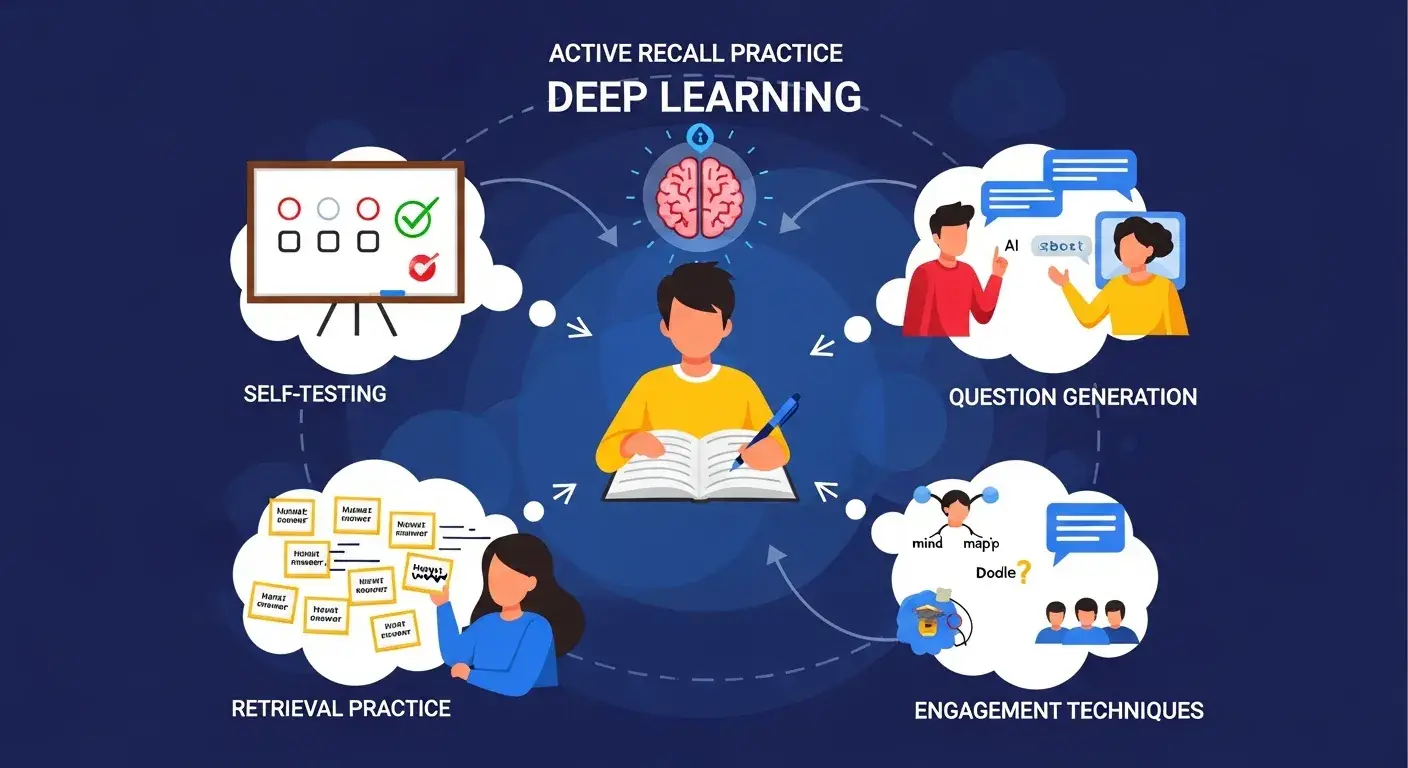
Two highly effective, neuroscience-backed techniques are active recall and spaced repetition. Active recall involves testing yourself regularly on material without looking at your notes, forcing your brain to retrieve information. This strengthens memory pathways significantly. For instance, after reading a chapter, close the book and try to summarize the main points aloud or write them down.
Spaced repetition involves reviewing material at increasing intervals over time. Instead of cramming, you revisit topics just as you're about to forget them, which optimizes memory consolidation. A 2024 study published in the Journal of Educational Psychology highlighted that students who consistently used spaced repetition showed a 15-20% improvement in long-term retention compared to those using massed practice. Tools like flashcard apps can automate this process, making it easier to manage.
The Power of Interleaving and Elaboration
Interleaving is another powerful strategy where you mix different subjects or topics during a single study session, rather than focusing on one subject for an extended period. This helps your brain make connections between different concepts and improves problem-solving skills. For example, instead of studying math for two hours, you might study math for 45 minutes, then history for 45 minutes, and then return to math.
Elaboration involves explaining concepts in your own words, connecting new information to what you already know, or teaching it to someone else. This process deepens understanding and makes the material more meaningful. When you elaborate, you're not just memorizing; you're truly learning.
Time Management Techniques for Optimal Learning
Efficient time management is a critical skill for boosting academic performance. It helps students balance their academic workload with personal life, reducing stress and preventing burnout. Without a structured approach, even the most dedicated students can feel overwhelmed.
Creating a Realistic Study Schedule
Developing a realistic study schedule is paramount. Start by identifying your peak productivity hours and allocate your most challenging tasks to these times. Break down large assignments into smaller, manageable steps and assign specific time slots for each. Consistency is key; try to study at the same times each day to build a routine.
Consider using a digital planner or a simple calendar to map out your week. Include time for classes, study sessions, extracurricular activities, and crucially, breaks. A well-structured schedule ensures that you dedicate sufficient time to each subject without feeling rushed.
The Pomodoro Technique and Prioritization
The Pomodoro Technique is an excellent method for maintaining focus and preventing burnout. It involves studying for 25 minutes, followed by a 5-minute break. After four "Pomodoros," take a longer break of 15-30 minutes. This structured approach helps maintain concentration and makes large study blocks less daunting.
Prioritization is equally important. Use methods like the Eisenhower Matrix to categorize tasks by urgency and importance. Focus on "important and urgent" tasks first, then "important but not urgent." This ensures you're always working on what truly matters for your academic goals. For further guidance on setting effective goals, explore our resources on self-directed learning strategies.
Prioritizing Well-being for Sustained Academic Performance
Your physical and mental well-being directly impacts your ability to learn and perform academically. Neglecting these aspects can lead to decreased concentration, increased stress, and ultimately, a decline in student success. A holistic approach to academic life includes self-care.
The Importance of Sleep, Nutrition, and Exercise
Adequate sleep is non-negotiable for cognitive function. During sleep, your brain consolidates memories and processes information, making it essential for learning. Aim for 7-9 hours of quality sleep per night. A 2023 report by the American Academy of Sleep Medicine emphasized the direct correlation between sufficient sleep and improved academic outcomes.
Proper nutrition fuels your brain. Incorporate a balanced diet rich in fruits, vegetables, whole grains, and lean proteins. Stay hydrated by drinking plenty of water throughout the day. Regular physical activity, even just a 30-minute walk, can reduce stress, improve mood, and enhance cognitive function. These habits collectively contribute to sustained energy and focus.
Managing Stress and Digital Well-being
Academic pressure can be a significant source of stress. Develop healthy coping mechanisms such as mindfulness, meditation, or spending time in nature. Don't hesitate to seek support from friends, family, or university counseling services if stress becomes unmanageable.
In today's digital age, digital well-being is also crucial. Excessive screen time and constant notifications can hinder concentration and disrupt sleep. Practice mindful tech use by setting boundaries, scheduling "digital detox" periods, and turning off unnecessary notifications during study times. This helps in improving study habits by minimizing distractions.
Leveraging Technology and Resources for Enhanced Learning
Technology offers powerful tools for boosting academic performance, but it's essential to use them wisely. Beyond traditional textbooks, a wealth of digital resources can enhance understanding and streamline your study process.
Utilizing Educational Apps and Online Platforms
Numerous educational apps and online platforms can supplement your learning. From note-taking apps that integrate with your devices to online courses that offer deeper dives into specific subjects, these tools can provide personalized learning experiences. Collaborative platforms allow for group study sessions, even when you're physically apart.
Consider using tools for mind mapping, flashcards (like Anki for spaced repetition), or reference management. These can help organize information, facilitate active recall, and ensure proper citation in your academic work.
Seeking Academic Support and Mentorship
Don't hesitate to seek help when you need it. University writing centers, tutoring services, and academic advisors are invaluable resources. They can provide personalized feedback, clarify difficult concepts, and offer strategies tailored to your specific challenges. Mentors, whether professors or older students, can offer guidance and insights that go beyond classroom learning. Engaging with these resources is a sign of proactive learning, not weakness.
Overcoming Common Academic Challenges
Every student faces hurdles, but learning how to navigate them is key to boosting academic performance. From procrastination to test anxiety, understanding common challenges and developing strategies to overcome them is vital.
Tackling Procrastination and Maintaining Motivation
Procrastination is a common enemy of student success. Break down tasks into smaller, less intimidating steps. Use the "two-minute rule": if a task takes less than two minutes, do it immediately. Reward yourself for completing tasks to build positive associations with studying.
Maintaining motivation can be challenging, especially during long semesters. Set clear, achievable goals and regularly remind yourself of your academic aspirations. Connect your studies to your broader life goals to find deeper meaning and purpose. Engaging in study groups can also provide peer support and accountability, helping to sustain motivation.
Managing Test Anxiety and Learning from Mistakes
Test anxiety can severely impact performance, even for well-prepared students. Practice relaxation techniques, visualize success, and ensure you're well-rested before exams. During the test, if you feel overwhelmed, take a few deep breaths to regain focus. Remember that a certain level of anxiety is normal and can even enhance performance.
View mistakes not as failures, but as valuable learning opportunities. After receiving grades, review your errors to understand where you went wrong. This reflective practice is crucial for improving study habits and preventing similar mistakes in the future. Analyze feedback from instructors carefully; it's a roadmap for future improvement.
FAQ Section
Q: How can I improve my concentration during study sessions?
A: To improve concentration, minimize distractions by turning off notifications and finding a quiet study environment. Use techniques like the Pomodoro Technique to