Conquering Exam Anxiety: Smart Study Schedules and Review Techniques to Master Any Test and Boost Your Scores
Conquering Exam Anxiety: Smart Study Schedules and Review Techniques to Master Any Test and Boost Your Scores
Exam anxiety is a common yet debilitating challenge that can undermine even the most prepared students, leading to underperformance despite diligent effort. It’s more than just pre-test jitters; it’s a genuine physiological and psychological response that can impair cognitive function. However, the good news is that conquering exam anxiety is entirely possible through strategic planning and the adoption of evidence-based smart study schedules and effective review techniques. This comprehensive guide will equip you with the metacognitive tools needed to not only manage your nerves but also to master any test, ultimately boosting your scores and academic confidence. By understanding how your brain learns and applying disciplined, yet flexible, approaches, you can transform exam preparation from a source of stress into a pathway to success.
Key Points to Conquer Exam Anxiety:
- Strategic Planning: Develop adaptable study schedules that account for individual learning styles and energy levels.
- Active Recall: Employ methods like flashcards and practice tests to strengthen memory retrieval.
- Spaced Repetition: Optimize learning and retention by reviewing material at increasing intervals.
- Metacognitive Reflection: Regularly assess your understanding and learning process to identify gaps and refine strategies.
- Mindfulness & Resilience: Integrate stress-reduction techniques to maintain calm and focus during preparation and exams.
Why Smart Study Schedules are Your First Line of Defense Against Exam Anxiety
The root of much exam anxiety often lies in a feeling of being overwhelmed or unprepared. A well-constructed study schedule acts as a roadmap, breaking down daunting tasks into manageable steps and fostering a sense of control. This proactive approach is crucial for conquering exam anxiety before it takes hold. Instead of last-minute cramming, which spikes stress, a smart study schedule distributes learning over time, allowing for better absorption and retention of information. This method reduces cognitive load and provides a clear pathway to master any test.
Developing an Adaptive and Personalized Study Schedule
Creating an effective schedule goes beyond just blocking out time; it requires a deep understanding of your personal learning rhythms and the demands of your course load. Start by identifying your peak productivity hours and aligning your most challenging subjects with those times. Incorporate short, focused study blocks (e.g., 25-50 minutes) followed by brief breaks to prevent burnout, a technique often associated with the Pomodoro Method. A critical component of an adaptive schedule is building in "flex zones" — periods designated for catching up, deeper dives into difficult topics, or simply rest. This flexibility is vital, as unexpected events or learning challenges invariably arise.
- Audit Your Time: Track how you currently spend your time for a few days to identify potential study slots.
- Prioritize Tasks: Use a planner or digital tool to list all exams, assignments, and study topics, then rank them by urgency and difficulty.
- Chunking Strategy: Break down large topics into smaller, digestible learning units. This makes the material less intimidating.
- Integrate Breaks: Regular short breaks are essential for mental rejuvenation and improving focus. Consider a 5-10 minute break every hour.
- Review and Adjust: After a week, assess your schedule’s effectiveness. Are you meeting your goals? Do you need more time for certain subjects? Adaptability is key.
Time Management Techniques to Boost Your Scores
Beyond the schedule itself, employing specific time management techniques can significantly enhance your study efficiency. The Eisenhower Matrix, for instance, helps categorize tasks by urgency and importance, ensuring you focus on what truly matters. Another powerful strategy is "timeboxing," where you allocate a fixed maximum amount of time for a specific task. Once the time is up, you move on, even if the task isn't fully complete. This prevents getting stuck and ensures progress across all areas. These systematic approaches are fundamental to building the confidence needed to boost your scores consistently.
Advanced Review Techniques for Deeper Learning and Test Mastery
Once you have your study schedule in place, the next step in conquering exam anxiety is to adopt advanced review techniques that move beyond passive re-reading. These methods engage your brain more actively, leading to stronger memory formation and better understanding. Focusing on retrieval practice and distributed practice (or spaced repetition) are game-changers for truly mastering any test.
Harnessing the Power of Active Recall
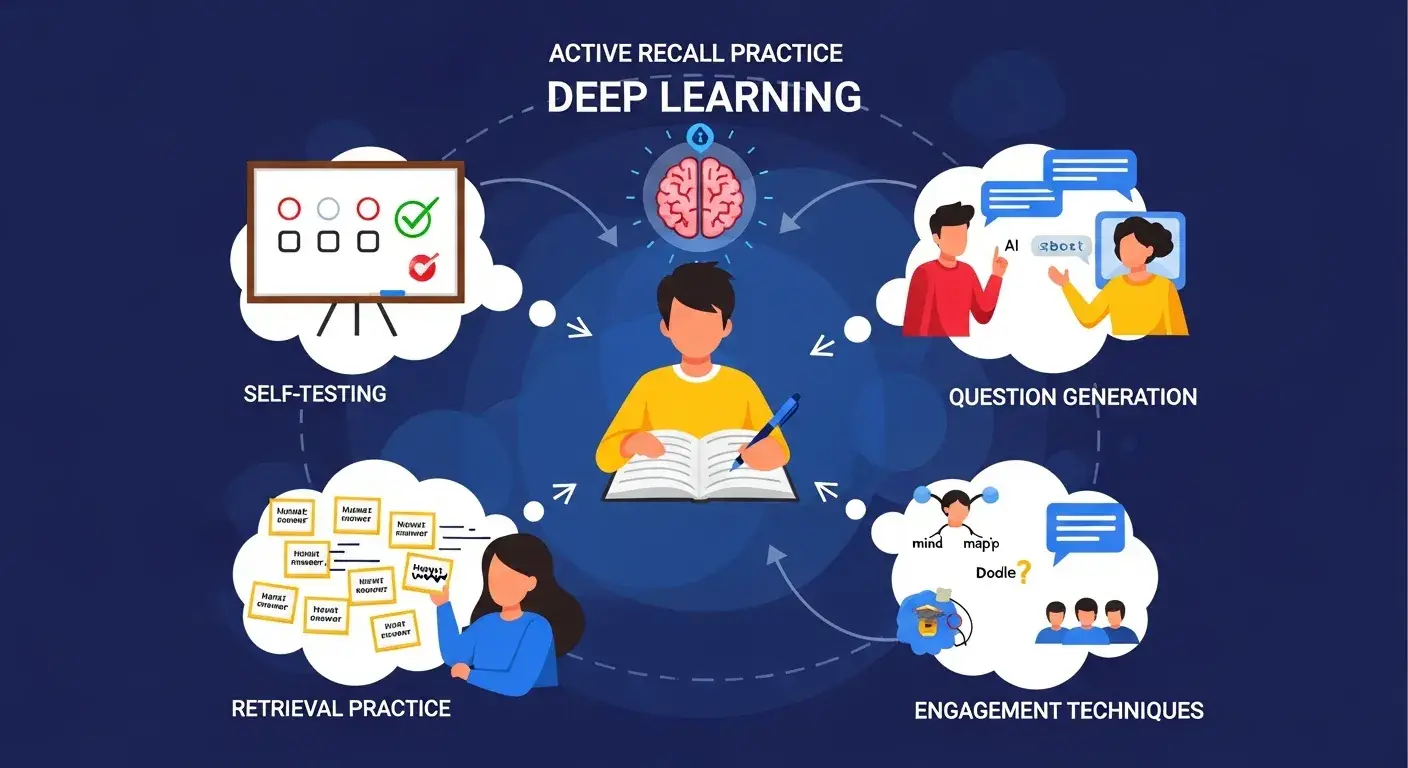
Active recall, also known as retrieval practice, is one of the most effective study methods supported by cognitive science. Instead of passively reviewing notes, you actively test your memory by trying to retrieve information. This could involve using flashcards, self-quizzing without looking at notes, or explaining concepts aloud to an imaginary audience. A 2024 meta-analysis published in Educational Psychology Review highlighted the significant impact of structured review techniques, such as active recall and spaced repetition, on long-term knowledge retention and reduced test anxiety. This deliberate effort to recall strengthens neural pathways, making the information more accessible during an actual exam.
- Flashcards: Create physical or digital flashcards with questions on one side and answers on the other. Use them regularly.
- Practice Questions: Work through past papers or textbook questions. Simulate exam conditions where possible.
- Blind Retrieval: After reading a section, close your book and try to write down everything you remember. Then, check for accuracy and fill in gaps.
- Teach the Concept: Explaining a complex topic to someone else (or even just to yourself) is a powerful way to solidify your understanding.
For more in-depth strategies on strengthening your memory, consider exploring articles on active recall and spaced repetition techniques found in our /articles/boosting-memory-active-recall-spaced-repetition section.
Optimizing Retention with Spaced Repetition
Spaced repetition is a powerful learning technique that involves reviewing previously learned material at increasing intervals over time. This method leverages the "spacing effect," a cognitive phenomenon where learning is more effective when study sessions are spaced out rather than crammed together. Initially, you might review new information daily, then every few days, then weekly, and so on. This intelligent scheduling prevents forgetting and ensures that information is securely lodged in your long-term memory. Tools like Anki or Quizlet can automate this process, presenting you with challenging items more frequently and easier items less often, making it an indispensable technique for conquering exam anxiety.
Mindfulness and Mental Resilience for Exam Success
Even with the best schedules and review techniques, exam anxiety can still creep in. This is where metacognitive strategies for mental resilience and mindfulness come into play. Learning to manage stress and cultivate a positive mindset is crucial for overall well-being and peak performance. Research from Stanford University's Learning & Mindset Lab (2023) indicates that adopting a growth mindset significantly mitigates performance anxiety, especially when paired with adaptive study strategies.
Practical Techniques for Managing Test Day Nerves
On exam day, specific techniques can help calm your mind and focus your attention. Deep breathing exercises are remarkably effective; simply inhaling slowly through your nose, holding for a few seconds, and exhaling slowly through your mouth can activate your parasympathetic nervous system, reducing the fight-or-flight response. Visualization techniques, such as imagining yourself confidently answering questions and successfully completing the exam, can also prime your mind for success. Remember, a certain level of arousal can actually enhance performance, so aim to manage, not eliminate, your nerves.
- Pre-Exam Ritual: Develop a simple, calming routine for the morning of the exam (e.g., light exercise, healthy breakfast, review key notes).
- Positive Self-Talk: Challenge negative thoughts with positive affirmations. Replace "I can't do this" with "I've prepared well, and I can do my best."
- Mindful Breathing: Practice controlled breathing techniques for a few minutes before entering the exam room.
- Progressive Muscle Relaxation: Tense and relax different muscle groups in your body to release physical tension.
For additional guidance on managing academic stress, explore resources on /articles/mindfulness-techniques-academic-stress-management.
Building a Growth Mindset and Self-Compassion
Adopting a growth mindset, the belief that your abilities can be developed through dedication and hard work, is a powerful antidote to anxiety. Instead of fearing failure, view challenges as opportunities for learning and improvement. When you encounter setbacks, practice self-compassion: acknowledge your struggles without judgment, and treat yourself with the same kindness you would a friend. This approach reduces the intense pressure often associated with exams and fosters a resilient attitude vital for conquering exam anxiety and achieving your best.
Differentiated Insights: Beyond Conventional Study Advice
While traditional advice is valuable, two key areas often overlooked can significantly enhance your ability to master any test and boost your scores:
- Adaptive Learning Loops through Metacognitive Self-Assessment: Most study advice focuses on what to study. Our approach emphasizes how you learn and how well you understand. Integrate regular reflective journaling or "learning logs" into your schedule. After each study session or practice test, don't just check answers; reflect on your cognitive process. What strategies worked? Where did you get stuck? Why did you make a particular mistake? By consciously evaluating your learning, you build accurate self-awareness of your mastery level, which directly reduces anxiety rooted in uncertainty. This adaptive feedback loop allows for real-time adjustments to your schedule and techniques, making your preparation exceptionally efficient and personalized. This goes beyond simple self-quizzing by focusing on the process of learning, not just the content.
- Optimizing Cognitive Load with Micro-Learning Bursts: In our attention-fragmented world, traditional long study blocks can be counterproductive, especially for students with ADHD or high levels of anxiety. We advocate for integrating "micro-learning bursts" (5-10 minutes) throughout your day, particularly for reviewing challenging concepts or quick retrieval practice. According to a 2025 study on learning efficacy by the Journal of Applied Cognitive Psychology, these short, high-intensity focus periods, even for just a few minutes, can be as effective as longer sessions for specific tasks, provided they are followed by immediate, active recall. This reduces the perception of a monumental study task, making it less intimidating and more approachable, thereby conquering exam anxiety by making study feel less like a burden and more like integrated learning snippets.
Frequently Asked Questions About Conquering Exam Anxiety
Q1: How can I start building a study schedule if I'm already overwhelmed?
A1: Begin small. Don't aim for a perfect schedule immediately. Start by identifying just 1-2 hours per day where you can consistently dedicate uninterrupted time to study. Gradually expand from there. Focus on blocking out time for your most challenging subject first, and incorporate short, active breaks. The goal is consistent, manageable effort, not perfection, to start building momentum and reducing the feeling of being overwhelmed.
Q2: What if I forget everything during the exam, even after studying?
A2: This feeling is often linked to retrieval failure, a symptom of anxiety, rather than a lack of knowledge. Combat this by practicing active recall consistently during your study sessions. During the exam, if you freeze, try a deep breathing exercise, then move on to questions you know. Sometimes, answering easier questions can trigger memories for the harder ones. Trust your preparation and engage relaxation techniques.
Q3: How do I balance multiple subjects with different exam formats?
A3: Prioritize your study time based on the difficulty of each subject and the weight of the exam. Allocate more time to challenging subjects or those with complex exam formats (e.g., essays vs. multiple-choice). Use different review techniques tailored to each format: extensive practice essays for essay exams, and flashcards for fact-based tests. Your adaptive schedule should reflect this varied approach.
Q4: Is it okay to take a day off studying before an exam?
A4: Absolutely! Taking the day before an exam as a "rest and consolidate" day can be highly beneficial. Avoid learning new material. Instead, focus on light review of key concepts, organization, and self-care activities that reduce stress. This allows your brain to process and solidify information without the pressure of last-minute cramming, ensuring you approach the exam feeling refreshed and confident.
Conclusion: Your Path to Exam Mastery and Reduced Anxiety
Conquering exam anxiety is not about eliminating all stress, but rather about equipping yourself with the strategies to manage it effectively and perform at your best. By implementing smart study schedules that are adaptive and personalized, and by leveraging advanced review techniques like active recall and spaced repetition, you are building a strong foundation for academic success. Integrating metacognitive reflection and mental resilience practices further fortifies your ability to master any test and consistently boost your scores. Remember, every student faces challenges; your power lies in how you approach them. Take control of your learning, trust your preparation, and step into your exams with confidence.
Ready to transform your study habits and achieve your academic goals? Start implementing these strategies today and share your journey in the comments below! What's your biggest takeaway?
For further reading and to enhance your metacognitive study techniques, consider exploring these topics:
- Strategies for effective note-taking and knowledge organization.
- The role of sleep and nutrition in cognitive performance.
- Advanced memory retention tactics beyond basic active recall.
This content was published on November 26, 2025. Information on metacognitive study techniques and anxiety management is continually evolving, and this article incorporates the latest evidence-based practices. We recommend regular updates to stay informed on new research and best practices.