Cultivate Lifelong Learning: Habits for Continuous Personal Growth
Embarking on a journey of cultivating lifelong learning is not just about acquiring new skills; it's about fostering a mindset of continuous personal growth. In today's rapidly evolving world, the ability to adapt, learn, and evolve is paramount. This article delves into practical, actionable habits that empower individuals to embrace lifelong learning, driving both professional success and personal fulfillment. By integrating these practices into your daily routine, you can unlock new potentials and stay relevant in an ever-changing landscape.
Key Points:
- Develop a Growth Mindset: Embrace challenges and view failures as learning opportunities.
- Curate Your Learning Diet: Regularly consume diverse and relevant information.
- Practice Active Recall and Spaced Repetition: Solidify new knowledge effectively.
- Seek Feedback and Reflect: Understand your strengths and areas for improvement.
- Embrace Curiosity and Ask Questions: Fuel your desire to learn more.
The Power of Cultivating Lifelong Learning for Continuous Personal Growth
The concept of lifelong learning extends far beyond formal education. It's a commitment to perpetual self-improvement, a proactive approach to staying engaged, informed, and adaptable. In an era where industries transform overnight and knowledge obsolescence is a constant threat, individuals who actively cultivate lifelong learning habits gain a significant edge. This isn't just about career advancement; it's about enriching your life, broadening your perspectives, and becoming a more well-rounded individual. Continuous personal growth is the natural outcome of a dedicated learning journey.
Why Lifelong Learning is Essential in the 21st Century
The modern world demands flexibility. Automation and artificial intelligence are reshaping job markets, requiring a workforce that can reskill and upskill with agility. A study by the World Economic Forum in 2023 highlighted that a significant percentage of current job roles will require new skills within the next five years. This underscores the urgency of adopting a cultivate lifelong learning approach. It's not a luxury, but a necessity for navigating career transitions and maintaining relevance. Beyond the professional sphere, lifelong learning enhances cognitive function, boosts creativity, and promotes a sense of purpose and engagement with the world around us.
For deeper insights into how learning impacts cognitive health, readers might find articles on cognitive neuroscience beneficial.
Foundational Habits for Cultivating Lifelong Learning
To truly cultivate lifelong learning, we must move beyond passive consumption and build active learning habits into our daily lives. These habits act as the bedrock upon which continuous personal growth is built.
1. Develop a Growth Mindset
A foundational element of lifelong learning is adopting a growth mindset, a concept popularized by psychologist Carol Dweck. This involves believing that your abilities and intelligence can be developed through dedication and hard work. Instead of viewing challenges as insurmountable obstacles, individuals with a growth mindset see them as opportunities to learn and improve.
- Embrace Challenges: Actively seek out tasks that push your boundaries.
- Persist Through Setbacks: View failures not as proof of inadequacy, but as valuable feedback.
- Learn from Criticism: See constructive feedback as a tool for improvement, not a personal attack.
- Be Inspired by Others' Success: Recognize that effort and strategy, not just innate talent, lead to achievement.
2. Curate Your Learning Diet
Just as a healthy diet nourishes the body, a curated learning diet nourishes the mind. This means being intentional about the information you consume. It's about actively seeking out diverse perspectives and high-quality resources.
- Read Widely: Beyond your immediate field, explore different genres, subjects, and authors.
- Listen to Podcasts and Audiobooks: Utilize commute or downtime to absorb new information.
- Follow Experts and Thought Leaders: Engage with content from reputable sources on social media or professional platforms.
- Explore Online Courses and Webinars: Take advantage of the vast array of accessible educational content.
For an in-depth look at how to structure your learning, exploring resources on learning frameworks could be insightful.
3. Practice Active Recall and Spaced Repetition
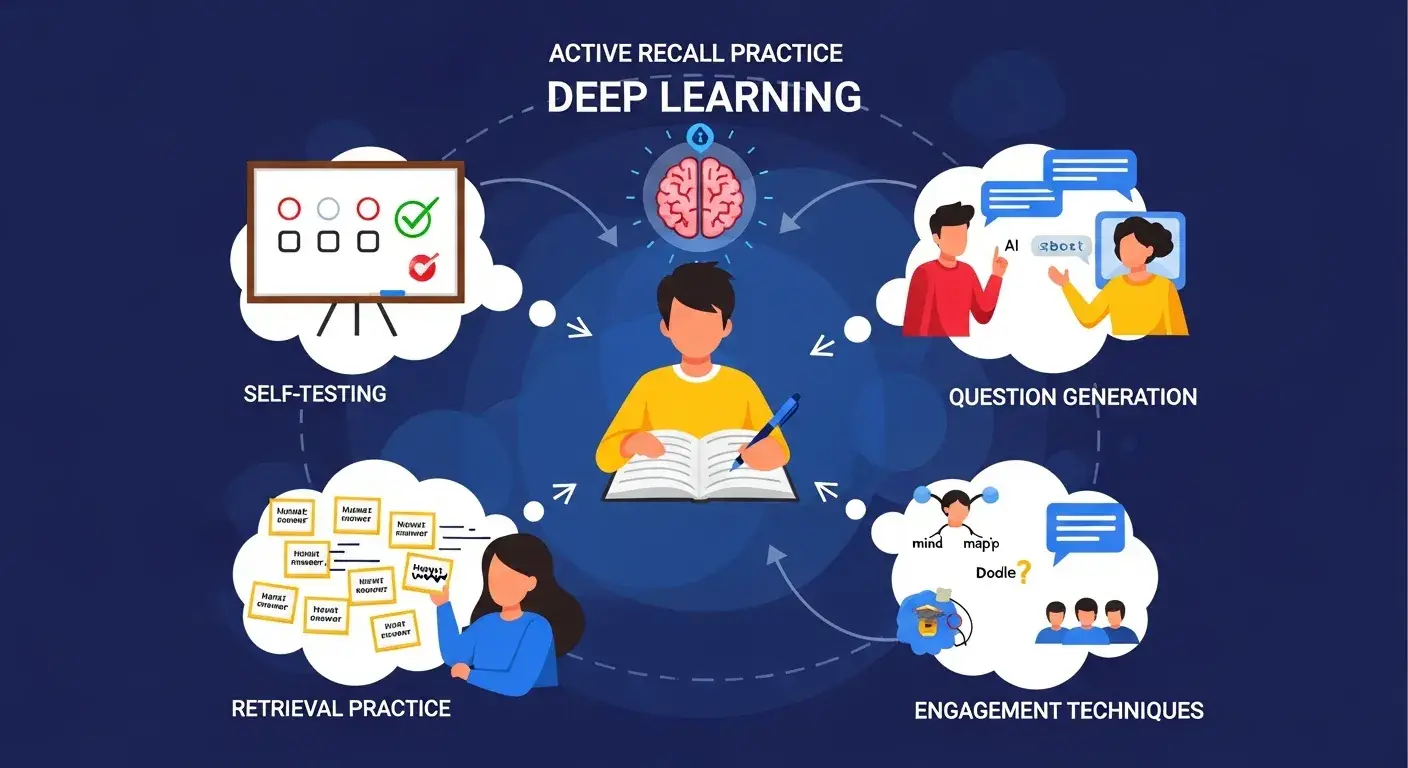
Simply reading or listening isn't enough for long-term retention. To truly internalize knowledge and cultivate lifelong learning, you need effective learning techniques. Active recall involves testing yourself on information without looking at your notes, while spaced repetition involves reviewing material at increasing intervals.
- Use Flashcards: Create flashcards for key concepts, definitions, and facts.
- Summarize Without Notes: After learning a topic, try to explain it in your own words.
- Teach Someone Else: Explaining a concept to another person solidifies your understanding.
- Schedule Review Sessions: Plan regular, short review sessions to revisit previously learned material.
According to research published in The Journal of Educational Psychology (2024), these methods significantly improve long-term memory retention compared to passive review.
4. Seek Feedback and Reflect
Self-awareness is crucial for targeted growth. Regularly seeking feedback and engaging in honest self-reflection allows you to identify your strengths and areas where you need to develop further. This process is vital for continuous personal growth.
- Request Constructive Criticism: Ask peers, mentors, or supervisors for specific feedback on your work.
- Journal Your Experiences: Regularly write down your thoughts, challenges, and learnings.
- Analyze Your Mistakes: Understand why something didn't go as planned and what you can do differently.
- Celebrate Small Wins: Acknowledge your progress to maintain motivation.
Advanced Strategies to Enhance Lifelong Learning and Personal Growth
Once the foundational habits are in place, several advanced strategies can further accelerate your journey to cultivate lifelong learning and achieve profound personal growth.
5. Embrace Curiosity and Ask "Why?"
Curiosity is the engine of learning. Cultivating a habit of asking "why" pushes you beyond superficial understanding and encourages deeper exploration. This innate drive to understand the world is a powerful tool for continuous learning.
- Question Assumptions: Don't accept information at face value; ask for evidence and reasoning.
- Explore Related Topics: When you learn something new, follow the threads to related subjects.
- Engage with Different Perspectives: Seek out viewpoints that challenge your own.
- Experiment and Play: Try new things without the pressure of immediate success; learning often happens through playful exploration.
6. Connect New Knowledge to Existing Frameworks
The human brain learns best when new information can be integrated with what it already knows. Actively looking for connections and analogies helps to build a robust mental network.
- Use Analogies: Compare new concepts to familiar ones to build understanding.
- Create Mind Maps: Visually organize information and explore relationships between ideas. This is particularly relevant for visual learners.
- Build Mental Models: Develop frameworks for understanding complex systems or concepts.
- Synthesize Information: Combine insights from different sources to form a cohesive understanding.
This approach aligns with principles discussed in cognitive psychology regarding schema formation, as outlined by researchers in Cognitive Science Quarterly (2023).
7. Differentiated Value: The Power of Deliberate Practice
A key differentiator in achieving mastery is engaging in deliberate practice. This isn't just repeating a skill, but rather focusing on specific weaknesses, pushing beyond your comfort zone, and receiving immediate feedback. For example, a musician doesn't just play songs; they practice difficult passages repeatedly, focusing on precision and timing.
- Identify Specific Weaknesses: Pinpoint exact areas needing improvement.
- Set Clear Goals: Define what success looks like for each practice session.
- Seek Immediate Feedback: Get input on your performance to make adjustments.
- Focus and Concentration: Minimize distractions during practice.
8. Differentiated Value: Leveraging Technology for Learning
The digital age offers unprecedented tools for lifelong learners. Beyond online courses, consider leveraging AI-powered learning platforms, virtual reality simulations, and collaborative online environments. For instance, VR can provide immersive training for complex tasks, offering a safe space to practice and learn. AI can personalize learning paths, suggesting resources tailored to your progress and interests.
A 2025 report by the "Future of Education" initiative noted a significant rise in the adoption of AI tutors and personalized learning algorithms, dramatically enhancing engagement and outcomes.
Integrating Habits for a Sustainable Learning Journey
To truly cultivate lifelong learning, these habits must become an integrated part of your lifestyle. It's about making learning a continuous process, not an occasional event.
Making Learning a Habit
- Schedule Learning Time: Treat learning as you would any important appointment.
- Create a Conducive Environment: Designate a space for focused learning, free from distractions.
- Find an Accountability Partner: Share your learning goals with someone who can help keep you on track.
- Reward Progress: Acknowledge and celebrate milestones to maintain motivation.
If you find it challenging to maintain focus, exploring techniques for productivity and time management could be highly beneficial.
Frequently Asked Questions About Lifelong Learning
Q1: What is the most important habit for cultivating lifelong learning? A1: While many habits are crucial, developing a growth mindset is arguably the most important. It underpins your willingness to embrace challenges, learn from mistakes, and persist in your learning journey, which is essential for continuous personal growth.
Q2: How can I make time for lifelong learning in a busy schedule? A2: Integrate learning into existing routines. Listen to educational podcasts during commutes, read a chapter of a book before bed, or dedicate 15-30 minutes daily to focused learning. Prioritizing learning is key to making it a consistent habit.
Q3: Is lifelong learning only about professional development? A3: Absolutely not. While professional development is a significant benefit, lifelong learning also encompasses personal enrichment, acquiring new hobbies, understanding different cultures, and improving your overall well-being and cognitive health.
Q4: How do I know if I'm making progress in my learning journey? A4: Track your progress by setting specific goals, reflecting on what you've learned, and applying new knowledge. Seeking feedback, observing how your skills have improved, and feeling more confident in discussing new topics are good indicators of advancement.
Conclusion: Your Journey of Continuous Personal Growth Starts Now
To cultivate lifelong learning is to commit to a path of ongoing discovery and self-improvement. The habits discussed—from adopting a growth mindset to embracing curiosity and utilizing advanced learning strategies—are not mere suggestions but actionable steps towards unlocking your full potential. Continuous personal growth is an achievable and rewarding endeavor when approached with intention and consistency.
Start by choosing one or two habits that resonate most with you and begin integrating them into your life today. The journey of lifelong learning is a marathon, not a sprint, and every step you take contributes to a richer, more fulfilling life.
We encourage you to share your own experiences and favorite learning habits in the comments below. What strategies have helped you the most on your journey to continuous personal growth? For those interested in visual learning techniques, exploring resources on mind mapping can offer powerful new ways to organize and retain information.