Daily Habits to Sharpen Your Mind: Practical Memory Enhancement Exercises for Better Learning
Daily Habits to Sharpen Your Mind: Practical Memory Enhancement Exercises for Better Learning
In an increasingly demanding world, the ability to learn quickly and retain information is a significant advantage. Many believe memory is a fixed trait, but the truth is, it's a skill that can be significantly improved with consistent effort. This article dives into practical memory enhancement exercises and daily habits designed to sharpen your mind, boost cognitive function, and foster better learning outcomes. We'll explore evidence-based strategies, from simple lifestyle adjustments to advanced cognitive techniques, helping you unlock your brain's full potential.
Here are the key takeaways to kickstart your journey:
Key Points:
- Neuroplasticity is Key: Your brain can adapt and grow, irrespective of age.
- Active Recall & Spaced Repetition: Master powerful study techniques for lasting memory.
- Holistic Approach: Integrate nutrition, sleep, and exercise for optimal brain health.
- Mindfulness Matters: Enhance focus and memory through present-moment awareness.
- Consistent Practice: Regular engagement with memory exercises yields significant results.
Understanding Your Brain: The Science Behind Memory Enhancement
Our memory isn't a single entity but a complex system, continuously processing, storing, and retrieving information. Understanding its underlying mechanisms is the first step towards effective enhancement. The brain's incredible capacity for change, known as neuroplasticity, is fundamental to learning and memory improvement.
The Role of Neuroplasticity in Learning
Neuroplasticity is the brain's ability to reorganize itself by forming new neural connections throughout life. Every time you learn something new or engage in a challenging mental task, your brain literally rewires itself. This process strengthens existing connections and creates new ones, making your brain more efficient. Far from being a static organ, the brain is dynamic and constantly evolving, making the pursuit of "daily habits to sharpen your mind" a fruitful endeavor. This continuous adaptation underpins all forms of cognitive improvement and better learning.
Debunking Common Memory Myths
Many misconceptions about memory persist. One common myth is that memory declines inevitably with age, which isn't entirely true; while some aspects may change, others can improve, and overall decline is often preventable. Another myth suggests that some people are simply born with a "good" or "bad" memory. While genetic factors play a role, consistent practice and the right strategies have a far greater impact on memory performance. Embracing effective memory enhancement exercises can transform anyone's cognitive capabilities.
Integrating Memory Enhancement Techniques into Your Daily Routine
To truly sharpen your mind, it's essential to weave memory-boosting strategies into the fabric of your everyday life. These aren't just for students; they benefit professionals, lifelong learners, and anyone looking to maintain robust cognitive function.
The Power of Active Recall and Spaced Repetition
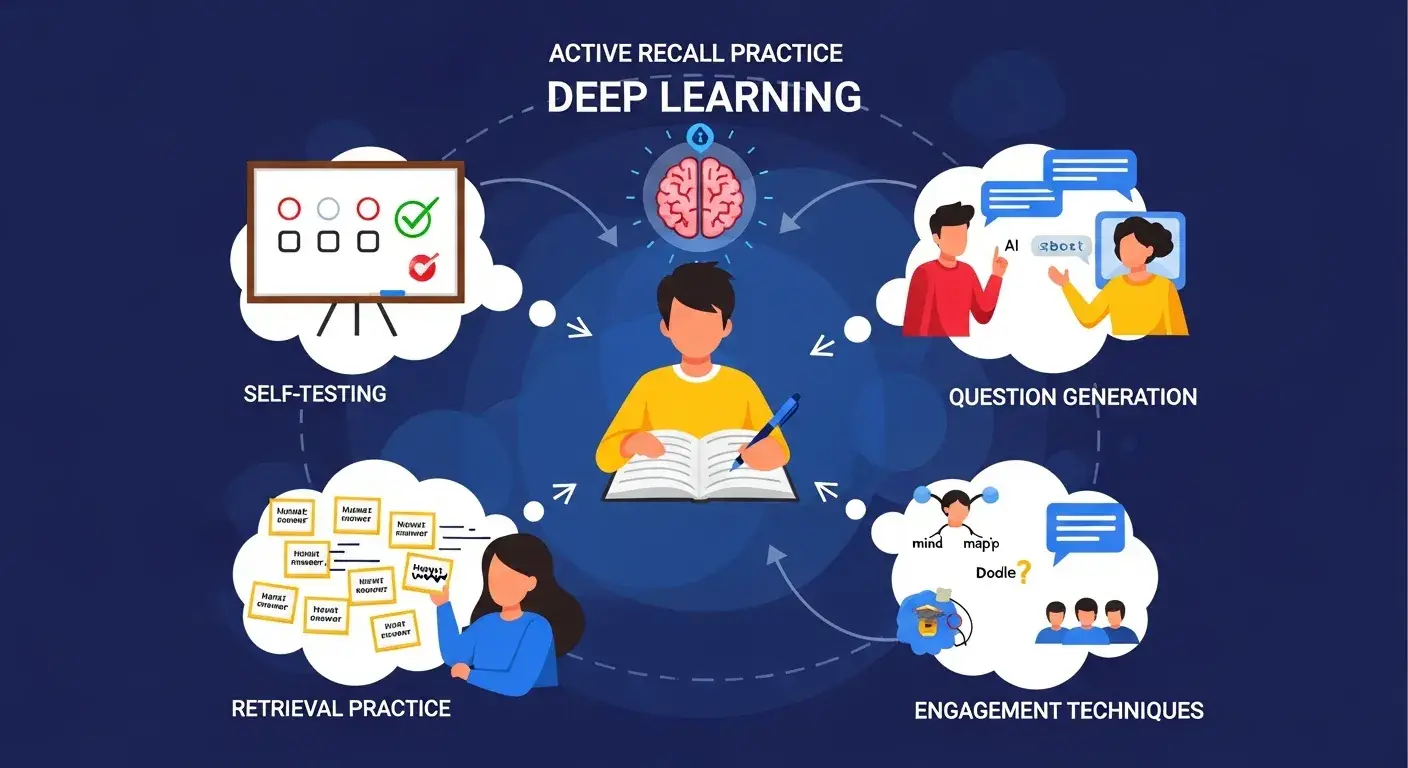
Active recall is a learning method where you retrieve information from your memory without looking at notes. Instead of passively rereading, you actively test yourself, forcing your brain to work harder. This process strengthens neural pathways, making information easier to retrieve in the future. For example, after reading a chapter, close the book and try to summarize its main points aloud.
Spaced repetition involves reviewing information at increasing intervals over time. Instead of cramming, you revisit material just as you're about to forget it, optimizing retention. Tools like flashcard apps (e.g., Anki) are excellent for implementing this technique. Combining active recall with spaced repetition is one of the most effective memory enhancement exercises for long-term retention.
Mnemonic Devices for Everyday Use
Mnemonic devices are memory aids that help us remember difficult-to-recall information by associating it with something easier to remember.
- Acronyms: Remembering the order of operations in math with PEMDAS (Parentheses, Exponents, Multiplication, Division, Addition, Subtraction).
- Rhymes and Songs: Nursery rhymes are classic examples, but you can create your own for facts or lists.
- Method of Loci (Memory Palace): This technique involves associating items you want to remember with specific locations in a familiar mental "space" (like your house). When you want to recall the items, you mentally "walk" through your space. This ancient method can be incredibly powerful for memorizing lists or complex information.
The Benefits of Mindful Observation
Mindfulness, the practice of being fully present and aware of the moment, significantly impacts memory. By observing details around you with greater attention, you encode information more effectively. For instance, notice the color of a colleague's shirt, the scent of your coffee, or the sound of birds outside your window. This simple practice improves attention span, a crucial precursor to memory formation, and is a gentle yet potent daily habit to sharpen your mind.
Lifestyle Habits that Sharpen Your Mind and Boost Learning
Beyond specific exercises, your overall lifestyle profoundly impacts your brain health and capacity for better learning. Incorporating these holistic habits can provide a strong foundation for cognitive excellence.
Fueling Your Brain: Nutrition and Hydration
Your brain is an energy-intensive organ, and its performance is directly linked to what you consume. A diet rich in omega-3 fatty acids (found in fish, nuts), antioxidants (berries, dark chocolate), and vitamins (leafy greens) supports brain health. Adequate hydration is equally critical; even mild dehydration can impair concentration and memory. For instance, a 2023 study published in The Journal of Cognitive Neuroscience highlighted the significant role of hydration in maintaining executive function and short-term memory performance.
The Impact of Sleep on Memory Consolidation
Sleep isn't just rest; it's a vital period for memory consolidation. During deep sleep, the brain processes and stores memories from the day, transforming short-term memories into long-term ones. Chronic sleep deprivation can severely impair your ability to learn new things and recall existing information. Aim for 7-9 hours of quality sleep nightly to optimize your brain's memory-making capabilities. This is a fundamental part of any strategy for better learning and memory.
Physical Activity: More Than Just Body Health
Regular physical activity increases blood flow to the brain, delivering essential oxygen and nutrients. It also stimulates the release of growth factors, which promote the growth of new brain cells and enhance synaptic plasticity. Studies, including research from the American Academy of Neurology in 2024, consistently show that aerobic exercise can improve memory, attention, and overall cognitive function across all age groups. Even a brisk 30-minute walk daily can make a significant difference.
Stress Management for Optimal Cognitive Function
Chronic stress floods the brain with cortisol, which can damage brain cells in the hippocampus, a region critical for memory formation. Implementing stress-reduction techniques like meditation, deep breathing exercises, spending time in nature, or engaging in hobbies can protect your brain and enhance its ability to learn and remember. Managing stress is a powerful daily habit to sharpen your mind.
Differentiated Content: Leveraging Digital Tools and Emerging Insights for Superior Memory
The digital age offers novel approaches to memory enhancement, moving beyond traditional methods to leverage technology and cutting-edge research.
AI-Powered Learning Platforms and Personalized Spaced Repetition
Modern learning platforms are increasingly integrating AI to create personalized learning paths. These systems analyze your learning patterns, identify areas where you struggle, and automatically adjust the spaced repetition schedule for optimal retention. They go beyond simple flashcards by offering adaptive quizzes, performance analytics, and even personalized feedback, making them highly efficient memory enhancement exercises. This tailored approach ensures you focus precisely on what you need to learn, preventing wasted effort.
The 'Memory Palace' Reimagined for Digital Natives
While the classical Memory Palace is a mental exercise, its principles are being adapted for digital interfaces. Imagine using virtual reality (VR) or augmented reality (AR) to build and explore your personalized "memory palace." These immersive environments can provide incredibly vivid and stable spatial cues, amplifying the effectiveness of this ancient technique. Early experimental platforms are showing promising results in creating engaging and highly effective digital memory training experiences, enhancing our capacity for better learning. As noted by experts at the Stanford University Cognitive Science Lab in their 2024 review of spatial memory and VR applications, these tools offer exciting new frontiers.
Advanced Strategies: Beyond the Basics for Cognitive Mastery
Once you've mastered the foundational habits and exercises, you might be ready for more advanced techniques to further sharpen your mind.
Dual N-Back Training: A Deep Dive
The Dual N-Back task is a cognitive exercise often used in research to improve working memory and fluid intelligence. It involves simultaneously remembering a sequence of spoken letters and a sequence of visual positions, then recalling if the current stimulus matches the one from n steps back. While challenging, consistent practice has been shown in some studies to significantly enhance working memory capacity, an essential component for complex problem-solving and better learning.
Learning New Skills: The Ultimate Brain Workout
One of the best ways to foster neuroplasticity and overall brain health is to continuously challenge your brain by learning new, complex skills. This could be learning a new language, playing a musical instrument, coding, or even mastering a new craft. These activities demand concentrated effort, engage multiple cognitive functions (memory, problem-solving, motor skills), and force your brain to create new neural pathways, serving as comprehensive memory enhancement exercises. For example, research from the Max Planck Institute for Human Cognitive and Brain Sciences in 2023 demonstrated how learning a new language could lead to increased grey matter density in certain brain regions.
To deepen your understanding of how these processes connect, consider exploring the foundational aspects of [/categories/cognitive-learning-principles](understanding cognitive learning principles).
Frequently Asked Questions (FAQ)
How long does it take to see improvements from memory exercises?
The timeline for seeing improvements can vary significantly among individuals, depending on consistency, starting point, and the intensity of the exercises. Generally, consistent engagement with daily memory enhancement exercises for 4-8 weeks can start to show noticeable improvements in recall and learning speed. Long-term benefits, however, require sustained practice.
Are memory supplements effective for sharpening the mind?
While some supplements claim to boost memory, scientific evidence supporting their efficacy for healthy individuals is often limited or inconclusive. Most reputable sources, like the National Institute of Health, suggest focusing on a balanced diet, adequate sleep, and regular exercise as far more effective strategies for cognitive health than relying on supplements.
Can age impact the effectiveness of these memory techniques?
While certain cognitive functions may experience a natural decline with age, the brain's neuroplasticity means that memory techniques and daily habits remain effective throughout life. Older adults can still significantly improve their memory and learning abilities, often experiencing substantial benefits from consistent engagement, combating age-related cognitive changes.
What are some quick memory exercises I can do anywhere?
You can easily incorporate quick memory exercises into your day. Try observing details: mentally list five things you see, hear, or smell. Practice active recall by summarizing a recent conversation or article without notes. Use mnemonic devices for phone numbers or shopping lists. Even mentally planning your day or reviewing your schedule can act as a mini-memory workout.
Conclusion: Your Journey to a Sharper Mind Begins Now
Embarking on a journey to sharpen your mind and enhance your memory is a lifelong endeavor, one that promises significant rewards in both your personal and professional life. By consistently applying these practical memory enhancement exercises and integrating healthy daily habits, you're not just improving your recall; you're building a more resilient, agile, and capable brain. Remember that consistency, curiosity, and a holistic approach are your most powerful allies in this pursuit of better learning.
We encourage you to start small, choose one or two habits or exercises that resonate with you, and commit to practicing them daily. Share your experiences in the comments below – what daily habits have helped you sharpen your mind?
For further exploration of cognitive improvement, consider reading about [/articles/the-science-of-focus-improving-concentration-for-enhanced-productivity](the science of focus for enhanced productivity) or diving into [/articles/unlocking-your-brains-potential-advanced-learning-strategies](advanced learning strategies) to continue your journey towards cognitive mastery.