Developing Lifelong Learning Habits for Continuous Personal Growth
Developing Lifelong Learning Habits for Continuous Personal Growth
In today's rapidly evolving world, the ability to continuously learn and adapt is no longer a luxury but a fundamental necessity. Developing lifelong learning habits is the cornerstone of sustained personal and professional development, empowering individuals to navigate change, acquire new skills, and remain relevant in any field. This article explores practical strategies and insights to cultivate a robust learning mindset, ensuring continuous personal growth throughout your life's journey. Embracing learning as an ongoing process fosters resilience, innovation, and a deeper understanding of the world around us.
Key Points for Cultivating Lifelong Learning:
- Embrace a Growth Mindset: View challenges as opportunities for learning and development.
- Set Clear Learning Goals: Define what you want to learn and why it matters.
- Integrate Learning into Daily Routines: Make learning a consistent, manageable part of your day.
- Practice Metacognition: Reflect on your learning process to improve effectiveness.
- Leverage Diverse Resources: Explore books, courses, podcasts, and real-world experiences.
Understanding the Imperative for Continuous Learning
The modern landscape, characterized by rapid technological advancements and shifting global dynamics, demands an agile approach to knowledge acquisition. What was relevant yesterday might be obsolete tomorrow. This constant flux underscores the critical importance of developing lifelong learning habits. It's about more than just acquiring new information; it's about fostering a mindset of curiosity, adaptability, and self-improvement that propels individuals forward.
A 2023 report by the World Economic Forum highlighted that over 50% of all employees will need reskilling by 2025. This statistic alone paints a clear picture: continuous learning isn't just beneficial, it's essential for career longevity and personal fulfillment. Those who actively engage in learning are better equipped to solve complex problems, innovate, and lead effectively.
Cultivating a Growth Mindset: The Foundation of Lifelong Learning
At the heart of developing lifelong learning habits lies the concept of a growth mindset, popularized by Dr. Carol Dweck. This perspective views abilities and intelligence not as fixed traits but as qualities that can be developed through dedication and hard work. Embracing a growth mindset means:
- Viewing challenges as opportunities: Instead of avoiding difficulties, see them as chances to learn and grow.
- Persisting in the face of setbacks: Understand that failures are temporary and provide valuable feedback.
- Embracing effort: Recognize that effort is the path to mastery, not a sign of inadequacy.
- Learning from criticism: Use feedback constructively to improve your skills and understanding.
This fundamental shift in perspective is crucial because it transforms the learning process from a daunting task into an exciting journey of discovery. Without a growth mindset, the motivation to continuously learn can quickly wane when faced with obstacles or new, complex subjects.
Practical Strategies for Developing Lifelong Learning Habits
Building effective learning habits requires intentional effort and consistent application. Here are several actionable strategies to integrate learning into your daily life:
1. Set Clear and Achievable Learning Goals
Just as you set goals for career or fitness, define specific, measurable, achievable, relevant, and time-bound (SMART) learning objectives.
- Identify your "why": Understand the motivation behind your learning. Is it for a new skill, personal interest, or career advancement?
- Break down large goals: Divide complex subjects into smaller, manageable modules. For instance, instead of "learn coding," aim for "complete an introductory Python course module each week."
- Schedule dedicated learning time: Treat learning appointments like any other important commitment. Even 15-30 minutes daily can yield significant results over time.
2. Integrate Learning into Your Daily Routine
Consistency is key when developing lifelong learning habits. Look for opportunities to weave learning into your existing schedule.
- Morning rituals: Listen to educational podcasts or audiobooks during your commute or morning walk.
- Lunch breaks: Read articles, watch short tutorials, or practice a new language.
- Evening wind-down: Dedicate time to reading a non-fiction book or reviewing notes from a course.
- Microlearning: Utilize apps or platforms that offer bite-sized lessons, perfect for short bursts of learning throughout the day.
3. Practice Metacognitive Study Techniques
Metacognition, or "thinking about thinking," is a powerful tool for enhancing your learning efficiency. This category, Metacognitive Study Techniques, emphasizes strategies that help you understand and control your own learning process.
- Self-reflection: Regularly ask yourself: "What did I learn today?" "How did I learn it?" "What was challenging, and why?"
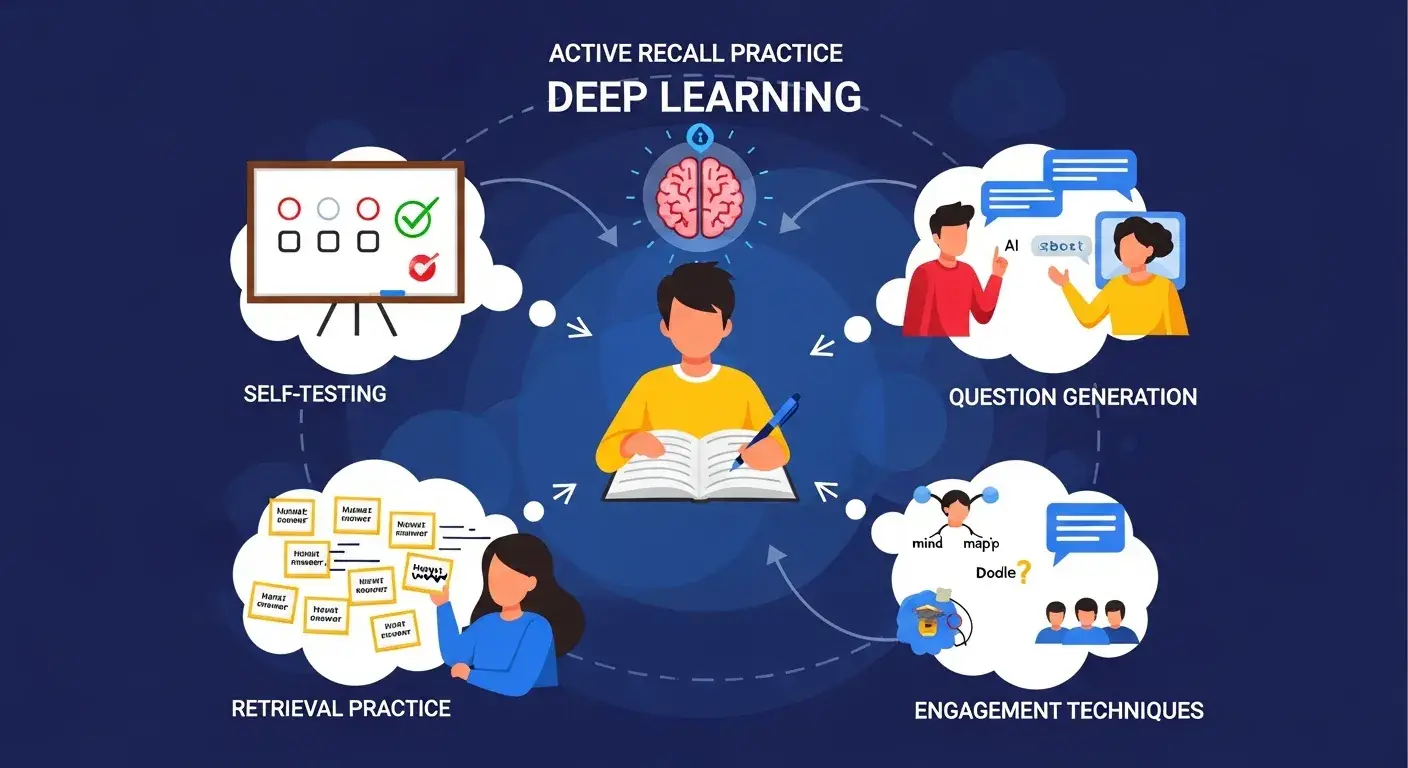
- Active recall: Instead of passively rereading, test yourself frequently. Flashcards, self-quizzing, or explaining concepts to others are effective methods.
- Spaced repetition: Review material at increasing intervals to strengthen memory retention.
- Metacognitive journaling: A unique approach involves keeping a journal specifically for your learning journey. Document what you're learning, how you're approaching it, what challenges you face, and what strategies work best for you. This helps identify patterns and optimize your personal learning style.
4. Leverage Diverse Learning Resources and Modalities
Don't limit yourself to traditional textbooks. The digital age offers an unprecedented array of learning opportunities.
- Online courses: Platforms like Coursera, edX, and Khan Academy offer structured learning paths.
- Books and articles: Both physical and digital formats provide in-depth knowledge.
- Podcasts and audiobooks: Excellent for learning on the go.
- Documentaries and educational videos: Visual learning can be highly engaging.
- Workshops and seminars: Offer interactive learning and networking opportunities.
- Mentorship and peer learning: Learning from experienced individuals or collaborating with peers can provide invaluable insights and different perspectives.
5. Embrace Experimentation and Feedback
Learning is an iterative process. Be willing to try new approaches and learn from the outcomes.
- Experiment with different techniques: Some learners thrive with visual aids, others with auditory or kinesthetic methods. Discover what works best for you.
- Seek feedback: Ask mentors, peers, or instructors for constructive criticism on your progress. A 2024 study on adult learning strategies, published by the Learning & Development Institute, emphasized the significant impact of timely and specific feedback on skill acquisition and motivation.
- Refine your approach: Based on feedback and self-reflection, adjust your learning strategies to optimize effectiveness.
Differentiated Value: AI-Powered Personalized Learning Paths
A cutting-edge trend in developing lifelong learning habits is the integration of Artificial Intelligence (AI) to create highly personalized learning experiences. Unlike traditional one-size-fits-all approaches, AI-powered platforms can:
- Assess individual strengths and weaknesses: Tailoring content to address specific knowledge gaps.
- Adapt learning pace: Allowing learners to progress at their optimal speed.
- Recommend relevant resources: Suggesting articles, videos, or courses based on past performance and interests.
- Provide instant feedback: Offering real-time guidance and corrections, accelerating the learning curve.
For example, a language learning app might use AI to identify specific pronunciation difficulties and generate custom exercises, or a coding platform could suggest projects aligned with a user's skill level and career aspirations. This personalized approach significantly enhances engagement and efficiency in the journey of continuous personal growth.
Overcoming Common Obstacles to Continuous Learning
Even with the best intentions, maintaining lifelong learning habits can be challenging.
- Lack of time: Prioritize learning by scheduling it, even in small increments.
- Lack of motivation: Reconnect with your "why" and celebrate small victories.
- Information overload: Focus on one or two key areas at a time to avoid feeling overwhelmed.
- Fear of failure: Remember that mistakes are part of the learning process.
FAQ: Developing Lifelong Learning Habits
Q1: How long does it typically take to establish a new learning habit?
A1: The time it takes to establish a new habit varies greatly among individuals, but research suggests it can range from 18 to 254 days, with an average of around 66 days for a habit to become automatic. Consistency is more important than intensity in the initial stages. Start small, be patient, and focus on showing up daily, even if it's just for a few minutes. Over time, these small actions compound into a robust lifelong learning habit.
Q2: What if I lose motivation to continue my learning journey?
A2: Losing motivation is a common experience. To regain momentum, revisit your initial "why" – the core reason you started learning. Break down your current learning goal into even smaller, more manageable steps to reduce overwhelm. Consider finding a learning buddy or joining a community for accountability and shared encouragement. Sometimes, taking a short break or switching to a different learning topic can also help refresh your enthusiasm and perspective.
Q3: How can I ensure the knowledge I gain through lifelong learning is retained?
A3: Effective knowledge retention relies on active engagement and strategic review. Implement metacognitive study techniques such as active recall (testing yourself), spaced repetition