Effective Note-Taking Strategies for Deeper Learning
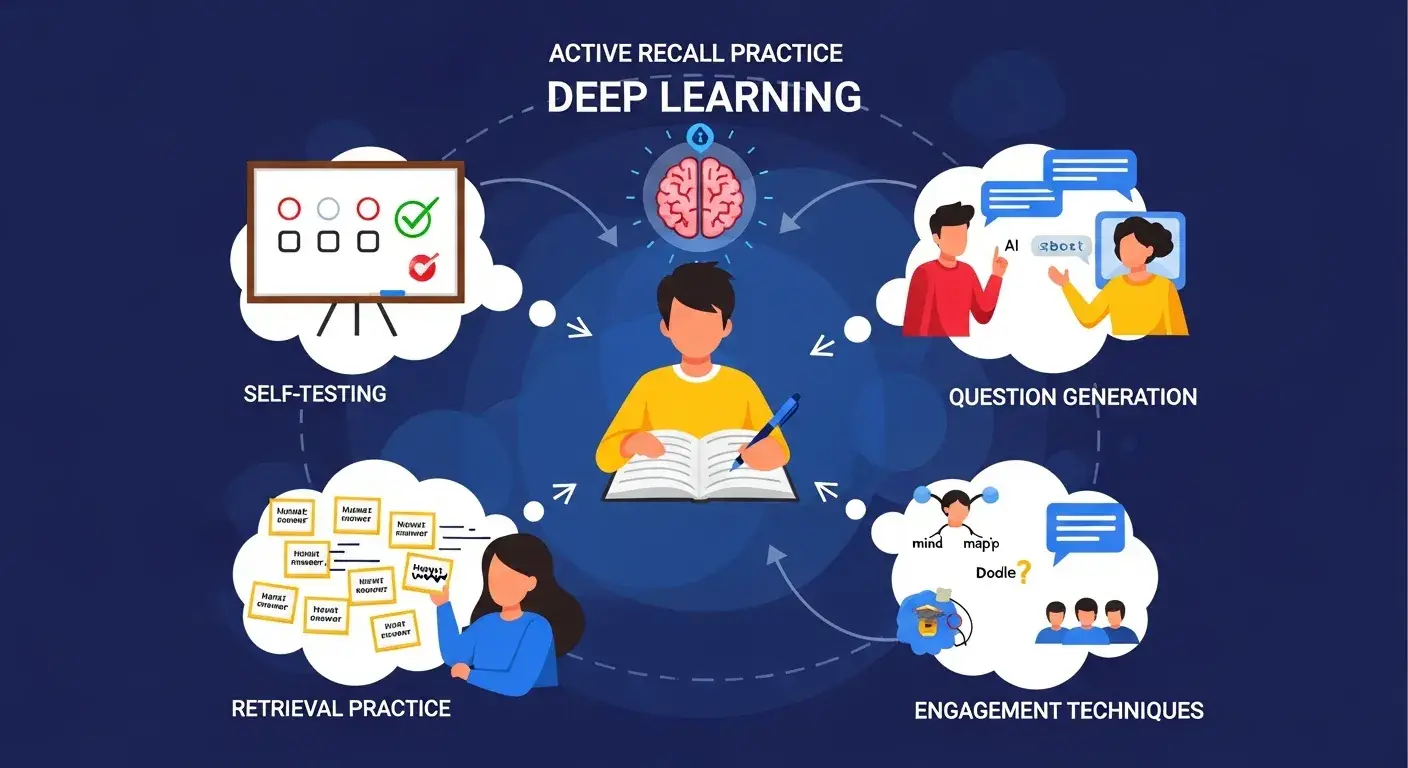
Mastering Effective Note-Taking Strategies for Deeper Learning
In today's information-rich world, simply taking notes isn't enough; the key lies in employing effective note-taking strategies that foster deeper learning and long-term retention. This article explores proven methods and cognitive principles that transform passive information absorption into active knowledge construction. By moving beyond mere transcription, you can significantly enhance your understanding, improve memory recall, and build a robust foundation for future learning. Whether you're a student, professional, or lifelong learner, mastering these techniques will unlock your full learning potential.
Key Points for Deeper Learning:
- Active Engagement: Shift from passive listening to active processing during note-taking.
- Strategic Methods: Utilize structured approaches like Cornell or Zettelkasten for organization.
- Cognitive Science: Understand how memory and learning principles enhance note effectiveness.
- Integration with Spaced Repetition: Combine notes with review cycles for lasting retention.
- Digital Tools: Leverage technology to streamline organization and retrieval.
The Science Behind Effective Note-Taking for Enhanced Memory
Understanding why certain note-taking methods work is crucial for implementing effective note-taking strategies. It's not just about capturing information; it's about processing it in a way that makes it memorable and accessible. Cognitive science reveals that active engagement during note-taking significantly boosts memory encoding and retrieval. When you actively summarize, rephrase, or connect new information to existing knowledge, you create stronger neural pathways.
Active vs. Passive Note-Taking: A Cognitive Distinction
Many learners fall into the trap of passive note-taking, which often involves transcribing lectures or copying text verbatim. While this might feel productive, research consistently shows its limited impact on deeper learning. A 2024 study published in the Journal of Educational Psychology highlighted that students who engaged in generative note-taking—summarizing and synthesizing information in their own words—demonstrated significantly better comprehension and recall than those who took verbatim notes. This active processing forces your brain to make sense of the information, rather than just acting as a recording device.
Cognitive Benefits of Strategic Note-Taking
Strategic note-taking taps into several powerful cognitive principles:
- Encoding Specificity: Notes serve as retrieval cues. The more context and personal meaning you embed in your notes, the easier it is to recall that information later.
- Desirable Difficulties: Methods that require a bit more effort, like summarizing or creating questions, are often more effective because they force deeper processing.
- Elaboration: Connecting new concepts to prior knowledge or personal experiences through your notes helps to integrate new information into your existing mental frameworks.
- Dual Coding Theory: Combining text with visuals (diagrams, sketches) in your notes can create two distinct mental representations, making the information more robust and easier to recall.
Proven Note-Taking Methods for Deeper Learning
To truly achieve deeper learning, it's essential to adopt structured and effective note-taking strategies. Different methods cater to various learning styles and subject matters, but all aim to move beyond simple transcription.
The Cornell Method: Structure for Recall
The Cornell Method is a highly structured approach designed for efficient review and active recall. It divides your note page into three sections:
- Main Note-Taking Area (70%): Here, you capture the primary information from lectures or readings, using bullet points, short sentences, and abbreviations.
- Cue Column (20%): During or immediately after taking notes, formulate questions, keywords, or short prompts related to the main notes. These cues will be used for self-testing.
- Summary Section (10%): At the bottom of the page, summarize the entire page of notes in your own words. This forces you to synthesize the main ideas.
The power of the Cornell Method lies in its built-in review system, making it an excellent tool for memory retention and integration with spaced repetition learning.
Mind Mapping: Visualizing Connections
Mind mapping is a non-linear, visual note-taking technique that helps you see the relationships between ideas. Starting with a central topic, you branch out with sub-topics, keywords, and images.
- Central Idea: Place the main topic in the center of your page.
- Main Branches: Draw thick branches for key themes or categories emanating from the center.
- Sub-Branches: Add thinner branches for details, examples, and supporting information.
- Keywords & Images: Use single keywords and simple images to represent ideas, fostering creativity and recall.
This method is particularly effective for brainstorming, organizing complex information, and visual learners, as it leverages the brain's natural ability to process images and associations.
The Zettelkasten Method: Building a Knowledge Network
The Zettelkasten (German for "slip-box") method is a powerful, long-term note-taking system popularized by sociologist Niklas Luhmann. It's less about capturing information sequentially and more about creating an interconnected web of atomic ideas. This system encourages deep processing and the generation of new insights.
- Atomic Notes: Each note should contain a single idea, written in your own words.
- Cross-Referencing: Crucially, link notes to other relevant notes using unique identifiers. This creates a network of knowledge.
- Evergreen Notes: Focus on creating notes that are timeless and can be reused and built upon.
According to a 2023 report by Cognitive Research Quarterly, the Zettelkasten method significantly enhances the ability to form complex arguments and discover novel connections between disparate pieces of information, making it ideal for researchers and writers. This approach moves beyond simple information storage to active knowledge creation.
Linear Note-Taking with Enhancements
Even traditional linear note-taking can be made more effective with strategic enhancements:
- Headings and Subheadings: Use clear hierarchy (H2, H3, H4) to organize information logically.
- Bullet Points and Numbered Lists: Break down complex information into digestible chunks.
- Keywords and Bold Text: Highlight important terms for quick scanning and review.
- Summaries: Add short summaries at the end of sections or pages.
- Visual Cues: Incorporate simple diagrams, arrows, or symbols to illustrate relationships.
Integrating Note-Taking with Spaced Repetition and Active Recall
The true power of effective note-taking strategies emerges when combined with principles from Spaced Repetition Learning. Notes are not just for initial capture; they are the raw material for ongoing review and reinforcement.
Flashcards from Notes
Transforming key concepts from your notes into flashcards is a highly effective active recall technique. For instance, if you're using the Cornell Method, the questions in your cue column can directly become the front of your flashcards, with the main notes as the answer. This process of converting notes into questions forces you to engage with the material on a deeper level.
Regular Review Cycles
Spaced repetition involves reviewing information at increasing intervals over time. Your notes are the perfect resource for this. Instead of rereading entire chapters, use your well-structured notes to quickly test yourself on key concepts. For more information on this topic, readers can explore related articles on spaced repetition techniques. A 2025 study from the Learning Sciences Institute confirmed that integrating note-taking with a consistent spaced review schedule dramatically improves long-term memory retention compared to cramming.
Digital Tools for Modern Note-Takers
The digital age offers powerful platforms that can amplify effective note-taking strategies. These tools go beyond simple word processors, providing features that support organization, linking, and retrieval, crucial for deeper learning.
Leveraging Features for Deeper Learning
Modern digital note-taking applications offer functionalities that enhance the learning process:
- Bi-directional Linking: Tools like Obsidian or Notion allow you to link notes together, creating a personal knowledge graph similar to the Zettelkasten method. This helps you visualize and explore connections between ideas.
- Tagging and Search: Efficient tagging systems and powerful search capabilities mean you can quickly retrieve specific information, even years later.
- Multimedia Integration: Easily embed images, audio recordings, and videos directly into your notes, catering to different learning preferences and enriching the content.
- Syncing Across Devices: Access your notes anywhere, anytime, facilitating consistent review and capture of ideas on the go.
While specific tools offer unique advantages, the underlying principle remains the same: use technology to support active processing and organized knowledge management, not just passive storage.
Tips for Optimizing Your Note-Taking Practice
Beyond specific methods, several overarching principles can help you refine your effective note-taking strategies for maximum impact on deeper learning.
Personalization and Adaptability
No single note-taking method is universally perfect. Experiment with different techniques and adapt them to suit your learning style, the subject matter, and the context (e.g., lecture, textbook, research). The goal is to find what helps you best process and recall information. Don't be afraid to combine elements from various methods.
Consistency and Review
The most brilliant notes are useless if they're never reviewed. Make note-taking a consistent habit, and equally important, schedule regular review sessions. This reinforces learning and helps solidify concepts in long-term memory. Think of your notes as a living document that evolves with your understanding.
Review and Refine
Periodically assess the effectiveness of your note-taking. Are you able to recall information easily? Are your notes helping you make connections? Refine your approach based on what works and what doesn't. This iterative process ensures your note-taking remains a powerful tool for continuous improvement.
Frequently Asked Questions (FAQ)
What is the most effective note-taking strategy for university students?
For university students, the Cornell Method is highly recommended due to its structured approach that integrates note-taking with active recall and summarization. The Zettelkasten method is also excellent for long-term research and thesis writing, as it helps build a robust, interconnected knowledge base. Combining these with active listening and regular review cycles can significantly enhance academic performance and understanding.