Effective Note-Taking Strategies for Enhanced Learning and Recall
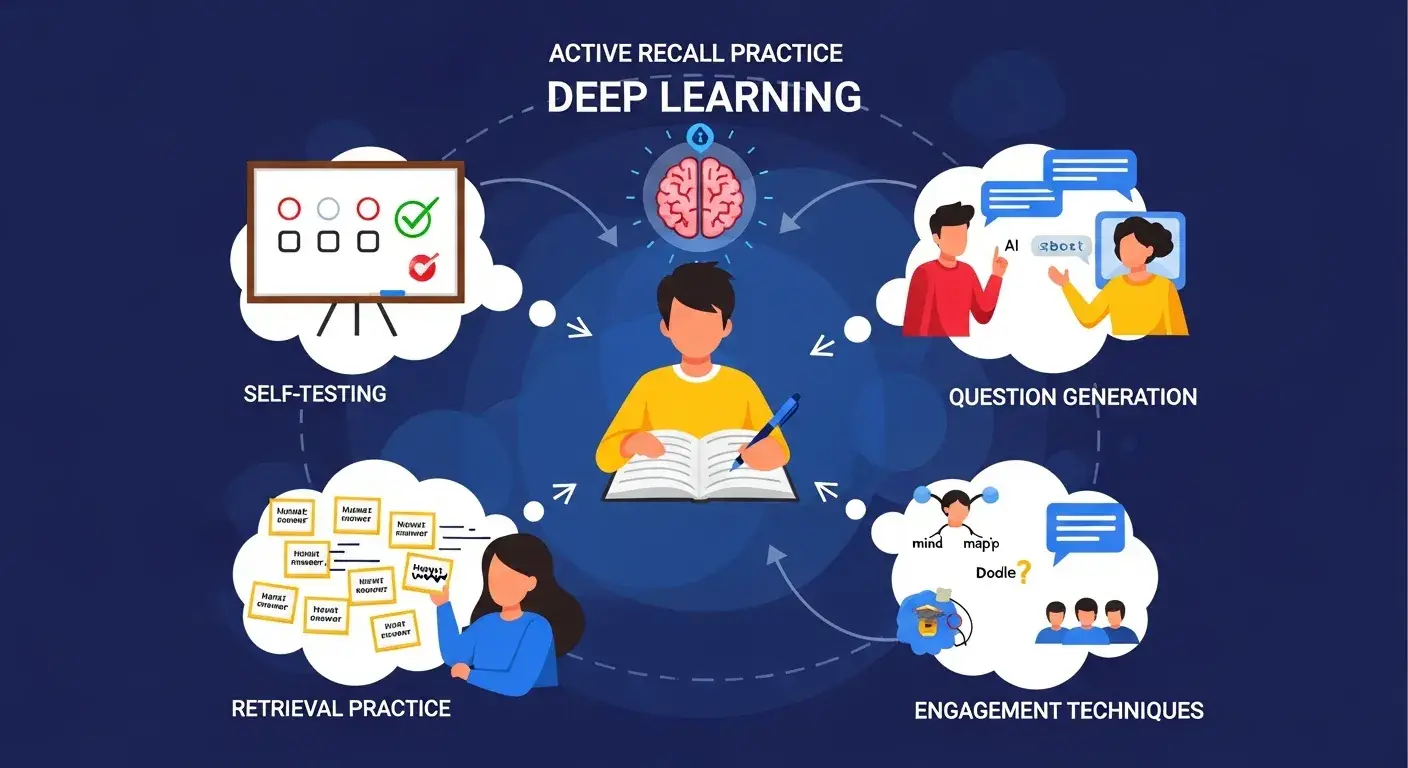
Effective Note-Taking Strategies for Enhanced Learning and Recall
In today's information-rich world, the ability to effectively capture, organize, and recall information is more crucial than ever. Effective note-taking strategies are not just about transcribing lectures or readings; they are powerful tools for active learning, critical thinking, and long-term memory retention. This article delves into various proven methods and modern approaches that can transform your note-taking from a passive chore into a dynamic learning asset, significantly enhancing your understanding and recall abilities. Whether you're a student, a professional, or a lifelong learner, mastering these techniques will equip you with the skills to process complex information, consolidate knowledge, and ultimately achieve superior learning outcomes.
Key Points for Enhanced Learning and Recall
- Active Engagement: Transform passive listening into active learning through strategic note-taking.
- Method Selection: Choose the best note-taking method for different learning contexts and content types.
- Cognitive Principles: Leverage insights from cognitive science to optimize memory and understanding.
- Digital Integration: Utilize modern tools to enhance organization, searchability, and review processes.
- Review & Spaced Repetition: Integrate notes with spaced repetition for robust long-term recall.
Optimizing Note-Taking for Enhanced Learning Outcomes
The primary goal of note-taking should always be to facilitate learning and recall, not merely to record information. When notes are taken strategically, they become a powerful aid in processing new concepts, identifying key ideas, and creating mental frameworks. This section explores foundational principles and popular methods that contribute to effective note-taking strategies for enhanced learning and recall.
The Science Behind Effective Note-Taking
Understanding why certain note-taking methods work can significantly improve their application. Cognitive science research highlights several principles:
- Encoding Specificity: The more cues you create during learning (e.g., through detailed notes), the easier it is to retrieve that information later.
- Desirable Difficulty: Methods that require more mental effort during note-taking, such as summarizing in your own words rather than verbatim transcription, lead to better long-term retention.
- The Testing Effect (Active Recall): Using your notes to quiz yourself is one of the most potent ways to solidify memory. This is why methods that facilitate self-testing are so effective.
A study published in Psychological Science in 2014 by Mueller and Oppenheimer demonstrated that students who took notes by hand performed better on conceptual questions than those who typed notes, suggesting that the act of processing and summarizing information manually leads to deeper encoding. While digital tools have evolved since then, the underlying principle of active processing remains paramount.
Popular Note-Taking Methods and Their Applications
Choosing the right method depends on the context and your personal learning style. Here are some highly effective approaches:
The Cornell Note-Taking System
The Cornell method divides your page into three sections: a main note-taking area, a smaller cue/question column, and a summary section at the bottom. This structure inherently promotes active recall and summarization.
- During Lecture/Reading: Take main notes in the largest section, focusing on key ideas and details.
- After Lecture/Reading: Formulate questions or keywords in the cue column that prompt recall of the main notes.
- Review: Cover the main notes and try to answer the questions in the cue column. Summarize the entire page in the bottom section.
This system is particularly effective for subjects requiring deep comprehension and for preparing for exams, as it builds in review and active recall from the start.
Mind Mapping for Conceptual Understanding
Mind mapping is a visual note-taking technique that organizes information hierarchically around a central topic. It's excellent for brainstorming, organizing complex ideas, and seeing connections between different concepts.
- Central Idea: Start with the main topic in the center of your page.
- Branches: Draw main branches for sub-topics, using keywords and images.
- Sub-Branches: Extend further branches for details, examples, and related ideas.
Mind maps are ideal for visual learners and for subjects where understanding relationships and structures is key, such as history, science, or project planning. They help reduce cognitive load by presenting information in an easily digestible format.
The Outline Method for Structured Information
The outline method uses headings and bullet points to organize information in a logical, hierarchical structure. It's straightforward and effective for subjects with clear structures, like lectures or textbooks.
- Main Topics: Use Roman numerals or major headings for primary subjects.
- Sub-Topics: Indent and use capital letters for secondary ideas.
- Details: Further indent with numbers or bullet points for specific facts and examples.
This method encourages you to identify the main points and supporting details, making it excellent for organizing large amounts of information and for subjects that follow a linear progression.
The Sketchnoting Approach for Creative Learners
Sketchnoting combines drawings, symbols, handwritten notes, and visual elements to capture information. It engages both sides of the brain, enhancing creativity and memory.
- Visual Cues: Incorporate doodles, icons, and diagrams alongside text.
- Typography: Vary font sizes and styles to emphasize key points.
- Layout: Experiment with different layouts to represent relationships and flow.
Sketchnoting is particularly beneficial for creative individuals and for subjects that lend themselves to visual representation, helping to make abstract concepts more concrete and memorable.
Integrating Modern Tools and Cognitive Principles
Beyond traditional methods, modern learning incorporates digital tools and deeper cognitive insights to further enhance note-taking. This provides differentiated value by moving beyond mere method descriptions to explain how to optimize the process for today's learner.
Leveraging Digital Note-Taking Tools
Digital tools offer unparalleled flexibility, searchability, and integration capabilities. Platforms like Notion, Obsidian, Evernote, and OneNote allow for:
- Easy Organization: Tagging, linking, and hierarchical folders make information retrieval effortless.
- Multimedia Integration: Embed images, audio, video, and web links directly into your notes.
- Searchability: Quickly find specific information across thousands of notes.
- Collaboration: Share and co-edit notes with peers or study groups.
While the manual processing benefit of handwriting is acknowledged, digital tools, when used mindfully (e.g., summarizing rather than copying, creating internal links for conceptual connections), can significantly boost learning efficiency and long-term retention, especially when paired with review systems. For instance, using a digital tool to create flashcards directly from your notes for spaced repetition can be incredibly powerful.
The Role of Active Recall and Spaced Repetition
The true power of note-taking is unlocked when combined with active recall and spaced repetition. Your notes become the raw material for these highly effective learning strategies.
- Active Recall: Instead of passively re-reading notes, actively test yourself. Turn headings into questions, create flashcards from key terms, or try to explain concepts aloud without looking at your notes. This process strengthens neural pathways and identifies knowledge gaps.
- Spaced Repetition: Reviewing information at increasing intervals over time is scientifically proven to move information from short-term to long-term memory. Your well-structured notes provide the perfect content for a spaced repetition system, whether it's a simple calendar reminder or a dedicated app like Anki.
A meta-analysis published in Review of Educational Research in 2013 by Dunlosky et al. highlighted that practice testing (active recall) and distributed practice (spaced repetition) are among the most effective learning techniques available to students. By integrating these into your note-taking workflow, you transform your notes into a dynamic learning system.
Differentiated Insight: The "Second Brain" Approach
A unique approach gaining traction is building a "Second Brain" – a personalized, external knowledge management system. This goes beyond simple note-taking by creating a interconnected web of your knowledge, ideas, and resources. It emphasizes:
- Capture: Consistently record everything that resonates with you.
- Organize: Structure your notes in a way that makes sense to you, often using a P.A.R.A. (Projects, Areas, Resources, Archives) framework.
- Distill: Summarize and highlight the most important parts of your notes.
- Express: Use your notes to create new content, solve problems, or make decisions.
This method, popularized by Tiago Forte, transforms notes into an active repository for thinking and creating, not just storing. It's particularly relevant for professionals and researchers who manage vast amounts of information and need to synthesize it for new outputs.
Frequently Asked Questions About Note-Taking
Q1: What is the single most important tip for effective note-taking?
The most crucial tip for effective note-taking is to engage actively with the material rather than passively transcribing it. This means summarizing in your own words, asking questions, drawing connections, and identifying key concepts. Active processing during note-taking significantly enhances comprehension and memory retention, making your notes a true learning tool rather than just a record.
Q2: How can I improve my recall using my notes?
To improve recall, integrate active recall and spaced repetition into your review process. Don't just re-read your notes; instead, quiz yourself using the questions you've created, try to explain concepts from memory, or convert key points into flashcards. Review these notes at increasing intervals over time to solidify them in your long-term memory.
Q3: Are digital or handwritten notes better for learning?
Both digital and handwritten notes have their merits. Handwritten notes often promote deeper processing due to the slower pace and the need for summarization, which can lead to better conceptual understanding. Digital notes offer superior organization, searchability, and integration with other tools. The "better" method depends on the context and individual preference, but the key is how you take notes, not just the medium.
Q4: How often should I review my notes for optimal retention?
For optimal retention, you should review your notes using a spaced repetition schedule. An initial review shortly after taking notes (within 24 hours) is critical. Subsequent reviews can be spaced out over days, then weeks, and then months. Tools like Anki or even a simple calendar can help manage this schedule, ensuring information is revisited just as you're about to forget it.
Conclusion: Transform Your Learning with Strategic Note-Taking
Mastering effective note-taking strategies for enhanced learning and recall is a fundamental skill that empowers you to take control of your educational journey. By moving beyond passive transcription and embracing active engagement, strategic method selection, and the power of cognitive science, your notes become much more than just records—they become catalysts for deeper understanding and robust memory.
We encourage you to experiment with the methods discussed, integrate them with active recall and spaced repetition, and explore modern digital tools to find what works best for your unique learning style. Start applying these techniques today and witness a significant improvement in your ability to learn, remember, and apply knowledge.
For more insights into optimizing your study habits, readers can explore related articles on spaced repetition techniques and memory enhancement. We'd love to hear about your favorite note-taking strategies in the comments below! Share your experiences and tips with our community.
Extended Reading Suggestions
- Memory Enhancement Techniques: Delve deeper into the science of memory and practical techniques to boost recall.
- Advanced Spaced Repetition Workflows: Explore how to integrate sophisticated spaced repetition systems into your daily learning.
- The Future of AI in Learning: Understand how artificial intelligence might further revolutionize note-taking and knowledge management.