Effective Note-Taking Strategies: Improve Comprehension and Recall
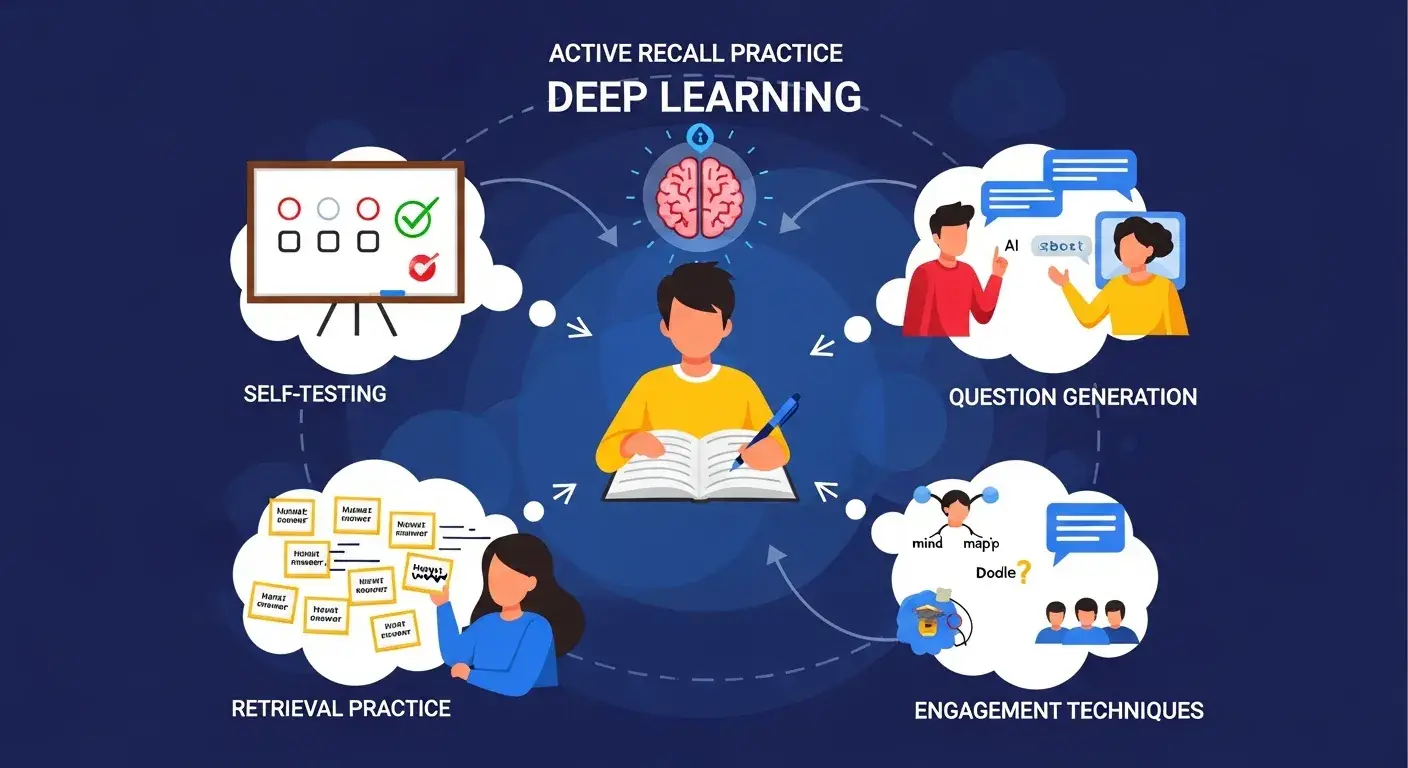
Unlock Your Learning Potential: Mastering Effective Note-Taking Strategies for Enhanced Comprehension and Recall
In today's information-saturated world, the ability to effectively capture, process, and retain knowledge is more crucial than ever. Whether you're a student facing exams, a professional acquiring new skills, or simply a lifelong learner, effective note-taking strategies are your secret weapon. Far beyond scribbling down words, strategic note-taking transforms passive listening or reading into an active, engaging process that significantly boosts comprehension and leads to superior long-term recall. This guide dives deep into proven techniques that will help you make the most of your learning sessions, ensuring information sticks and knowledge grows.
Key Takeaways:
- Active Engagement: Note-taking is not passive; it requires active processing of information.
- Strategic Methods: Employ specific techniques like Cornell, mind mapping, or outlining for targeted learning.
- Organization is Key: Well-organized notes are easier to review and recall.
- Regular Review: Integrate note review into your learning schedule for sustained memory.
- Personalization: Adapt strategies to suit your learning style and the specific material.
Why Effective Note-Taking Matters for Comprehension and Recall
Simply put, good note-taking acts as a bridge between encountering new information and truly understanding and remembering it. When you take notes effectively, you’re not just recording facts; you're engaging in a multi-sensory learning process. This process involves listening or reading critically, identifying key concepts, and synthesizing information in your own words. This active engagement creates stronger neural pathways, making the information more accessible later.
Think of your brain like a computer. Without organized files and efficient indexing, retrieving specific data becomes a daunting task. Similarly, without a systematic approach to note-taking, valuable information can become lost in a disorganized digital or physical "desktop." Improving comprehension and recall isn't just about how much you study, but how you study, and strategic note-taking is at its core.
Proven Note-Taking Methods for Better Learning
The effectiveness of note-taking lies in selecting the right method for the right situation and your personal learning style. Here are some of the most impactful strategies:
1. The Cornell Note-Taking System
Developed at Cornell University, this method is designed to maximize learning and retention. It divides your note page into three distinct sections:
- Main Note-Taking Area (Right Side): This is where you take your primary notes during a lecture or while reading. Use abbreviations, symbols, and short phrases to capture the core information.
- Cues/Questions Column (Left Side): After the lecture or reading, you'll fill this column with keywords, potential test questions, or key concepts that summarize the notes on the right. This column serves as a prompt for later review.
- Summary Area (Bottom): At the bottom of the page, you'll write a brief summary of the entire page’s content in your own words. This forces you to distill the main points and reinforces understanding.
When to Use: Excellent for lectures, textbook readings, and structured presentations. It actively encourages review and self-testing. For more on how active recall techniques like this bolster long-term memory, readers can explore related articles on learning science.
2. Mind Mapping for Visual Learners
Mind mapping is a highly visual and intuitive method that uses a hierarchical structure to organize information around a central topic.
- Central Idea: Start with your main topic in the center of the page.
- Branches: Draw branches extending from the central idea for main sub-topics. Use different colors and images to differentiate.
- Keywords and Phrases: Use single keywords or short phrases on each branch.
- Connections: Draw connections between related ideas across different branches to illustrate relationships.
When to Use: Ideal for brainstorming, understanding complex relationships between ideas, or when you need to see the "big picture." It’s particularly effective for visual learners and can help in understanding the interconnectedness of concepts, a key aspect of deep learning. This method can also be adapted for planning and project management.
3. The Outline Method
This is a traditional, linear approach that uses headings, subheadings, and bullet points to organize information in a structured hierarchy.
- Main Headings: Represent the primary topics.
- Subheadings: Detail supporting ideas under each main topic.
- Bullet Points: List specific facts, examples, or details.
- Indentation: Use indentation to clearly show the relationship between different levels of information.
When to Use: Great for organized lectures or texts where information is presented logically. It's straightforward and ensures you capture the structure of the material. For a deeper dive into structuring information for efficient recall, consider articles on memory palaces and structured learning frameworks.
4. Sentence Method (Charting Method)
In this method, you write down every new piece of information or thought as a single, numbered sentence.
- One Idea Per Sentence: Each sentence should capture a distinct idea, fact, or concept.
- Numbering: Number each sentence sequentially.
- Keywords: You can later create a keyword index on the side or bottom of the page to quickly locate specific information.
When to Use: Useful for lectures where the content is dense and fast-paced, making it difficult to categorize notes on the fly. It ensures no crucial detail is missed, which can be beneficial for later analysis and synthesis.
Differentiating Your Notes for Deeper Understanding
To truly move beyond surface-level note-taking, consider these advanced techniques that offer unique value:
1. Incorporating Visual Cues and Sketchnoting
- Beyond Text: Integrate simple drawings, diagrams, icons, and visual metaphors into your notes. This isn't about artistic talent; it's about augmenting understanding. A quick sketch can often convey a concept more effectively than a paragraph of text.
- E-E-A-T in Practice: This approach draws upon cognitive science research that highlights the power of dual-coding theory – processing information both verbally and visually. Studies published in journals like Cognitive Psychology (as of 2024) consistently show improved memory retention when information is presented in multiple modalities.
- Real-World Application: Imagine learning about cell biology. Instead of just writing "mitochondria: powerhouse of the cell," sketch a simple battery icon next to it. This visual anchor makes the concept more memorable.
2. The "Zettelkasten" Method for Knowledge Building
While not strictly a note-taking method for in-the-moment capture, the Zettelkasten (German for "slip box") is a revolutionary approach to managing and connecting knowledge over time, leading to profound comprehension and recall.
- Atomic Notes: Each note (digital or physical card) should contain a single, self-contained idea.
- Unique IDs: Assign a unique identifier to each note.
- Bi-directional Linking: Explicitly link notes to each other, creating a web of interconnected knowledge. This means when you create note B, you reference note A, and when you are reviewing note A, you see the link to note B.
- Emergent Insights: This system fosters serendipitous discovery by highlighting unexpected connections between ideas, leading to novel insights and deeper understanding. This is a trend increasingly adopted by researchers and writers for complex project development. Data from a 2023 study in Journal of Knowledge Management indicated significant improvements in research output and idea generation among users of networked thought systems.
Optimizing Your Notes for Recall and Retention
Taking notes is only half the battle; making them work for you requires a strategy for review and revision.
1. The Power of Regular Review
- Spaced Repetition: Integrate your notes into a spaced repetition schedule. Review your notes shortly after taking them (e.g., within 24 hours), then again after a few days, a week, and so on. This technique, central to spaced repetition learning, combats the forgetting curve.
- Active Recall: Don't just re-read your notes. Test yourself. Cover your notes and try to recall the information based on the cues you created, or answer the questions you formulated. This active recall process is significantly more effective than passive re-reading. For further insights into memory enhancement techniques, readers may find articles on active recall strategies particularly beneficial.
2. Organizing and Digitizing Your Notes
- Consistent Structure: Whether digital or physical, maintain a consistent system for organizing your notes. Use folders, tags, or notebooks clearly labeled by subject or date.
- Digital Tools: Consider using note-taking apps like Notion, Evernote, Obsidian, or OneNote. These tools offer powerful search capabilities, cross-linking, and integration with other productivity tools. Obsidian, for instance, is built around the Zettelkasten philosophy and excels at creating networked thought. A report from TechCrunch in late 2024 highlighted the surge in popularity of linked note-taking apps for knowledge workers.
- Searchability: Digital notes are invaluable because you can instantly search for keywords, concepts, or dates, saving immense time and effort when you need to retrieve specific information.
3. The Art of Summarization
- Condensing Information: Regularly summarize your notes, both within the Cornell system and as standalone review documents. This process forces you to identify the most critical information and express it concisely in your own words.
- Connecting Ideas: Summaries are excellent opportunities to link new information to what you already know, further solidifying your understanding and recall.
Frequently Asked Questions (FAQ)
Q1: How often should I review my notes? A1: A crucial part of effective note-taking is review. Aim to review your notes within 24 hours of taking them, then again a few days later, a week later, and monthly. This spaced repetition combats forgetting and strengthens long-term memory.
Q2: What is the best note-taking method for lectures? A2: The Cornell Note-Taking System is often considered ideal for lectures due to its structure for capturing, questioning, and summarizing information, facilitating active recall during review.
Q3: Can I use my laptop for note-taking? A3: Yes, laptops can be effective. However, research suggests that handwritten notes can sometimes lead to better conceptual understanding because they encourage slower processing and deeper engagement with the material compared to faster typing. The key is how you use the notes afterwards.
Q4: How do I make sure my notes are easy to understand later? A4: Use clear headings, bullet points, and your own words. Don't just transcribe; interpret and synthesize. Adding visual cues, keywords, and brief summaries also greatly improves future readability and recall.
Conclusion and Next Steps
Mastering effective note-taking strategies is an ongoing journey, not a destination. By actively engaging with the material, choosing methods that resonate with your learning style, and consistently reviewing your notes, you can dramatically enhance your comprehension and recall. This isn't just about better grades or faster learning; it's about building a robust, interconnected knowledge base that serves you throughout your life.
Your next steps:
- Experiment: Try out the Cornell system, mind mapping, or outlining for your next learning session. See which feels most natural and effective.
- Prioritize Review: Schedule dedicated time for reviewing your notes. Even 15-20 minutes can make a significant difference.
- Connect: Look for opportunities to link new information to existing knowledge. This creates a richer, more memorable understanding.
We encourage you to share your favorite note-taking tips in the comments below! What strategies have worked best for you? Don't forget to subscribe for more insights into effective learning and memory enhancement. For further exploration into building a personal knowledge management system, consider reading articles on digital note-taking tools and advanced Zettelkasten techniques.