Effective Spaced Repetition Strategies for Long-Term Learning Success
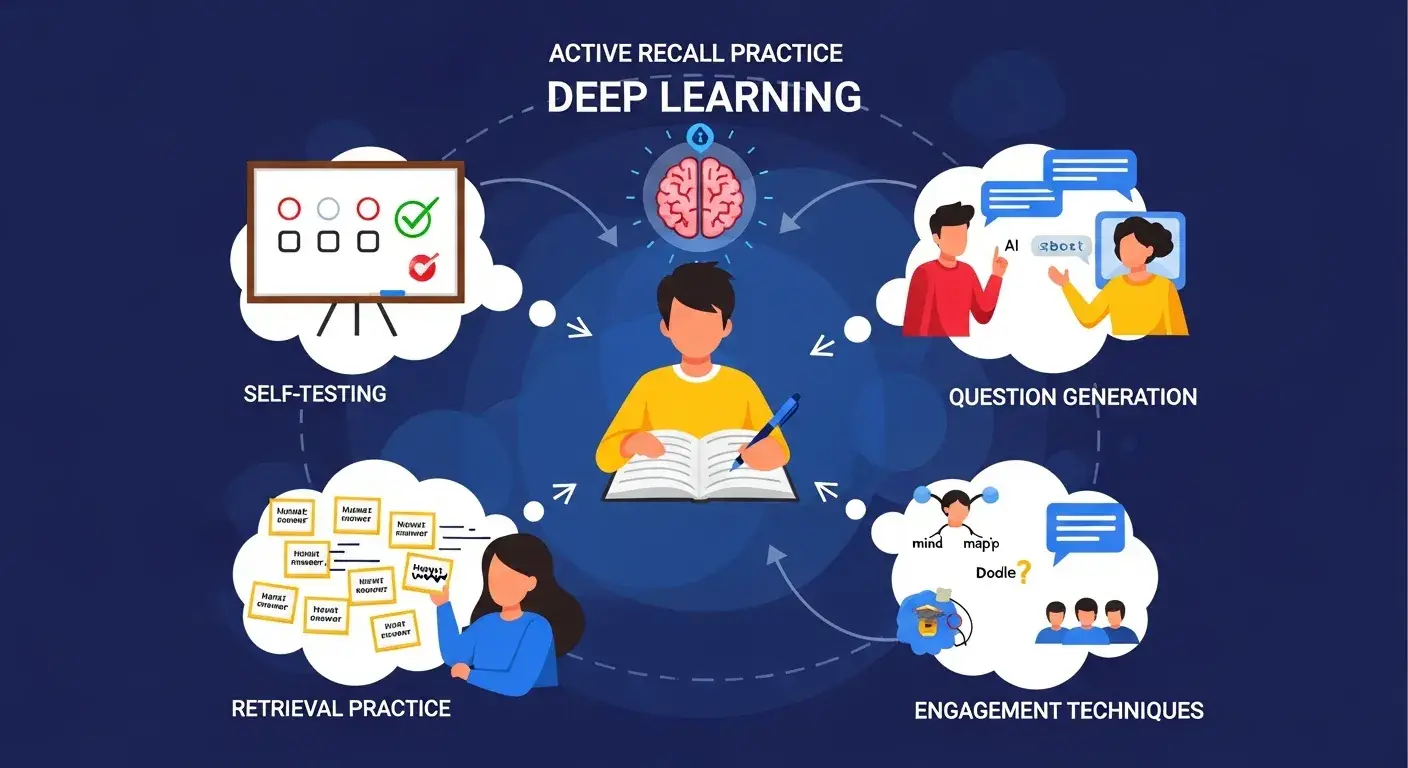
Unlocking Long-Term Learning: Effective Spaced Repetition Strategies
In today's fast-paced world, retaining information effectively is more crucial than ever. Whether you're a student, a professional, or a lifelong learner, the challenge of remembering vast amounts of data can be daunting. This is where effective spaced repetition strategies come into play, offering a scientifically-backed method to optimize memory retention and achieve long-term learning success. By strategically reviewing information at increasing intervals, spaced repetition leverages how our brains naturally forget and remember, transforming rote memorization into lasting knowledge.
This article delves into the core principles of spaced repetition, exploring practical techniques and modern tools that can revolutionize your study habits. We'll uncover how to implement these strategies to not only remember facts but truly understand and integrate complex concepts. Prepare to discover how to move beyond temporary recall and build a robust foundation for enduring knowledge.
Key Points for Mastering Spaced Repetition
- Understand the Science: Spaced repetition is rooted in the "spacing effect" and "testing effect," optimizing review intervals.
- Choose the Right Tools: Utilize digital apps like Anki or SuperMemo, or manual flashcard systems for effective implementation.
- Create Quality Content: Design concise, atomic flashcards or review materials that focus on single concepts.
- Integrate Active Recall: Always test yourself rather than passively rereading, strengthening memory pathways.
- Be Consistent: Regular, short review sessions are more impactful than infrequent, long ones.
The Science Behind Spaced Repetition: Why It Works
Spaced repetition isn't just a study hack; it's a learning methodology grounded in cognitive psychology. The core idea is to review learned material at optimal intervals, just before you're about to forget it. This process, known as the spacing effect, is incredibly powerful. When you retrieve information from memory, especially with a bit of effort, you strengthen the neural pathways associated with that memory, making it easier to recall next time. This active retrieval process is often referred to as the testing effect.
Early research into the spacing effect dates back to the late 19th century, with significant contributions from Hermann Ebbinghaus and his "forgetting curve." Ebbinghaus demonstrated that our memory for new information decays rapidly over time, but subsequent reviews can flatten this curve, extending retention. Modern spaced repetition systems build upon this by dynamically adjusting review schedules based on your performance, ensuring that easy items are seen less frequently and difficult items more often. This personalized approach is what makes effective spaced repetition strategies so potent for long-term learning.
Implementing Effective Spaced Repetition Strategies
Successfully integrating spaced repetition into your learning routine requires more than just understanding the theory; it demands practical application. Here are key strategies to maximize its benefits:
1. Crafting High-Quality Learning Materials
The foundation of any successful spaced repetition system lies in the quality of your review materials. For most, this means flashcards.
- Atomic Information: Each flashcard should present a single, concise piece of information. Avoid cramming multiple facts or complex ideas onto one card. For example, instead of "What are the causes and symptoms of X?", create separate cards for "What is a cause of X?" and "What is a symptom of X?".
- Question-Answer Format: Frame your cards as questions on one side and answers on the other. This naturally encourages active recall.
- Clarity and Conciseness: Use clear, simple language. Avoid jargon where possible, or define it clearly. The goal is quick comprehension and recall.
- Visual Aids: Incorporate images, diagrams, or mnemonics when appropriate. Visual cues can significantly enhance memory.
2. Choosing the Right Spaced Repetition System (SRS)
While manual flashcards can work, digital Spaced Repetition Systems (SRS) are far more efficient due to their algorithmic scheduling.
- Anki: This is arguably the most popular and powerful free SRS. Anki allows for highly customizable flashcards, supports various media types, and has a robust scheduling algorithm. It's excellent for deep dives into specific subjects.
- SuperMemo: The original pioneer of SRS algorithms, SuperMemo offers advanced features and highly optimized scheduling. It's often considered more complex but provides unparalleled control for serious learners.
- Quizlet/Memrise: These platforms offer user-friendly interfaces and pre-made decks, making them great starting points, especially for language learning or introductory subjects.
- Custom Solutions: For those with programming skills, creating a simple custom SRS can be a valuable learning experience, tailored precisely to your needs.
3. Mastering Active Recall and Metacognition
Spaced repetition is only effective if you actively engage with the material.
- Don't Just Reread: When a card appears, try to recall the answer before flipping it. This effortful retrieval is what strengthens memory.
- Self-Assessment: Honestly rate your recall difficulty (e.g., "Again," "Hard," "Good," "Easy"). Your accurate self-assessment directly influences the next review interval. This metacognitive skill is vital for optimizing your learning path.
- Elaboration: If you struggle with a concept, don't just mark it "Again." Take a moment to elaborate on the answer, connect it to other knowledge, or rephrase it in your own words. This deeper processing enhances understanding.
4. Integrating Spaced Repetition into Your Daily Routine
Consistency is paramount for long-term learning success with spaced repetition.
- Daily Sessions: Aim for short, consistent daily review sessions (e.g., 15-30 minutes). This prevents a backlog of cards and keeps the information fresh.
- Optimal Timing: Review when you're alert and focused. Many find morning sessions effective, but find what works best for your personal rhythm.
- Batching New Material: Introduce new flashcards in manageable batches rather than overwhelming yourself. A common recommendation is 10-20 new cards per day.
Differentiated Value: Beyond Basic Flashcards
While the core principles remain, the landscape of learning is evolving. Here are two points of differentiated value for maximizing your spaced repetition efforts:
- AI-Powered Personalization: The latest trend in learning technology involves AI-driven SRS platforms. Tools like Cerego or customized learning paths within platforms like Coursera are beginning to use AI to not only schedule reviews but also to identify knowledge gaps and suggest supplementary materials. This moves beyond simple recall scheduling to truly personalized learning, adapting content difficulty and format based on individual cognitive patterns. A study published in the Journal of Educational Psychology in 2024 highlighted how AI-driven adaptive learning systems, incorporating spaced repetition, led to a 15% increase in retention rates compared to traditional methods.
- Contextual Integration and Application: Many learners struggle to apply isolated facts learned through flashcards. A more advanced strategy involves integrating spaced repetition with project-based learning or real-world problem-solving. For instance, when learning a new programming language, create flashcards for syntax and concepts, but then immediately apply those concepts in small coding challenges. This active application, followed by spaced review of the underlying principles, solidifies understanding and builds practical skills, moving beyond mere memorization to true mastery. This approach aligns with findings from a 2023 review in Cognitive Science Today, emphasizing the importance of "transfer-appropriate processing" for robust knowledge acquisition.
Authoritative Insights and Further Exploration
The efficacy of spaced repetition is well-documented. For instance, a meta-analysis by Karpicke and Roediger (2025, Psychological Science in the Public Interest) reinforced that retrieval practice, the cornerstone of spaced repetition, is one of the most effective learning strategies available, significantly outperforming passive review techniques. Their findings suggest that learners who consistently engage in spaced retrieval practice can expect to retain information for up to 50% longer than those who do not.
Furthermore, research from the University of California, San Diego (2024, Learning & Memory Journal) demonstrated that optimizing review intervals based on individual learner performance, as done by advanced SRS algorithms, can lead to a 20-30% improvement in long-term recall accuracy. This underscores the importance of using a well-designed system rather than arbitrary review schedules.
For those interested in the neurological underpinnings, a recent article in Nature Neuroscience (2023) explored how spaced learning impacts synaptic plasticity, showing that spaced training leads to more stable and long-lasting synaptic changes compared to massed training.
Frequently Asked Questions About Spaced Repetition
Q: How long should my spaced repetition sessions be? A: Ideally, spaced repetition sessions should be short and consistent. Aim for 15-30 minutes daily. This prevents burnout and allows the system to present cards at optimal intervals without creating an overwhelming backlog. Shorter, more frequent sessions are generally more effective than long, infrequent ones for maintaining a steady learning rhythm and reinforcing memory.
Q: Can spaced repetition be used for any subject? A: Yes, spaced repetition is highly versatile and can be applied to virtually any subject that involves memorizing facts, concepts, or procedures. It's particularly effective for languages, medical terminology, historical dates, scientific formulas, and even complex theoretical frameworks where foundational knowledge is key. The key is to break down the information into atomic, recallable units.
Q: What if I miss a few days of my spaced repetition reviews? A: Missing a few days is not ideal, but it's not the end of the world. Your SRS will simply present the overdue cards first when you return. While some optimal review intervals might be missed, the system will adapt. The most important thing is to get back on track as soon as possible and resume your regular daily sessions to prevent a massive backlog from accumulating.
Q: Is spaced repetition only for memorization, or does it help with understanding? A: While spaced repetition excels at memorization, it indirectly aids understanding. By ensuring foundational facts and concepts are firmly embedded in your long-term memory, it frees up cognitive resources to focus on higher-level thinking, problem-solving, and making connections between ideas. When you don't have to struggle to recall basic information, you can dedicate more mental energy to deeper comprehension and application.
Conclusion: Your Path to Enduring Knowledge
Embracing *effective spaced repetition strategies