Effective Spaced Repetition Techniques for Long-Term Knowledge
Effective Spaced Repetition Techniques for Long-Term Knowledge
In an era of information overload, the ability to not just acquire but retain knowledge is more valuable than ever. Spaced repetition stands out as a scientifically-backed learning strategy designed to optimize memory retention and ensure long-term knowledge. By strategically reviewing information at increasing intervals, learners can combat the natural forgetting curve, making their study sessions significantly more efficient and impactful. This article delves into the core principles and effective spaced repetition techniques for long-term knowledge, offering practical strategies to integrate this powerful method into your learning routine.
Key Points for Mastering Spaced Repetition:
- Understand the Forgetting Curve: Recognize how memory naturally decays over time.
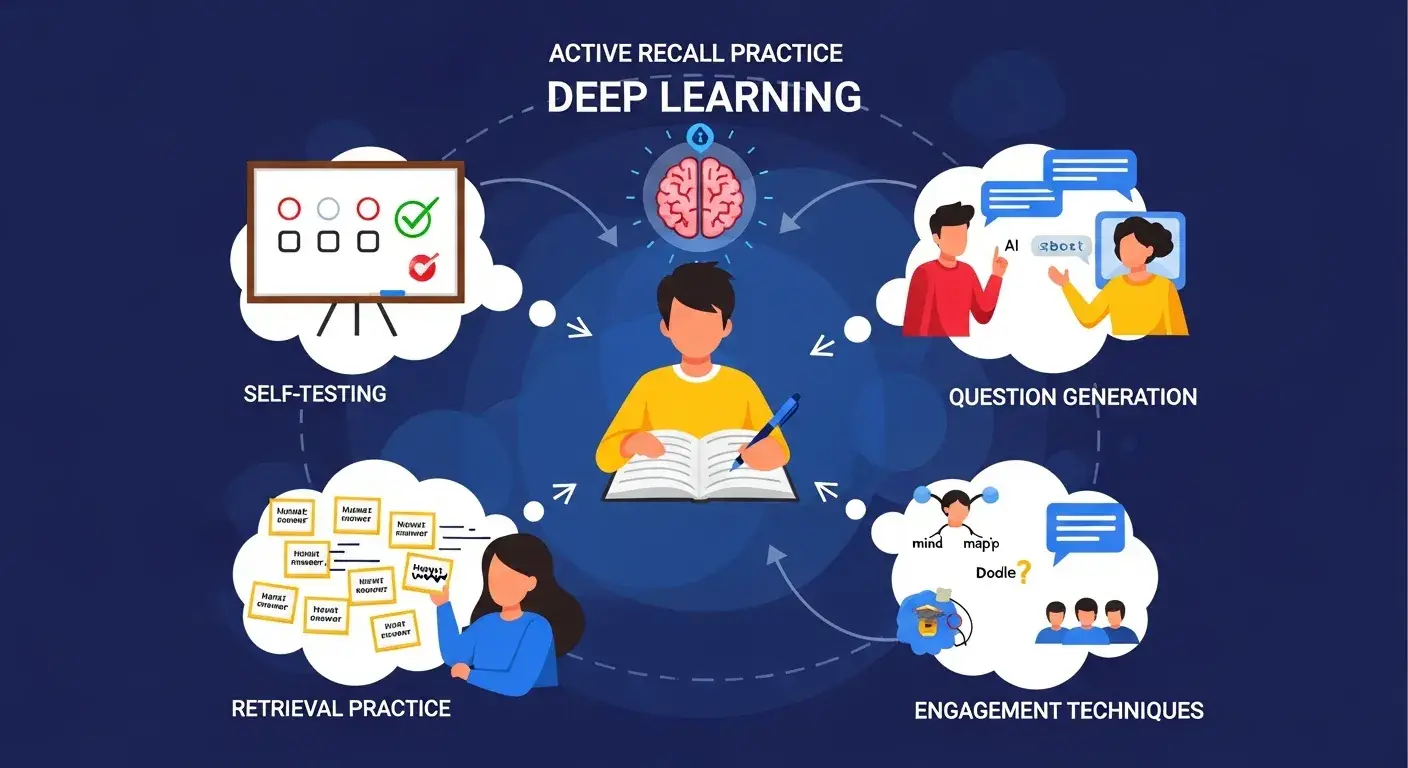
- Embrace Active Recall: Actively retrieve information rather than passively reviewing it.
- Utilize Digital Tools: Leverage apps like Anki for personalized scheduling.
- Integrate Metacognition: Reflect on your learning process and adjust strategies.
- Apply Knowledge Contextually: Connect new information to real-world scenarios.
Understanding the Foundation of Spaced Repetition
Spaced repetition is a learning method that involves reviewing previously learned material at increasing intervals over time. This technique capitalizes on the psychological phenomenon of the "spacing effect," where learning is more effective when study sessions are spaced out rather than crammed together. The goal is to present information just as you're about to forget it, thereby strengthening the memory trace and making recall easier in the future. It’s a highly efficient way to move information from short-term to long-term knowledge.
The Science Behind Spaced Repetition
The efficacy of spaced repetition is deeply rooted in cognitive psychology and neuroscience. Understanding these underlying principles can help learners implement the techniques more effectively.
The Forgetting Curve
Introduced by German psychologist Hermann Ebbinghaus in 1885, the forgetting curve illustrates the rate at which memories are lost over time when there is no attempt to retain them. Initially, information is forgotten rapidly, but the rate of forgetting slows down over time. Spaced repetition directly counters this curve by scheduling reviews at optimal points, just before significant memory decay occurs. This strategic timing repeatedly "resets" the forgetting curve, solidifying the memory.
Active Recall
A cornerstone of effective spaced repetition techniques for long-term knowledge is active recall. Instead of passively re-reading notes, active recall involves deliberately retrieving information from memory. This could be by answering a question, explaining a concept in your own words, or attempting to solve a problem without looking at the solution. Research from the University of California, Berkeley, in their 2023 review on cognitive learning strategies, highlights that active recall significantly enhances memory retention compared to recognition-based learning. This effortful retrieval process strengthens neural pathways, making future recall faster and more reliable.
Core Effective Spaced Repetition Techniques
Implementing spaced repetition doesn't have to be complicated. Several proven methods and tools can help you integrate this powerful strategy into your study habits.
Flashcards and Digital Tools
Flashcards are perhaps the most common medium for spaced repetition. Traditional physical flashcards can be organized using systems like the Leitner system. However, digital flashcard applications have revolutionized the process by automating the scheduling of reviews. Tools like Anki, Quizlet, and SuperMemo use sophisticated algorithms to determine the optimal time to review each piece of information based on your performance. This personalization is crucial for optimizing spaced repetition schedules and maximizing efficiency. For instance, Anki's algorithm adjusts intervals dynamically, presenting difficult cards more frequently and easier cards less often.
The Leitner System
For those who prefer physical flashcards, the Leitner system offers a simple yet effective method for spaced repetition. It involves several boxes (or piles) representing different levels of knowledge. When you get a card correct, it moves to the next box, which has a longer review interval. If you get it wrong, it moves back to the first box. This system ensures that you spend more time on challenging material and less on what you already know well, making it a practical approach for mastering information without digital aids.
Personalized Scheduling
The beauty of spaced repetition lies in its adaptability. While algorithms provide a great starting point, truly effective spaced repetition techniques for long-term knowledge involve a degree of personalized scheduling. Pay attention to your own learning patterns. Are you better at recalling certain types of information? Do you have specific times of day when your memory is sharper? Adjust your review sessions to align with your cognitive rhythms. A recent meta-analysis published in Learning & Memory in late 2024 emphasized the significant impact of learner self-regulation on the success of spaced learning interventions.
Advanced Strategies for Optimizing Spaced Repetition
Beyond the basics, integrating advanced strategies can further enhance the power of spaced repetition, leading to deeper understanding and more robust memory.
Integrating Metacognition and Self-Assessment
One key differentiator in modern spaced repetition is the emphasis on metacognition – thinking about your thinking. Instead of just marking a card "correct" or "incorrect," take a moment to assess why you remembered or forgot. Was it a lack of understanding, a weak connection, or simply a momentary lapse? This self-assessment helps you refine your learning approach, perhaps by rephrasing a flashcard, breaking down a complex concept, or seeking additional context. This reflective practice transforms rote memorization into a more meaningful and adaptive learning experience, crucial for applying spaced repetition in daily learning.
Contextual Learning and Real-World Application
While flashcards are excellent for discrete facts, true long-term knowledge requires understanding concepts in context. Integrate your spaced repetition practice with real-world application. If you're learning a language, use your flashcard vocabulary in conversations. If you're studying programming, apply new syntax in small coding projects. Insights from the "Future of Learning" report by the World Economic Forum, updated in 2025, consistently highlight the importance of experiential learning and connecting knowledge to practical scenarios for deeper retention and skill development. This contextualization builds a richer network of associations in your memory, making information more accessible and useful.
Leveraging Adaptive Algorithms and AI
The frontier of spaced repetition is increasingly shaped by adaptive learning algorithms and artificial intelligence. Modern platforms are moving beyond fixed intervals, using AI to analyze not just correctness but also response times, confidence levels, and even biometric data (in advanced research settings) to predict optimal review times with greater precision. Some tools can even generate personalized learning paths and suggest related content, making the learning process incredibly efficient. This continuous evolution promises even more powerful ways to achieve long-term knowledge retention.
Common Pitfalls and How to Overcome Them
Even with the best intentions, learners can stumble when implementing spaced repetition. Recognizing these common pitfalls is the first step to overcoming them.
- Passive Review: Simply flipping through flashcards without actively trying to recall the answer diminishes effectiveness. Overcome: Always attempt to retrieve the answer before revealing it.
- Over-reliance on Tools: While digital tools are powerful, blindly following their schedule without understanding the underlying principles can be counterproductive. Overcome: Understand why an item is scheduled for review and adjust if your intuition suggests otherwise.
- Poorly Constructed Flashcards: Vague or overly complex flashcards hinder effective recall. Overcome: Create concise, atomic flashcards that test a single piece of information. Use images or mnemonics where helpful.
- Inconsistency: Spaced repetition thrives on regularity. Skipping sessions can disrupt the optimal intervals. Overcome: Integrate short, daily review sessions into your routine, even if it's just 10-15 minutes.
The Future of Spaced Repetition Learning
Spaced repetition is not just a study technique; it's a fundamental principle of efficient learning. As technology advances, we can expect even more sophisticated tools that integrate spaced repetition seamlessly into various learning environments, from corporate training to personal development. The focus will continue to be on personalized, adaptive, and context-rich learning experiences that empower individuals to build robust and accessible long-term knowledge.
Frequently Asked Questions (FAQ)
What is the ideal interval for spaced repetition?
The ideal interval varies greatly depending on the difficulty of the material, your prior knowledge, and the specific spaced repetition algorithm being used. Generally, intervals start short (e.g., 1 day, 3 days) and progressively lengthen (e.g., 7 days, 1 month, 3 months). The key is to review just as you are about to forget, which is why adaptive algorithms are so effective at calculating these personalized intervals.
Can spaced repetition be used for all types of learning?
While spaced repetition is exceptionally effective for factual recall, vocabulary acquisition, and formula memorization, its principles can be adapted for more complex learning. For conceptual understanding, flashcards might prompt you to explain a concept in your own words or compare/contrast ideas. It's most powerful when combined with other active learning strategies like problem-solving and project-based work.
How do I choose the best spaced repetition tool?
The "best" tool depends on your needs. Anki is highly customizable and powerful, ideal for dedicated learners willing to invest time in setup. Quizlet is user-friendly and great for collaborative study. SuperMemo offers advanced features but has a steeper learning curve. Consider factors like platform availability (desktop, mobile), community support, and ease of creating content.
Is spaced repetition effective for complex subjects like mathematics or programming?
Yes, spaced repetition is highly effective for complex subjects. In mathematics, it can reinforce theorems, formulas, and problem-solving steps. For programming, it helps internalize syntax, common algorithms, and data structures. The trick is to break down complex topics into smaller, testable units for flashcards and to combine spaced repetition with hands-on practice and application.
Conclusion: Embrace Spaced Repetition for Lasting Knowledge
Mastering effective spaced repetition techniques for long-term knowledge is a game-changer for anyone committed to continuous learning. By understanding the science behind memory, embracing active recall, and leveraging both traditional and digital tools, you can transform your learning efficiency and ensure that what you learn truly sticks. Start integrating these strategies today, and experience the profound difference in your ability to retain and apply information over the long haul.
What are your favorite spaced repetition techniques? Share your experiences in the comments below! For more insights into optimizing your learning journey, readers can explore related articles on cognitive science and advanced study methods.