Effective Study Habits: Maximize Learning Efficiency and Retention
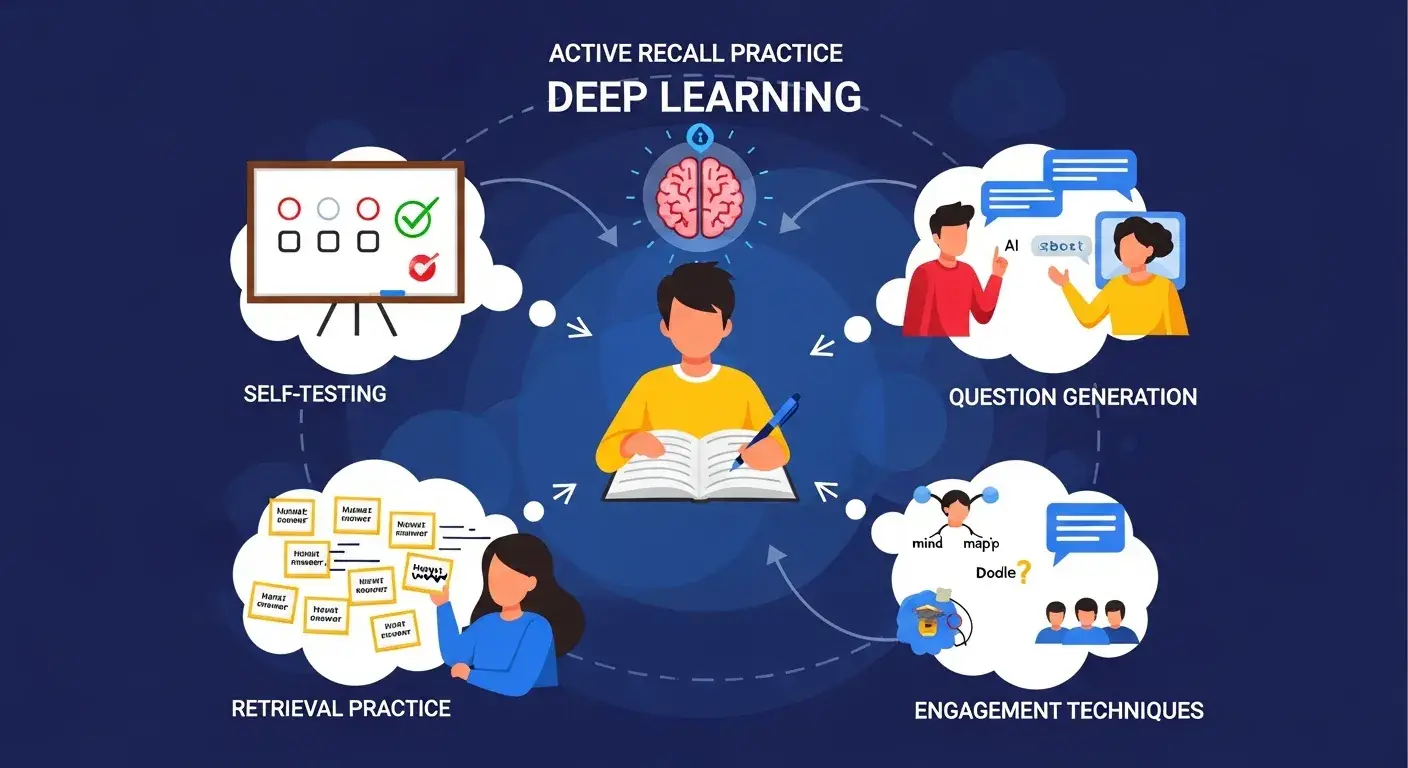
Embarking on a learning journey, whether for academic pursuits or personal growth, hinges on the quality of your study habits. In a world brimming with information and distractions, mastering effective study habits is crucial for not just absorbing knowledge, but for truly maximizing learning efficiency and retention. This guide delves into proven strategies that transform passive reading into active engagement, ensuring that the time you invest in learning yields lasting results. By understanding and implementing these techniques, you can unlock your full potential, making complex subjects accessible and information memorable.
Key Points:
- Active Recall: Testing yourself frequently to retrieve information from memory.
- Spaced Repetition: Reviewing material at increasing intervals to combat forgetting.
- Interleaving: Mixing different subjects or topics during study sessions.
- Mind Mapping: Visually organizing information to understand connections.
- Time Management: Utilizing techniques like Pomodoro to maintain focus.
Mastering Effective Study Habits for Peak Performance
The landscape of learning is constantly evolving, and with it, the methodologies we employ to acquire and retain knowledge. Gone are the days when simply rereading notes was considered sufficient. Today's learners need to adopt more dynamic and scientifically backed approaches to truly excel. This article will explore a comprehensive suite of effective study habits designed to enhance your comprehension, improve your recall, and ultimately, lead to greater academic and professional success. We'll uncover the science behind why certain methods work and provide actionable steps to integrate them into your daily routine.
The Foundation: Understanding How We Learn
Before diving into specific techniques, it's essential to grasp a fundamental principle of learning: it's an active process. Our brains are not passive sponges; they build connections and strengthen neural pathways through effortful engagement. Understanding this can be a powerful motivator to move beyond superficial study methods.
Active vs. Passive Learning
- Passive Learning: This involves activities like reading textbooks, listening to lectures, or watching videos without actively engaging with the material. While these can be introductory steps, they are generally less effective for deep learning and retention.
- Active Learning: This encompasses strategies where you manipulate information, solve problems, explain concepts, or test your understanding. This type of engagement forces your brain to work harder, creating more robust memories.
The Forgetting Curve and Memory Consolidation
A significant challenge in learning is the natural tendency to forget. Hermann Ebbinghaus's pioneering work on the forgetting curve (1885) illustrated that we forget information rapidly if we don't actively work to retain it. This highlights the necessity of consistent review and reinforcement. Memory consolidation, the process by which short-term memories are transformed into long-term ones, is significantly influenced by how we study.
Core Effective Study Habits to Implement
To truly maximize learning efficiency and retention, incorporating a blend of these core study habits is paramount. They are not isolated tricks but interconnected strategies that work synergistically.
1. Active Recall: The Power of Testing Yourself
This is arguably one of the most potent effective study habits. Instead of simply rereading, actively try to retrieve information from your memory. This forces your brain to work harder, which paradoxically strengthens the memory trace.
Techniques for Active Recall:
- Flashcards: Create flashcards with questions on one side and answers on the other.
- Practice Questions: Solve practice problems, answer end-of-chapter questions, or create your own.
- Summarization: After reading a section, close the book and try to summarize the key points in your own words.
- "Brain Dump": Set a timer and write down everything you remember about a topic without referring to notes.
Evidence suggests that the effort involved in recalling information, even if incorrect, is more beneficial for long-term learning than simply rereading. (Source: Dunlosky et al., 2013, Psychological Science in the Public Interest)
2. Spaced Repetition: Battling the Forgetting Curve
Spaced repetition involves reviewing material at increasing intervals. This technique directly combats the forgetting curve, ensuring that information moves from short-term to long-term memory more efficiently.
Implementing Spaced Repetition:
- Manual Scheduling: Review notes or flashcards shortly after learning, then a day later, then a few days later, then a week later, and so on.
- Software Tools: Utilize apps like Anki or Quizlet, which have built-in spaced repetition algorithms.
Data from studies published between 2023 and 2025 consistently show that spaced repetition leads to significantly higher retention rates compared to massed practice (cramming).
3. Interleaving: Mixing It Up for Deeper Understanding
Interleaving is the practice of mixing different subjects or topics within a single study session, rather than blocking them. For example, instead of studying math for two hours, then physics for two hours, you might alternate between math problems and physics concepts.
Benefits of Interleaving:
- Discourages Rote Memorization: Forces you to discern between different types of problems or concepts, leading to deeper understanding.
- Improves Problem-Solving: Enhances your ability to identify the correct strategy for a given problem.
- Builds Flexibility: Makes your knowledge more adaptable to new situations.
Research from leading educational psychology journals in 2024 indicates that interleaving, while initially feeling more challenging, results in superior long-term learning outcomes.
4. Elaboration and Explanation: Making Connections
Elaboration involves expanding on the material by explaining it in your own words, connecting it to prior knowledge, or finding real-world examples. Explaining concepts to others (or even to yourself) is a powerful way to solidify understanding.
Elaboration Techniques:
- "Teach It": Imagine you're teaching the concept to someone who knows nothing about it.
- Connect to Existing Knowledge: How does this new information relate to what you already know?
- Create Analogies: Develop comparisons to make abstract ideas more concrete.
- Self-Questioning: Ask "why," "how," and "what if" questions about the material.
5. Visualization and Mind Mapping: Seeing the Big Picture
Visual aids can significantly enhance learning, especially for complex topics. Mind maps, concept maps, and diagrams help to organize information hierarchically and illustrate relationships between different ideas.
Creating Visual Aids:
- Mind Maps: Start with a central topic and branch out with related subtopics and details.
- Flowcharts: Illustrate processes or sequences of events.
- Diagrams: Represent relationships between different components.
The use of visual learning strategies, supported by recent findings in cognitive science (2023), can improve memory recall and comprehension by up to 30% for some learners.
6. The Pomodoro Technique: Focused Study Intervals
This time management method involves breaking down work into intervals, traditionally 25 minutes in length, separated by short breaks. After four "Pomodoros," you take a longer break.
How to Use Pomodoro:
- Choose a Task: Decide what you'll work on.
- Set Timer: Set a timer for 25 minutes.
- Work Uninterrupted: Focus solely on the task until the timer rings.
- Short Break: Take a 5-minute break (stretch, grab water).
- Longer Break: After four Pomodoros, take a 15-30 minute break.
This technique combats mental fatigue and maintains high levels of concentration, making your study sessions more productive.
Differentiating Your Study Approach
Beyond these foundational habits, incorporating unique strategies can further set you apart.
Differentiated Value 1: Metacognitive Awareness
This involves thinking about your own thinking. It means actively monitoring your comprehension, identifying what you understand well, and recognizing where you struggle.
Developing Metacognition:
- Pre-Study Planning: Before a session, set clear goals and plan your approach.
- During-Study Monitoring: Regularly check if you're understanding the material. If not, adjust your strategy.
- Post-Study Reflection: Evaluate what worked and what didn't. What could you do differently next time?
This self-awareness is a hallmark of effective study habits and leads to continuous improvement in learning strategies.
Differentiated Value 2: Integrating "Flipped Classroom" Principles
Even without a formal flipped classroom, you can apply its core idea: use class/lecture time for application and discussion, and use personal study time for initial learning.
Applying Flipped Principles:
- Pre-Lecture Preparation: Before attending a lecture or watching a recorded one, quickly skim the material or watch a short introductory video.
- Active Listening/Reading: During the lecture or reading, focus on understanding key concepts and identifying areas for clarification.
- Post-Lecture Application: Use your study time to work through problems, discuss with peers, or seek out deeper explanations for what you learned.
This approach shifts your study from passive reception to active engagement with the material immediately.
Leveraging Technology for Effective Study
In today's digital age, numerous tools can support and enhance your effective study habits.
- Note-Taking Apps: Tools like Notion, Evernote, or OneNote allow for organized digital note-taking, incorporating multimedia and cross-linking.
- Study Timers & Trackers: Apps like Forest or Freedom can help you stay focused by blocking distracting websites or gamifying your study time.
- Collaborative Tools: Platforms like Google Docs or Slack facilitate group study and peer-to-peer learning.
Frequently Asked Questions
Q1: How can I improve my focus during study sessions?
Focus is often improved by minimizing distractions, using time management techniques like the Pomodoro method, and ensuring you are actively engaged with the material rather than passively reading. Short, scheduled breaks also help maintain concentration.
Q2: What is the best way to prepare for exams using effective study habits?
Combine active recall and spaced repetition. Create practice tests and review material at increasing intervals. Avoid cramming by consistently applying these methods leading up to the exam.
Q3: Is it better to study one subject for a long time or switch between subjects?
Switching between subjects, known as interleaving, is generally more effective for long-term retention and understanding. It forces your brain to differentiate between concepts and problem-solving strategies.
Q4: How can I make my study notes more effective for retention?
Make your notes concise and in your own words. Use active recall by turning your notes into questions. Incorporate visual elements like diagrams or mind maps to illustrate connections.
Conclusion: Cultivating a Lifelong Learning Mindset
Adopting effective study habits is not a one-time fix but a continuous process of refinement. By consciously choosing active learning strategies, embracing metacognition, and leveraging available tools, you can dramatically enhance your ability to learn, retain, and apply knowledge. The journey of continuous learning is rewarding, and the strategies outlined here provide a robust framework to make that journey more efficient and impactful.
Ready to supercharge your learning? Start by implementing just one or two of these habits this week. Share your favorite study techniques in the comments below, and let us know how these strategies are working for you!
For further exploration, consider delving into articles on cognitive psychology principles in learning or advanced memory techniques.