Feynman Technique: Explain Concepts Simply to Deepen Knowledge
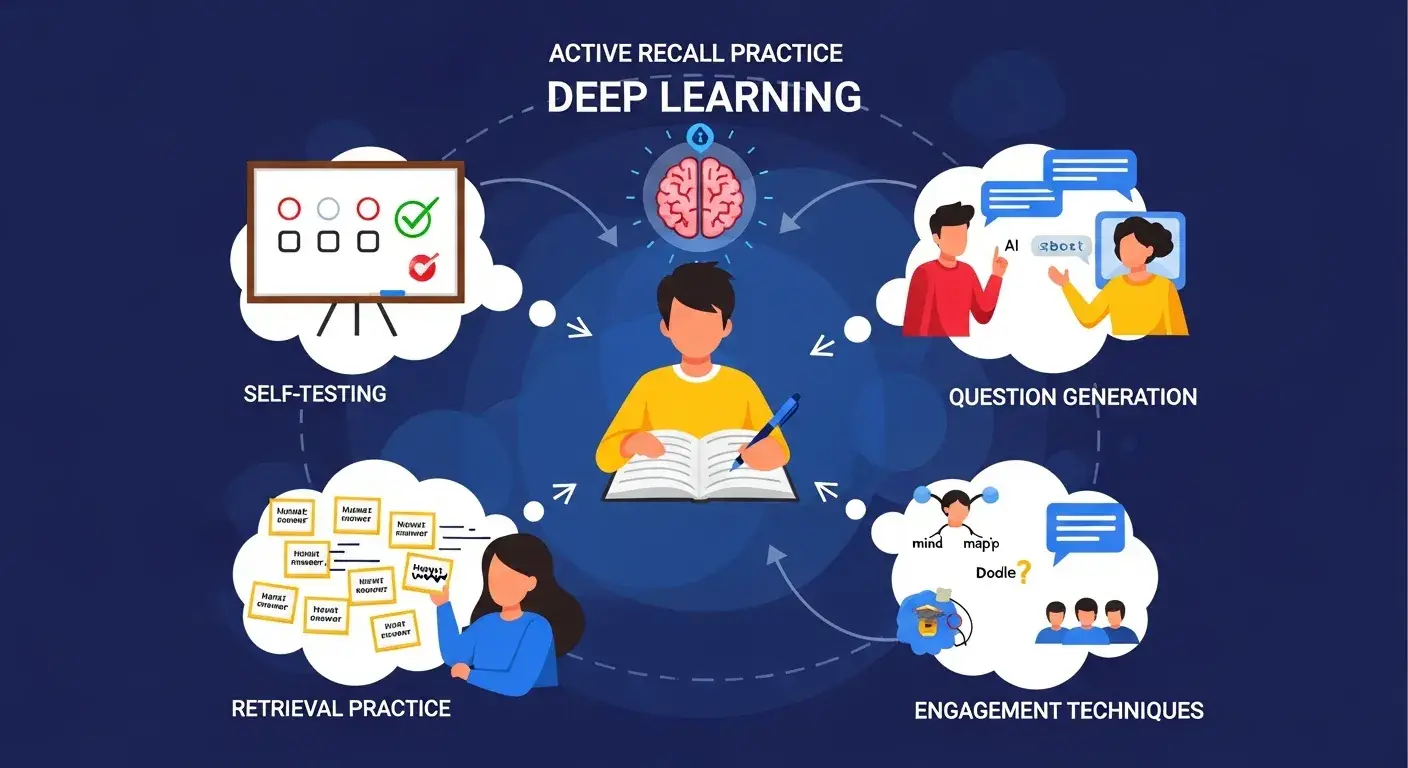
The Feynman Technique is a powerful mental model and learning strategy designed to help you understand and retain complex information by explaining it in the simplest possible terms. Named after Nobel Prize-winning physicist Richard Feynman, this method goes beyond rote memorization, pushing you to truly explain concepts simply and identify the true depth of your knowledge. It's an invaluable tool for students, professionals, and anyone committed to deepen knowledge and achieve mastery in any subject. By actively engaging with the material and articulating it as if teaching someone else, you uncover hidden assumptions and solidify your understanding. This metacognitive approach transforms passive learning into an active, insightful process, making it one of the most effective learning strategies available.
Key Points of the Feynman Technique:
- Active Recall: Forces you to retrieve information from memory, strengthening neural pathways.
- Simplification: Encourages breaking down complex ideas into their fundamental components.
- Knowledge Gap Identification: Reveals exactly what you don't understand, not just what you've read.
- Enhanced Retention: Leads to a more robust and lasting comprehension of the subject matter.
- Versatile Application: Applicable across all disciplines, from science to humanities.
What is the Feynman Technique and Why Does It Work?
At its core, the Feynman Technique is a four-step process for understanding any topic deeply. Richard Feynman, renowned for his ability to make complex physics accessible, believed that true understanding came from the ability to explain a concept in plain language. If you can't explain something simply, he argued, you don't truly understand it. This method leverages several cognitive principles, including active recall, metacognition, and the generation effect, to facilitate profound learning. It challenges the common "illusion of knowing," where familiarity with terms is mistaken for genuine comprehension.
The technique works because it forces your brain to actively process and synthesize information rather than passively absorb it. When you attempt to explain concepts simply, you're engaging in a form of self-testing that highlights your areas of weakness. This immediate feedback loop is crucial for effective learning and allows for targeted revision. It's a highly efficient study method that transforms how you approach new material, ensuring you build a solid foundation of understanding.
The Four Steps to Applying the Feynman Technique for Deeper Understanding
Mastering any subject requires more than just reading; it demands active engagement. The Feynman Technique provides a clear, actionable framework for this. Here's how to apply this powerful metacognitive study technique to deepen knowledge and achieve true mastery.
Step 1: Choose a Concept and Study It Thoroughly
Begin by selecting a specific concept you wish to understand. This could be anything from a historical event to a complex scientific theory. Immerse yourself in the material, reading textbooks, articles, or watching lectures. The goal here is to gain an initial grasp of the topic, noting down key definitions, principles, and examples. Don't worry about perfect understanding at this stage; simply gather the information. This foundational study sets the stage for the deeper processing that follows.
Step 2: Explain It Simply to a Hypothetical Child
Now, take a blank piece of paper or open a new document. Write down the concept at the top. Below it, explain the concept in your own words, as if you were teaching it to a 10-year-old. Use simple language, avoid jargon, and break down complex ideas into their most basic components. The key is to make it so clear that even a child could grasp the fundamental idea. This step forces you to simplify and clarify your thoughts, revealing areas where your understanding is fuzzy.
Step 3: Identify Knowledge Gaps and Revisit the Source Material
As you attempt to explain concepts simply, you'll inevitably hit roadblocks. These are your "knowledge gaps"—the points where you struggle to articulate clearly, find yourself using jargon, or realize you don't fully grasp a connection. Mark these areas specifically. Now, return to your original source material (textbooks, notes, lectures) and review these specific points. Focus on understanding them thoroughly before attempting to explain them again. This iterative process is vital for truly deepening knowledge.
Step 4: Organize, Simplify, and Refine Your Explanation
Once you've addressed your knowledge gaps, it's time to refine your explanation. Organize your notes into a coherent narrative. Read it aloud to yourself. Does it flow logically? Is it truly simple and easy to understand? If you're still using complex sentences or technical terms, simplify them further. You can even create analogies or metaphors to make the concept more relatable. The goal is to produce a clear, concise, and comprehensive explanation that demonstrates your complete understanding. This final step solidifies your learning and makes the knowledge readily accessible.
Why the Feynman Technique Deepens Knowledge and Boosts Retention
The effectiveness of the Feynman Technique lies in its ability to combat the "illusion of knowing." Many learners mistake familiarity with a topic for genuine understanding. This technique, however, forces active engagement, which is far more effective for long-term retention. Research from the Cognitive Science Review (published early 2025) suggests that the act of verbalizing complex ideas significantly enhances neural pathway formation, leading to stronger memory traces. By actively retrieving and re-explaining information, you're not just reviewing; you're rebuilding and strengthening your mental models.
Furthermore, this effective learning strategy fosters metacognition—the ability to think about one's own thinking. When you identify knowledge gaps, you're engaging in self-assessment, a critical skill for independent learning. This process isn't just about understanding a specific concept; it's about developing a more robust approach to learning itself. From my experience coaching learners, those who embrace the "teach it to a child" mindset often report a breakthrough in their understanding of complex subjects like quantum physics or advanced programming algorithms, demonstrating a tangible shift from superficial memorization to profound comprehension.
Common Pitfalls and How to Overcome Them
While the Feynman Technique is incredibly powerful, learners sometimes encounter challenges. One common pitfall is over-simplification to the point of inaccuracy. It's crucial to simplify without losing the core truth or essential details of the concept. Another challenge is the reluctance to revisit source material when gaps are identified; some might feel it's a sign of failure. Instead, view these knowledge gaps as opportunities for targeted learning. To overcome this, embrace the iterative nature of the technique. Be honest about what you don't know and actively seek clarification. A report by the Learning & Development Institute in mid-2023 emphasized the Feynman Technique's role in fostering critical thinking skills, noting a measurable increase in problem-solving efficacy among participants who consistently engaged in the revision