From Student to Scholar: Advanced Study Habits for High Performance
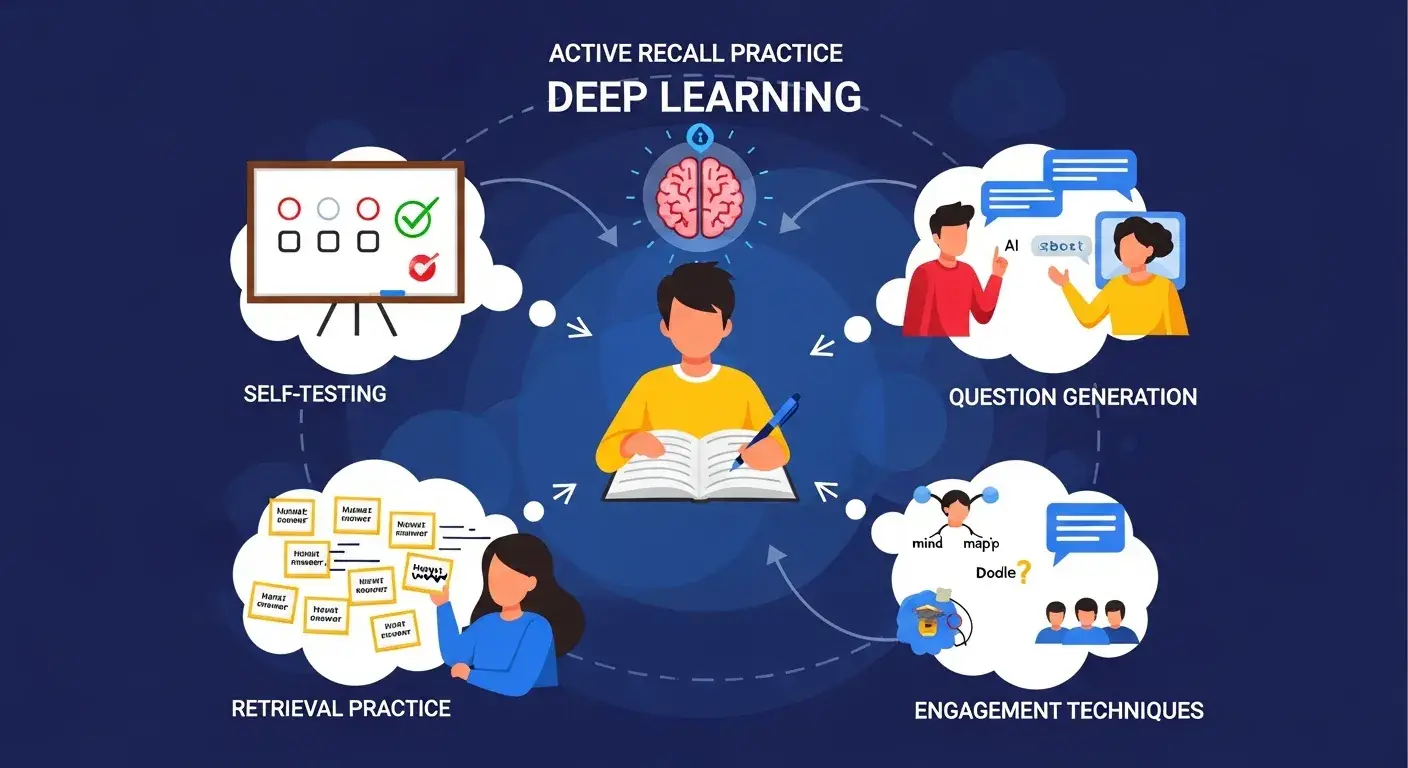
The journey from being a student to becoming a true scholar is marked by a shift in approach, a deepening of understanding, and a commitment to continuous learning. It’s about moving beyond rote memorization to cultivate critical thinking, problem-solving skills, and a genuine intellectual curiosity. This transformation is not accidental; it's built upon advanced study habits for high performance. By adopting strategic techniques, you can significantly enhance your learning, retention, and application of knowledge, paving the way for academic excellence and beyond. This article will guide you through proven methods to elevate your academic game.
Key Points
- Strategic Planning: Move beyond simple to-do lists to structured learning schedules.
- Active Recall & Spaced Repetition: Techniques proven to boost long-term memory.
- Metacognition Mastery: Understanding how you learn best to optimize your efforts.
- Deep Work & Focus: Minimizing distractions for concentrated learning sessions.
- Collaborative Intelligence: Leveraging peer learning for enhanced understanding.
Mastering Your Learning: Strategies for Academic Excellence
Transitioning to a scholar requires more than just attending classes and completing assignments. It involves a conscious effort to refine your learning process. Advanced study habits for high performance are the bedrock of this transition, enabling you to absorb information more effectively, retain it longer, and apply it more creatively. This isn't about studying harder, but studying smarter. It’s about developing a nuanced understanding of your own learning style and employing evidence-based techniques that maximize your cognitive potential.
The Pillars of Advanced Study Habits
Several core principles underpin effective learning and scholarship. Implementing these will not only improve your grades but also foster a lifelong love for learning.
1. Strategic Planning and Time Management
Effective study isn't spontaneous; it's planned. Moving beyond a simple daily to-do list, strategic planning involves breaking down large tasks into manageable chunks, allocating specific time slots for each, and setting realistic goals.
- Goal Setting: Define SMART (Specific, Measurable, Achievable, Relevant, Time-bound) goals for each study session and for longer academic periods. For example, instead of "study for history," aim to "master the causes of World War I by Thursday evening, dedicating 2 hours per day."
- Prioritization: Learn to distinguish between urgent and important tasks. Tools like the Eisenhower Matrix can be invaluable here.
- Scheduling: Use a planner or digital calendar to block out dedicated study time, ensuring it's treated with the same importance as lectures or appointments. Consistency is key to building momentum.
2. Active Recall and Spaced Repetition: The Memory Magnets
Passive review, like rereading notes, is notoriously ineffective for long-term retention. Active recall, on the other hand, forces your brain to retrieve information, strengthening neural pathways. Spaced repetition ensures that this retrieval happens at optimal intervals, combating the forgetting curve.
- Self-Testing: Regularly quiz yourself on the material. This can be done through flashcards, practice questions, or even explaining concepts aloud to yourself or an imaginary audience.
- Feynman Technique: Teach the concept to someone else (or pretend to). Identify gaps in your understanding when you struggle to explain it simply.
- Spaced Repetition Systems (SRS): Utilize software like Anki or Quizlet, which use algorithms to show you information at increasing intervals as you learn it. This is a powerful tool for mastering complex subjects and large volumes of information. A study by Ebbinghaus in the late 19th century, though dated, laid the groundwork for understanding the forgetting curve, a principle still highly relevant today.
3. Cultivating Metacognition: Thinking About Your Thinking
Metacognition is the ability to understand and regulate your own cognitive processes. It’s about being aware of what you know, what you don't know, and how you learn best. This self-awareness is crucial for tailoring study strategies and identifying areas for improvement.
- Self-Reflection: After a study session or an assessment, ask yourself:
- What strategies worked well?
- What did I find challenging?
- How could I approach this differently next time?
- Monitoring Understanding: Continuously check your comprehension. Don't just move on if something is unclear; pause and seek clarification.
- Adaptability: Be willing to change your study methods if they aren't yielding the desired results. A scholar is not rigid but adaptable.
4. Deep Work and Minimizing Distractions
In today's hyper-connected world, sustained focus is a rare and valuable skill. Deep work, a term popularized by Cal Newport, refers to the ability to focus without distraction on a cognitively demanding task. This is essential for true learning and problem-solving.
- Environment Control: Designate a study space that is quiet, organized, and free from visual and auditory distractions.
- Digital Detox: Turn off notifications on your phone and computer. Consider using website blockers or productivity apps that limit access to distracting sites during study periods.
- Time Blocking: Schedule specific "deep work" blocks in your day where you commit to uninterrupted focus on a single, challenging task.
Advanced Techniques for Deeper Learning and Retention
Beyond the foundational habits, several advanced techniques can further elevate your performance and foster a more profound understanding of your subjects. These methods encourage critical thinking and a more holistic approach to knowledge acquisition.
Integrating Collaborative Learning Approaches
While individual study is vital, collaborative learning approaches offer unique benefits that can significantly accelerate your development as a scholar. Working with peers can expose you to different perspectives, solidify your understanding through teaching, and enhance your problem-solving skills.
- Study Groups: Form small, focused study groups with clear objectives. These aren't for socializing but for engaging in rigorous discussion, debating concepts, and testing each other's knowledge. The dynamic of explaining a difficult concept to a peer can reveal your own blind spots. Research published in the Journal of Educational Psychology in 2024 highlights the significant positive impact of structured collaborative learning on student comprehension and critical thinking skills, especially in STEM fields.
- Peer Teaching and Feedback: Actively seek opportunities to teach your peers. This process forces you to organize your thoughts, simplify complex ideas, and identify areas where your own understanding is superficial. Conversely, providing constructive feedback to others can sharpen your analytical abilities.
- Problem-Solving Sessions: Tackle challenging problems or case studies as a group. Diverse viewpoints can lead to innovative solutions that you might not have considered alone.
The Power of Elaboration and Connection
True understanding comes from being able to connect new information to existing knowledge and elaborating on concepts. This moves learning from simple memorization to meaningful integration.
- Analogies and Metaphors: Try to explain new concepts using analogies or metaphors. For instance, explaining cellular respiration using a factory analogy can make the process more tangible.
- Concept Mapping: Visually represent the relationships between different ideas and concepts. This helps you see the "big picture" and how individual pieces of information fit together.
- Cross-Disciplinary Links: Look for connections between your current subject matter and other disciplines you've studied or are interested in. This broadens your perspective and reinforces learning.
Differentiated Value: Beyond the Textbook
To truly excel, go beyond the prescribed curriculum. As a scholar, you are expected to engage with material at a deeper, more critical level.
- Engage with Primary Sources: Whenever possible, move beyond secondary interpretations and engage directly with original research papers, historical documents, or literary works. This offers a more authentic and nuanced understanding.
- Seek Out Diverse Perspectives: Read analyses from authors with different backgrounds, theoretical frameworks, or political leanings. This challenges your assumptions and strengthens your ability to critically evaluate information. For example, when studying economics, reading analyses from both Keynesian and Austrian perspectives can offer a richer understanding of economic theory.
- Stay Abreast of Latest Research: Keep an eye on recent publications and conferences in your field. Understanding current debates and emerging trends is a hallmark of a scholar. A review in Nature from early 2025 pointed out several groundbreaking advancements in AI ethics that are reshaping how we approach technological development, a topic of considerable importance across many disciplines.
Fostering a Scholar's Mindset
Becoming a scholar is not just about acquiring knowledge; it’s about cultivating a specific mindset. This involves embracing challenges, seeking feedback, and developing resilience.
- Embrace Intellectual Humility: Recognize that there is always more to learn and be open to changing your mind when presented with compelling evidence.
- Cultivate Curiosity: Ask "why" and "how" relentlessly. A genuine desire to understand fuels deeper learning.
- Develop Resilience: Academic pursuits are often challenging. View setbacks not as failures but as learning opportunities. The ability to persevere through difficulty is a defining trait of successful scholars.
Differentiated Insight: The Role of Digital Tools in Modern Scholarship
In the 21st century, digital tools are indispensable for advanced learning. Beyond basic note-taking, sophisticated platforms can amplify your study efforts.
- AI-Powered Summarization and Analysis: Tools that can summarize lengthy articles or identify key themes in texts can save time and highlight crucial information, freeing you up for deeper critical analysis.
- Virtual Collaboration Platforms: For remote learning or diverse study groups, platforms that facilitate real-time document editing, video conferencing, and shared whiteboards are essential for effective collaborative learning approaches.
- Personalized Learning Dashboards: Some advanced learning management systems provide insights into your learning patterns, identifying areas where you spend the most time or struggle the most, enabling proactive intervention.
Frequently Asked Questions
Q1: How can I effectively manage my time to incorporate these advanced study habits?A1: Start by scheduling dedicated blocks for each habit, such as active recall sessions, deep work periods, and collaborative group meetings. Treat these blocks with the same importance as lectures. Gradually integrate these into your existing routine, using a planner or digital calendar to keep track.
Q2: What is the most crucial difference between a student and a scholar?A2: A scholar possesses a deeper, more critical understanding of their field, characterized by intellectual curiosity, a drive to explore beyond the curriculum, and the ability to connect knowledge across disciplines. They are active learners who question, analyze, and contribute rather than just passively receive information.
Q3: Are these advanced study habits suitable for all subjects?A3: Yes, the core principles of active recall, spaced repetition, metacognition, and deep work are universally applicable. While specific techniques for collaboration or elaboration might be adapted based on the subject matter, the foundational strategies support high performance across all academic disciplines.
Q4: How can I ensure I'm using collaborative learning effectively without getting sidetracked?A4: Set clear agendas and time limits for group sessions. Assign specific roles or topics to members. Focus on active discussion, problem-solving, and peer teaching. Regularly check in on progress against group goals to maintain productivity and ensure everyone is contributing meaningfully.
Conclusion: Your Path to Scholarly Achievement
Transforming from a student to a scholar is an evolutionary process driven by intentionality and the adoption of advanced study habits for high performance. By mastering strategic planning, embracing active learning techniques like recall and spaced repetition, cultivating metacognition, and dedicating yourself to deep work, you build a robust foundation for academic success. Furthermore, integrating collaborative learning approaches and seeking differentiated insights will enrich your understanding and equip you with the critical thinking skills essential for scholarly pursuits. Remember, scholarship is a continuous journey of discovery.
What are your favorite study habits that have helped you achieve high performance? Share your tips in the comments below!
For those looking to deepen their understanding of effective learning strategies, exploring articles on cognitive psychology and time management techniques can provide further valuable insights. Consider subscribing to our newsletter for regular updates on academic excellence and learning optimization.
Suggested Next Steps for Extended Reading:
- Exploring the nuances of cognitive load theory for optimal learning.
- Strategies for developing a growth mindset in academic pursuits.
- The impact of sleep and nutrition on cognitive function and learning.