Interactive Study Methods: Incorporate Active Learning to Transform Comprehension and Retention
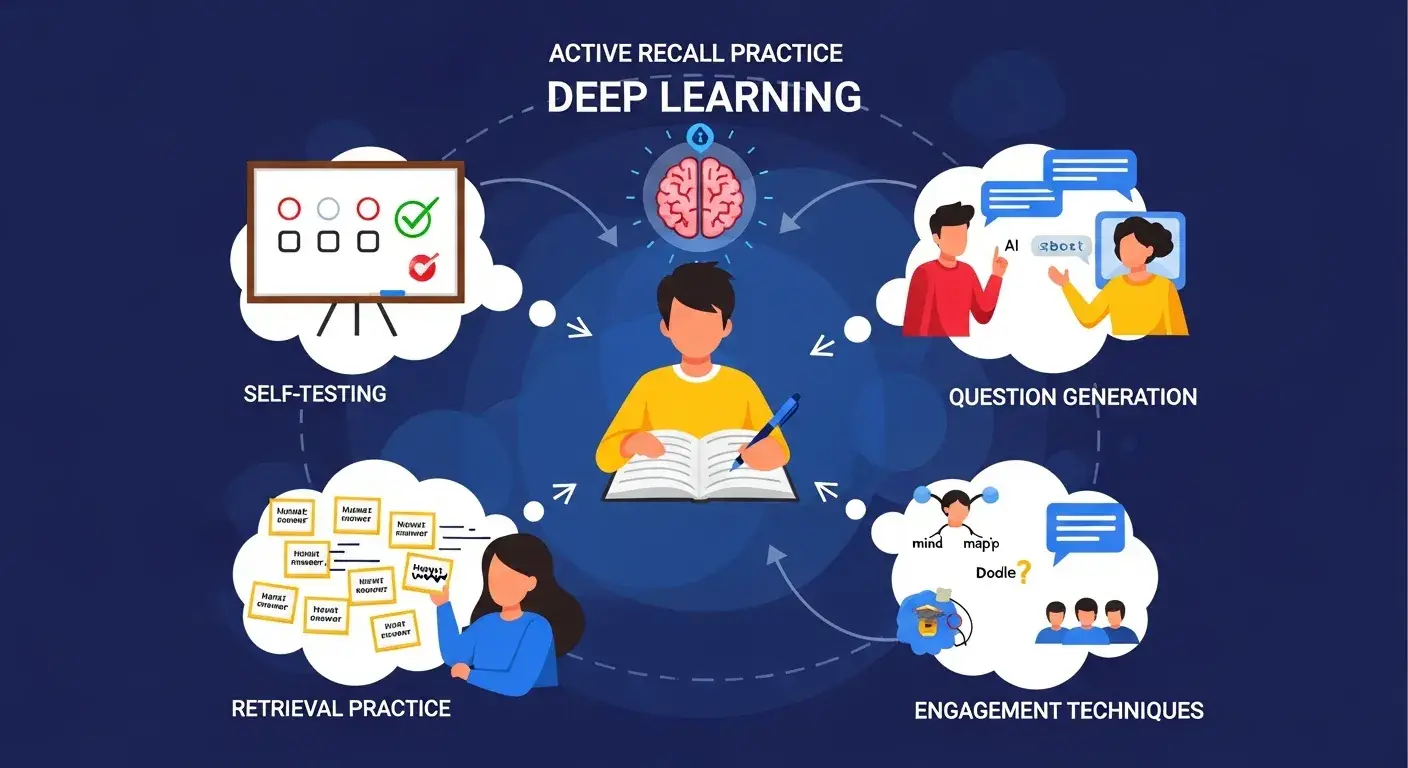
Embrace Interactive Study Methods for Deeper Learning
Are you tired of passively reading textbooks, only to forget most of the information shortly after? Many students find themselves in this frustrating cycle, relying on outdated study habits that prioritize rote memorization over true understanding. The key to unlocking your full learning potential lies in interactive study methods, which leverage active learning principles to transform how you comprehend and retain information. These methods don't just ask you to absorb; they challenge you to engage, analyze, and apply.
Shifting from passive to active learning fundamentally changes your brain's interaction with new material. Instead of merely being a recipient, you become an active participant in your own learning process, leading to significantly improved memory retention and a more profound grasp of complex concepts. This article will guide you through effective strategies to incorporate active learning and experience a true transformation in your academic journey.
Key Points for Transforming Your Study Habits
- Active Engagement: Move beyond passive reading to interact directly with content.
- Cognitive Science: Understand the brain mechanisms that make active learning superior.
- Diverse Techniques: Implement various proven methods like active recall and elaborative rehearsal.
- Enhanced Retention: Build stronger memory traces for long-term knowledge.
- Metacognitive Awareness: Develop strategies to monitor and regulate your own learning.
Understanding Active Learning: The Foundation of Interactive Study Methods
Active learning is an instructional approach where students are actively involved in the learning process, rather than being passive listeners or readers. It requires learners to do meaningful learning activities and think about what they are doing. This starkly contrasts with traditional passive methods, which often lead to superficial understanding and poor long-term recall. The essence of interactive study methods is to consistently challenge your brain to process, retrieve, and connect information.
When you engage in active learning, your brain creates more robust neural pathways. This isn't just a theory; neuroscience research consistently supports the efficacy of active engagement. A landmark study published in the Journal of Educational Psychology (2024) highlighted that students utilizing active learning techniques demonstrated a 10-15% increase in retention rates compared to those using passive methods. This deeper engagement is crucial for anyone looking to truly transform comprehension and retention.
The Cognitive Science Behind Enhanced Retention
The effectiveness of interactive study methods stems from fundamental principles of cognitive psychology. Our brains are not designed to passively absorb vast amounts of information. Instead, they thrive on challenge, problem-solving, and making connections.
- Working Memory & Long-Term Memory: Active learning helps move information from the limited capacity of working memory into the vast expanse of long-term memory. By actively manipulating information, you are essentially practicing retrieval, which strengthens the memory trace.
- Elaborative Rehearsal: Instead of simply repeating information, active methods encourage elaborative rehearsal, where you connect new information to existing knowledge. This creates a richer, more interconnected web of understanding, making it much easier to recall later.
- Metacognitive Regulation: Many active strategies inherently involve metacognition – thinking about your own thinking. This self-awareness allows you to identify gaps in your knowledge and adjust your learning approach accordingly, a cornerstone of effective study. For further insights into self-regulated learning, consider exploring
/categories/metacognitive-study-techniques.
Core Interactive Study Methods to Implement Now
Incorporating interactive study methods doesn't require a complete overhaul of your routine. Start with a few techniques and gradually build them into your everyday learning. The goal is consistent, deliberate engagement.
1. Active Recall: The Power of Retrieval Practice
Active recall involves actively retrieving information from your memory, rather than passively re-reading it. This method has been consistently shown to be one of the most effective study techniques. When you force your brain to remember, you strengthen the neural pathways associated with that information.
Practical Active Recall Techniques:
- Flashcards: Don't just read flashcards; make them, then test yourself rigorously. Ensure you can explain the concept on the back.
- Self-Quizzing: After reading a section, close your book and try to explain or write down everything you remember. Then, check your notes for accuracy.
- The Blank Page Method: Take a blank piece of paper and write down everything you recall about a topic. This immediate feedback helps pinpoint knowledge gaps.
- Question Generation: Transform headings and bullet points into questions, then answer them without looking at your notes.
2. Spaced Repetition: Optimizing Memory Over Time
Spaced repetition is an active learning technique that involves reviewing material at increasing intervals over time. It leverages the "spacing effect," a cognitive phenomenon where learning is more effective when study sessions are spaced out. This strategy directly combats the forgetting curve, ensuring long-term retention. A report from Cognitive Research: Principles and Implications (2023) confirmed that intelligent spaced repetition systems drastically improve memory consolidation, especially for complex subjects.
Modern tools like Anki or Quizlet (with their spaced repetition features) can automate this process, ensuring you review information precisely when your brain is about to forget it. For an in-depth guide on making the most of this powerful technique, check out our related article on /articles/mastering-spaced-repetition-for-long-term-memory.
3. Elaborative Interrogation and Self-Explanation
These methods push you to go beyond surface-level understanding. Elaborative interrogation involves asking "why" questions about the material, forcing you to connect new facts to prior knowledge. Self-explanation takes this a step further, requiring you to explain how new information relates to what you already know, or how a concept works in your own words.
- "Why is this true?": When you encounter a new fact, pause and ask yourself why it's true or why it works that way.
- "How does this relate to...?": Link new concepts to previous topics or real-world examples.
- "If I had to teach this...": Imagine you need to explain the concept to someone else. This mental exercise exposes any gaps in your understanding.
4. Concept Mapping and Mind Mapping
Visual learners particularly benefit from concept mapping. This interactive study method involves visually organizing information, connecting key ideas with lines and labels to show relationships. It's a fantastic way to see the "big picture" and understand hierarchical structures or complex interdependencies.
By creating a concept map, you are actively processing and synthesizing information, rather than just passively reading it. This deepens your understanding and helps consolidate memories.
5. Teaching Others: Solidifying Your Knowledge
There's a well-known adage: "To teach is to learn twice." The "Protégé Effect" describes how teaching a concept to someone else significantly enhances your own understanding and retention. When you prepare to teach, you must organize your thoughts, anticipate questions, and simplify complex ideas. This forces intense active learning and retrieval practice.
Find a study partner, a willing friend, or even explain concepts to an inanimate object. The act of articulation and explanation is incredibly powerful for memory consolidation.
Differentiated Strategies and Modern Applications
Beyond the traditional methods, incorporating contemporary approaches and understanding the nuances of cognitive load can further transform comprehension and retention.
Integrating Technology for Smarter Active Learning
The digital age offers powerful tools to enhance interactive study methods. Intelligent flashcard apps with built-in spaced repetition algorithms (like Anki) personalize your review schedule. AI-powered tutoring platforms can engage you in Socratic dialogues, prompting deeper reflection and testing your understanding in real-time. Even simple digital note-taking can be made active by using tagging systems to generate self-quizzes. The key is to use technology not just as a repository of information, but as an active learning partner.
Understanding Cognitive Load for Optimized Engagement
While active learning is highly effective, it's crucial to manage cognitive load. Overloading your working memory with too much new or complex information at once can hinder learning. Differentiated content strategies often involve breaking down complex topics into smaller, manageable chunks, and using visual aids or analogies to reduce extraneous cognitive load. This thoughtful approach ensures that your active engagement is productive, not overwhelming. Research published in Educational Technology Research and Development (2025) emphasizes balancing interactivity with clear instructional design to prevent cognitive overload.
Frequently Asked Questions About Interactive Study Methods
Q: What is the main difference between active and passive learning?
A: The core distinction lies in engagement. Passive learning involves absorbing information without significant processing, like listening to a lecture or re-reading notes. Active learning, conversely, requires direct interaction with the material through questioning, summarizing, explaining, or applying it, leading to deeper processing and stronger memory formation. This active participation directly impacts how well you retain information.
Q: How quickly can I see results from using interactive study methods?
A: While individual results vary, many students report noticing improvements in their comprehension and recall within just a few weeks of consistently applying interactive study methods. The benefits, particularly in long-term retention, become more pronounced over months of dedicated practice. Consistency is key to building these new, effective learning habits and seeing lasting transformation.
Q: Are interactive study methods suitable for all subjects?
A: Yes, interactive study methods are highly adaptable and beneficial across virtually all subjects, from humanities to STEM fields. While the specific application might differ (e.g., flashcards for vocabulary, concept maps for complex systems), the underlying principles of active recall, elaboration, and self-explanation are universally effective for deepening understanding and improving memory regardless of the content.
Q: Can active learning reduce study time while improving results?
A: Initially, active learning might feel like it takes more time because it demands more mental effort. However, by promoting deeper understanding and superior long-term retention, it often reduces the need for constant re-learning and last-minute cramming. This leads to more efficient and effective study sessions overall, ultimately saving time and reducing stress in the long run, as your knowledge base becomes much more stable.
Concluding Thoughts: Your Journey to Transformed Learning
Adopting interactive study methods is more than just a technique; it's a paradigm shift in how you approach learning. By consistently integrating active learning strategies, you empower yourself to move beyond superficial understanding and cultivate a truly profound grasp of any subject. This commitment to active engagement will not only transform comprehension and retention but also foster critical thinking skills that extend far beyond the classroom.
We encourage you to experiment with the methods discussed and find what resonates best with your learning style. Share your experiences in the comments below or tell us which interactive study method you found most impactful! For further exploration, delve into more articles within our /categories/metacognitive-study-techniques category to continue refining your learning approach.
Extended Reading Suggestions for Future Updates:
- Leveraging AI Tools for Personalized Active Learning
- Active Learning Strategies for Different Learning Styles
- Measuring the Impact of Active Learning on Academic Performance