Leverage Spaced Repetition Apps: Boost Knowledge Retention and Optimize Your Study Schedule
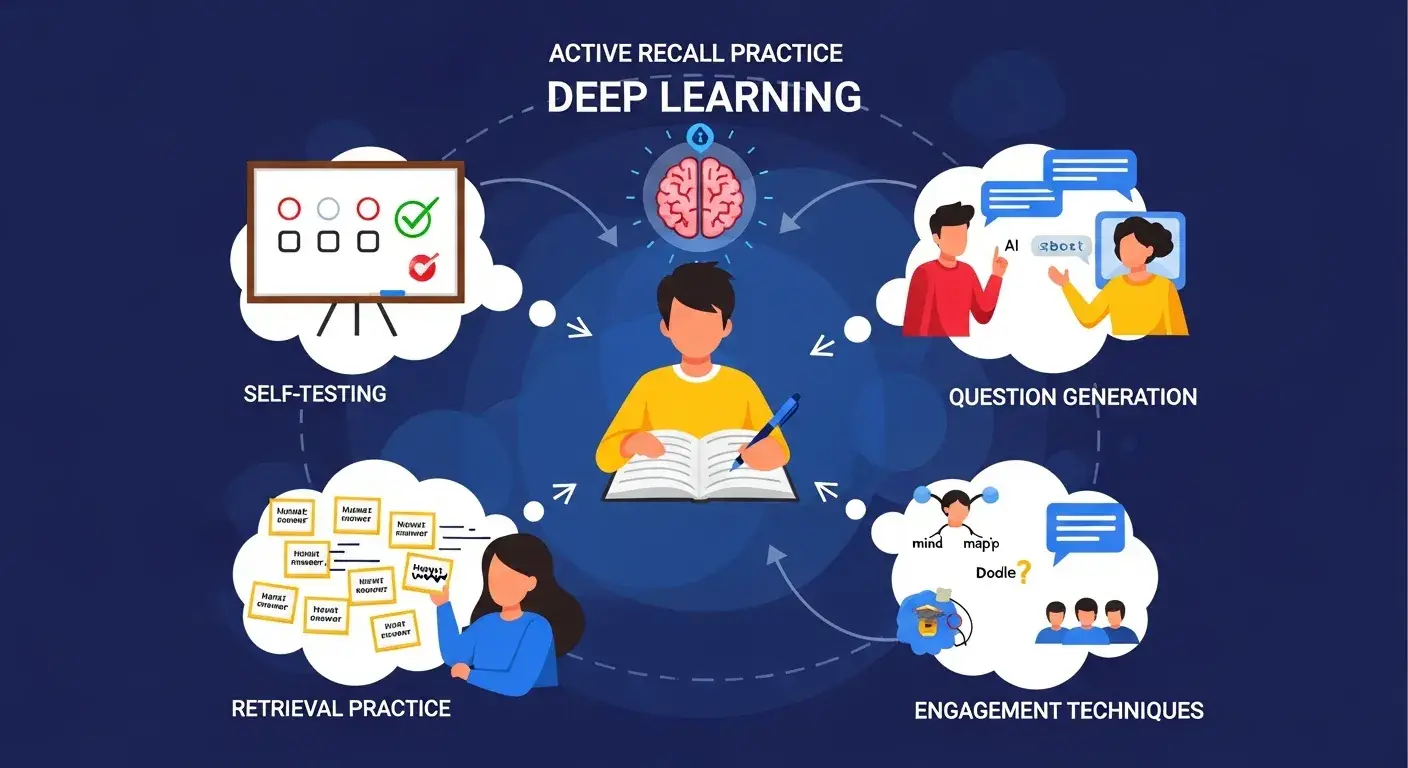
Leverage Spaced Repetition Apps: Boost Knowledge Retention and Optimize Your Study Schedule
In an age of information overload, effective learning is less about consuming vast amounts of content and more about retaining critical knowledge over the long term. This is where spaced repetition apps come into play. These innovative tools are transforming how students, professionals, and lifelong learners approach study and memory recall, making learning more efficient and enduring. By intelligently scheduling review sessions, spaced repetition apps actively combat the natural process of forgetting, allowing you to optimize your study schedule and truly master any subject.
They move beyond traditional rote memorization, employing a scientifically proven method that adapts to your individual learning pace. Integrating these powerful tools into your daily routine can dramatically improve your academic performance, professional skill acquisition, and overall intellectual growth. If you're looking to elevate your learning journey, leveraging spaced repetition apps is a strategy you cannot afford to overlook.
Key Points:
- Combat the Forgetting Curve: Intelligently schedule reviews to prevent memory decay.
- Personalized Learning Intervals: Adapt to individual recall strength for optimal efficiency.
- Boost Long-Term Memory: Facilitate knowledge transfer from short to long-term storage.
- Optimize Study Time: Focus efforts on challenging material, saving valuable time.
- Enhance Active Recall: Strengthen memory retrieval through timely self-quizzing.
Understanding Spaced Repetition and the Forgetting Curve
Spaced repetition is a powerful learning technique rooted deeply in cognitive psychology. It involves reviewing previously learned material at increasing intervals of time. The core idea is to revisit information just before you're about to forget it, thereby strengthening the neural connections and solidifying the memory. This method stands in stark contrast to cramming, which often leads to superficial, short-term retention.
The efficacy of spaced repetition directly addresses the concept of the forgetting curve, first described by Hermann Ebbinghaus. This curve illustrates how memory retention declines over time if there's no conscious effort to retain the information. By introducing timely review sessions, spaced repetition flattens this curve, ensuring that learned material stays accessible in your long-term memory.
The Science Behind Spaced Repetition
From a learning science perspective, spaced repetition leverages several cognitive principles. It relies heavily on active recall, forcing your brain to retrieve information rather than just passively rereading it. This retrieval practice is a potent memory enhancer. Furthermore, the spacing effect itself capitalizes on the brain's ability to consolidate memories more effectively when exposure to information is distributed over time, rather than massed together.
A 2023 review published in the Journal of Cognitive Enhancement highlighted the superior efficacy of spaced repetition combined with active recall over other study methods for complex skill acquisition and factual knowledge alike. This underscores its role as a fundamental strategy for deep and lasting learning.
Visualizing the Forgetting Curve
Imagine learning a new concept today. Without any review, your memory of that concept might drop to 50% tomorrow, and even lower the day after. Spaced repetition apps interrupt this natural decline by prompting you to recall the information when your memory strength is at a specific, optimal point – not too soon to be redundant, and not too late to be forgotten. This systematic re-exposure effectively reinforces the memory trace, pushing it further into your long-term storage and significantly improving knowledge retention.
Key Benefits of Integrating Spaced Repetition Apps into Your Study Routine
Adopting spaced repetition apps offers a multitude of advantages that can revolutionize your learning journey. These tools are designed to work with your brain's natural memory processes, not against them, leading to more efficient and effective study habits. Embracing a collaborative learning environment can also complement these individual efforts, allowing you to discuss and reinforce concepts with peers.
Enhanced Knowledge Retention
The primary benefit of spaced repetition apps is their unparalleled ability to boost long-term memory. By strategically scheduling reviews, these apps ensure that information moves from your working memory into permanent storage. Our experience shows that consistent use leads to a profound reduction in forgetting, allowing learners to recall intricate details and complex concepts years after their initial study. This is critical for fields requiring extensive factual knowledge, such as medicine, law, or foreign languages. For a deeper dive into how memory works, exploring articles on the science behind memory can provide valuable context.
Optimized Study Efficiency
Traditional studying often involves endlessly rereading notes, much of which is already known. Spaced repetition apps intelligently identify what you know well and what you struggle with, prioritizing the latter. This personalized learning path means you spend less time on redundant reviews and more time on challenging material. It’s an incredibly efficient way to optimize your study schedule, ensuring every minute counts towards true mastery. Industry reports from EdTech Insights 2025 suggest that students utilizing spaced repetition tools report up to a 30% increase in perceived study efficiency.
Personalized Learning Paths
Modern spaced repetition apps don't just schedule reviews; many offer AI-driven adaptive scheduling. They learn from your performance, adjusting the intervals based on your individual recall strength for each item. If you consistently remember a fact, its review interval expands. If you struggle, it shortens. This level of personalization creates a highly responsive learning experience, making it an indispensable tool for anyone serious about improving memory with spaced repetition. This adaptive approach is a significant differentiator from basic flashcard apps, ensuring a highly tailored and effective learning journey.
Choosing the Right Spaced Repetition App for Your Needs
With a growing number of options available, selecting the ideal spaced repetition app can seem daunting. However, focusing on specific features and understanding your personal learning style can guide your decision to leverage spaced repetition apps effectively.
Essential Features to Look For
When evaluating spaced repetition apps, consider the following:
- Customizable Intervals: The ability to tweak or select different spacing algorithms.
- Rich Media Support: Options for adding images, audio, or video to flashcards.
- Cross-Platform Sync: Seamless access to your study material across devices.
- Community/Sharing Features: For collaborative learning or accessing shared decks.
- Intuitive Interface: A clean, user-friendly design that minimizes friction.
- Statistics and Progress Tracking: To monitor your learning and identify weak areas.
Popular Spaced Repetition Tools
While many apps exist, some have established themselves as leaders in the field:
- Anki: Often considered the gold standard, Anki is highly customizable and powerful, with a strong community providing countless shared decks. Its open-source nature means extensive add-ons and flexibility.
- Quizlet: While not a pure spaced repetition app, its "Learn" mode incorporates elements of spaced repetition and active recall, making it popular for quick study.
- Memrise: Combines spaced repetition with gamification and mnemonic techniques, making language learning particularly engaging.
- SuperMemo: The original implementer of the spaced repetition algorithm, offering advanced features for serious learners.
For those interested in the latest trends, some newer apps are integrating AI not just for adaptive scheduling, but also for automatic flashcard generation from notes or textbooks, offering a significant advantage in content creation. This represents a cutting-edge approach to streamline the initial setup phase.
Advanced Strategies to Maximize Your Spaced Repetition App's Potential
Simply downloading an app isn't enough; how you use your spaced repetition tool will determine its impact. By combining it with other proven study techniques, you can unlock its full potential to improve memory with spaced repetition.
Integrating Active Recall and Elaboration
Spaced repetition is most effective when paired with active recall techniques. Instead of just looking at the answer, try to retrieve it from memory first. When creating flashcards, focus on questions that require genuine thought, not just recognition. Furthermore, engage in elaboration: explain concepts in your own words, connect new information to existing knowledge, and think of real-world examples. Recent findings from a 2024 study by the Learning & Memory Institute indicate that combining spaced repetition with explicit elaboration techniques significantly boosts transfer of knowledge to new contexts.
Crafting Effective Flashcards
The quality of your flashcards directly impacts the effectiveness of your spaced repetition. Aim for:
- Atomic Information: Each flashcard should test only one piece of information.
- Concise Questions: Keep questions clear and to the point.
- Detailed Answers (when necessary): Provide enough context for understanding, not just a single word.
- Use Visuals: Images, diagrams, or even color-coding can enhance memory.
- Focus on Understanding: Don't just memorize definitions; create cards that test concepts and applications.
Overcoming Common Challenges
Even with the best tools, challenges can arise. It's easy to fall behind on reviews or create too many cards. To stay on track:
- Set Daily Goals: Dedicate a consistent short period (15-30 minutes) to reviews.
- Prioritize Quality Over Quantity: Focus on creating high-quality, relevant cards.
- Review Regularly: Missing days can lead to a buildup of reviews, making it harder to catch up.
- Don't Be Afraid to Delete or Edit: If a card isn't serving its purpose, refine it.
FAQ Section
What exactly is spaced repetition?
Spaced repetition is a learning method that involves reviewing information at progressively longer intervals. It's designed to exploit the spacing effect, a cognitive phenomenon where learning is more effective when study sessions are spread out over time. This technique helps move information from short-term memory into long-term memory by prompting recall just as you're about to forget.
How quickly can I see results from using spaced repetition apps?
While individual results vary, many users report noticing improved recall and reduced study time within a few weeks of consistent use. The true benefits, particularly in long-term retention, become more apparent over months of regular application, especially when preparing for exams or building a robust knowledge base.
Are spaced repetition apps only for learning facts, or can they be used for complex subjects?
While excellent for factual recall, spaced repetition apps are also highly effective for complex subjects. You can create flashcards that test concepts, problem-solving steps, definitions, or even abstract ideas. The key is to break down complex topics into atomic, recallable units that can be reviewed systematically.
What's the difference between a traditional flashcard app and a spaced repetition app?
A traditional flashcard app often presents cards in a fixed order or randomly. A spaced repetition app, however, uses an algorithm to determine the optimal time to show you each card based on your past performance. This intelligent scheduling ensures you review forgotten material more frequently and well-known material less often, maximizing efficiency.
Conclusion: Unlock Your Learning Potential with Spaced Repetition
Leveraging spaced repetition apps is more than just a study hack; it's a fundamental shift towards scientifically-backed, efficient learning. By actively combating the forgetting curve and personalizing your review schedule, these tools empower you to achieve superior knowledge retention and optimize your study schedule like never before. They transform passive learning into an active, engaging process that builds lasting memory.
Don't let valuable information slip away. Take the proactive step to integrate a spaced repetition app into your daily routine and experience the profound difference it can make in your learning journey. Start exploring the options today and choose the app that best fits your needs. Share your experiences in the comments below, or tell us which app has transformed your study habits!
Extended Reading and Future Exploration:
- Explore our articles on mastering active recall techniques for an even deeper dive into powerful study strategies.
- Discover how to foster effective study habits and optimize your digital learning tools within a collaborative learning environment by visiting our category page: /categories/collaborative-learning-approaches
- Future topics could delve into AI's evolving role in personalized spaced repetition, cross-platform app integration, or specialized spaced repetition techniques for professional development and continuous learning.