Mastering Mind Maps for Academic Success: Practical Tips for Students
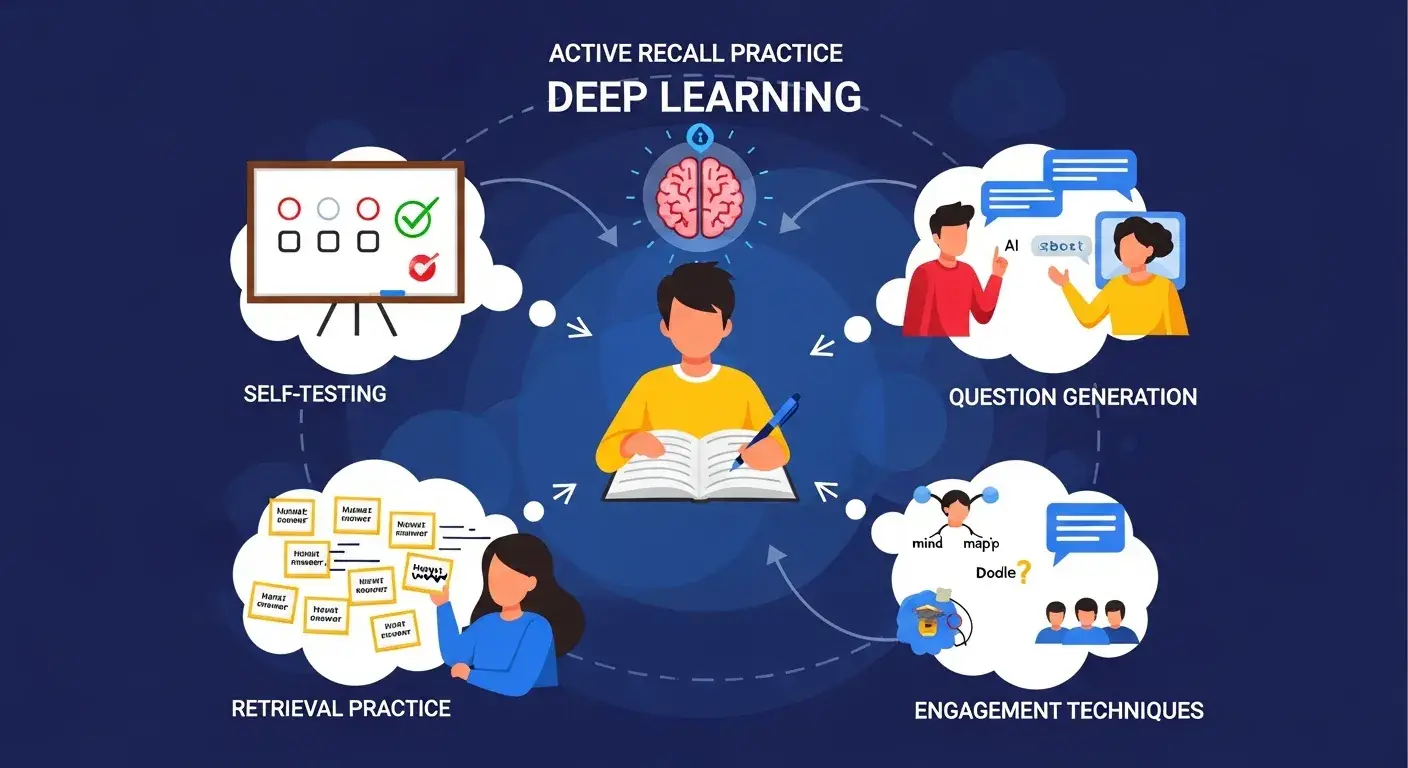
Mastering Mind Maps for Academic Success: Practical Tips for Students
In the demanding landscape of academia, students often grapple with vast amounts of information, complex concepts, and the pressure to perform. This is where mastering mind maps for academic success can be a game-changer. Mind mapping is a powerful visual thinking tool that helps you organize information, brainstorm ideas, and improve memory retention. By transforming linear notes into a dynamic, branching diagram, you can unlock your brain's natural ability to process information more effectively. This guide offers practical tips for students to integrate mind mapping into their study routines, leading to enhanced comprehension, better retention, and overall academic excellence.
Key Points:
- Visual Learning: Leverage your brain's preference for visual information.
- Active Recall: Strengthen memory through active engagement with content.
- Strategic Study: Plan and organize complex topics with clarity.
- Efficient Note-Taking: Condense information without losing key details.
- Problem-Solving: Break down challenges into manageable components.
What are Mind Maps and Why Students Need Them?
Mind maps are graphical representations of ideas and concepts. They are a hierarchical, radial diagram centered on a single topic, with related ideas branching out. This non-linear approach mirrors how our brains naturally think, making information easier to digest and recall. For students, this means moving beyond rote memorization to a deeper, more intuitive understanding of subjects.
The Science Behind Visual Learning
Our brains are wired for visual processing. Studies in cognitive neuroscience consistently show that visual aids significantly enhance learning and memory. When you create a mind map, you're not just writing; you're engaging multiple brain functions: logic, creativity, visual spatial awareness, and memory. A 2024 review published in Cognitive Research: Principles and Implications highlighted how visual organization tools like mind maps leverage neural pathways associated with spatial memory, leading to superior recall compared to traditional linear notes. This makes them a prime example of effective Cognitive Learning Principles.
Overcoming Information Overload
Students frequently face the challenge of information overload, especially during lecture heavy courses or research projects. Mind maps provide a solution by helping you condense vast amounts of information into a single, comprehensive overview. This process forces you to identify core concepts and their relationships, filtering out noise and focusing on what truly matters. It's an invaluable skill for efficient study and exam preparation.
Getting Started with Mind Mapping: Essential Tools and Techniques
The beauty of mind mapping lies in its simplicity. You don't need fancy equipment to begin, just a blank page and a pen. However, understanding some core techniques can elevate your mind mapping game.
Analog vs. Digital Mind Mapping
The choice between analog (pen and paper) and digital mind mapping depends on personal preference and context.
- Analog Mind Maps: Offer tactile engagement, freedom of drawing, and zero distractions. They are excellent for brainstorming sessions or quick note-taking during lectures. The act of physically drawing helps solidify concepts.
- Digital Mind Maps: Provide flexibility for editing, easy sharing, and integration with other digital tools. Software like XMind, Miro, or Coggle allows for quick reorganization, adding attachments, and collaboration. A 2023 survey by Learning Technologies Research found that digital mind mapping tools saw a 30% increase in adoption among university students for project planning and collaborative study over the past year. This suggests a growing trend towards digital solutions for their convenience and advanced features.
Core Elements of an Effective Mind Map
Regardless of the medium, an effective mind map adheres to several principles:
- Central Image: Start with a powerful, memorable image at the center representing your main topic.
- Branches: Use thick, curved lines for main topics, branching out from the center. Thinner lines for sub-topics.
- Keywords: Use single keywords or short phrases on each branch. This encourages conciseness and active recall.
- Colors: Utilize colors to differentiate branches, themes, or importance, stimulating visual memory.
- Images/Icons: Incorporate small images or icons to represent ideas, adding visual interest and aiding memory.
Practical Steps to Create Your First Mind Map
- Define Your Core Subject: Place the main topic in the center of a blank page (e.g., "Biology Exam," "Essay Outline," "Project Management").
- Add Main Branches: From the central topic, draw thick, curved lines representing the main sections or themes. Use a different color for each.
- Expand with Sub-Branches: From each main branch, draw thinner lines for sub-topics.
- Populate with Keywords: Write single keywords or short phrases on each branch. Think of associations, examples, or details.
- Use Images and Symbols: Don't hesitate to draw small pictures or symbols to represent ideas.
- Review and Refine: Once complete, review your mind map. Add connections, re-organize if necessary, and ensure clarity.
Advanced Mind Map Strategies for Enhanced Academic Performance
Beyond basic note-taking, mind maps can be powerful tools for specific academic tasks.
Using Mind Maps for Exam Revision and Active Recall
Mind maps are exceptional for consolidating revision notes. Instead of re-reading textbooks, transform your notes into a series of interconnected mind maps. Each map can represent a chapter or a major concept. When reviewing, try to recreate parts of the mind map from memory. This process of active recall techniques forces your brain to retrieve information, strengthening neural pathways and improving long-term retention. It's a much more effective study strategy than passive reading.
Structuring Essays and Research Papers with Mind Maps
One of the most valuable applications for students is using mind maps to outline essays and research papers.
- Thesis Statement as Center: Place your thesis or main argument at the center.
- Main Arguments as Primary Branches: Each primary branch becomes a body paragraph or major section.
- Supporting Points as Sub-Branches: From each main argument, add supporting evidence, examples, and details as sub-branches.
- Connect Ideas: Use arrows to show relationships between different sections or concepts, ensuring a logical flow.
This visual outline helps ensure coherence, identifies gaps in your argument, and streamlines the writing process, making your arguments more robust.
Mind Mapping for Group Projects and Collaboration
Mind maps are also fantastic collaborative tools. In group settings, a shared mind map can facilitate brainstorming, task allocation, and project planning. All team members can contribute ideas, track progress, and see how their individual contributions fit into the larger picture. This fosters better communication and ensures everyone is on the same page.
Common Pitfalls and How to Avoid Them
While mind mapping is intuitive, certain habits can reduce its effectiveness.
Over-complication and Clutter
A common mistake is trying to cram too much information onto one map or using full sentences. This defeats the purpose of visual clarity. Remember: less is more. Use single keywords, symbols, and plenty of white space. If a branch becomes too dense, consider creating a separate, linked mind map for that sub-topic.
Lack of Focus and Hierarchy
Without a clear central topic and logical branching, a mind map can become a chaotic web of unrelated ideas. Always start with a well-defined central theme and ensure that sub-branches genuinely relate to their parent branches. Maintain a clear visual hierarchy, with primary ideas standing out and supporting details receding.
Integrating Mind Mapping into Your Daily Study Routine
To truly benefit from this powerful tool, consistent integration is key. Start by using mind maps for effective note-taking strategies in one course, then gradually expand to others. Try mapping out daily tasks, weekly schedules, or even complex problem sets. The more you practice, the more natural and effective mind mapping will become.
Frequently Asked Questions
How often should I use mind maps?
Consistency is key. Aim to use mind maps whenever you are learning new material, brainstorming ideas, or consolidating information for revision. Even a quick 5-minute mind map after a lecture can significantly boost retention. Regular practice builds proficiency and makes the process more intuitive.
Can mind maps help with subjects like math or science?
Absolutely! While often associated with humanities, mind maps are incredibly effective for STEM subjects. You can map out formulas, scientific processes, problem-solving steps, or complex theories. The visual organization helps in understanding relationships between concepts, which is crucial for subjects requiring logical progression.
What's the best software for digital mind mapping?
Several excellent tools exist. XMind, MindMeister, Miro, and Coggle are popular choices, each offering unique features for collaboration, export options, and ease of use. Many offer free basic versions, allowing students to experiment and find the one that best suits their needs and learning style.
Are mind maps only for visual learners?
No, mind maps benefit all learning styles. While they strongly appeal to visual learners, the process of active creation, critical thinking, and summarizing information engages auditory, kinesthetic, and reading/writing learners as well. The multi-sensory engagement makes it a universally effective learning strategy.
Take Control of Your Learning Journey Today!
Mastering mind maps for academic success is within your reach. By incorporating these practical tips, you can transform your study habits, improve your memory, and approach complex topics with newfound clarity and confidence. Don't let information overload hinder your potential; embrace the power of visual thinking.
Ready to unlock your academic potential? Start creating your first mind map today and share your experiences in the comments below! Subscribe to our newsletter for more cutting-edge learning strategies and tips.
Extended Reading Suggestions:
- Explore more about memory retention and cognitive psychology.
- Dive into advanced study techniques like the Feynman Technique or Spaced Repetition.
- Discover tools for project management and organizational skills for students.