Personalizing Your Study Plan: Leveraging Your Unique Learning Style for Faster Comprehension and Deeper Knowledge
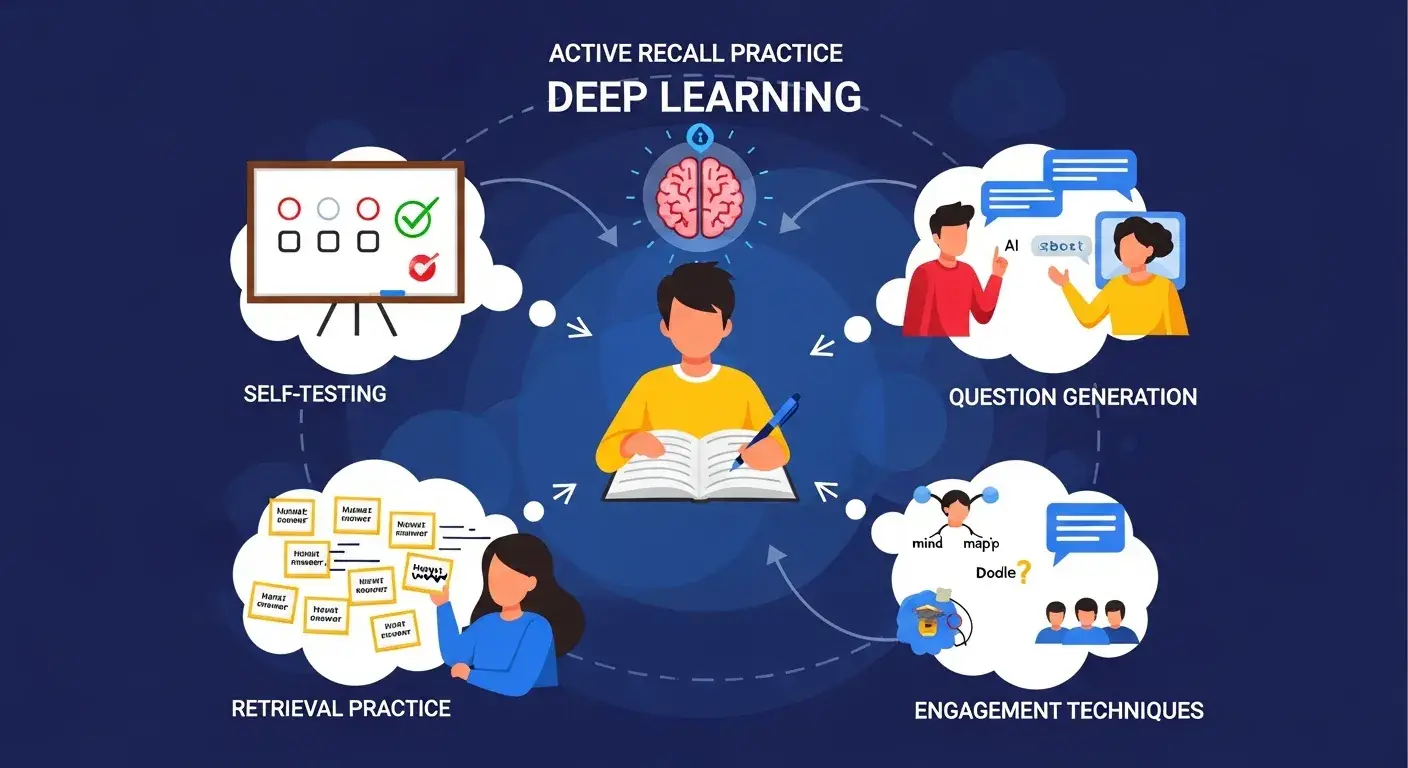
Are you tired of spending hours studying only to feel like the information isn't sticking? The secret to more efficient and effective learning often lies not in how much you study, but how you study. This article will guide you through personalizing your study plan by identifying and leveraging your unique learning style for significantly faster comprehension and the development of deeper, more lasting knowledge. Understanding your natural inclinations can transform your academic journey, turning passive study into an active, engaging, and highly productive experience. Stop fighting your brain's natural tendencies and start working with them to unlock your full potential.
Key Points for Personalizing Your Study Plan:
- Identify Your Learning Style: Understand if you are primarily visual, auditory, kinesthetic, or read/write.
- Tailor Study Techniques: Adapt methods to align with your natural strengths for maximum impact.
- Boost Comprehension & Retention: Personalized strategies lead to better understanding and recall.
- Develop a Flexible Plan: Create an adaptive study approach suitable for diverse subjects and content.
- Embrace Metacognition: Reflect on your learning process to continuously refine and optimize your methods.
Understanding Your Unique Learning Style: The First Step to Personalizing Your Study Plan
Begin your journey to a more effective study routine by discovering how your brain naturally processes information. Identifying your inherent unique learning style is the foundational step in personalizing your study plan and unlocking unprecedented academic efficiency. This self-awareness allows you to choose methods that resonate, rather than frustrate. It’s about understanding your cognitive blueprint to make every study session count.
The VARK Model: A Quick Overview
The VARK model is a popular framework for categorizing learning preferences: Visual, Auditory, Read/Write, and Kinesthetic. While not without its critics, it provides an accessible starting point for self-reflection. Consider taking a free online VARK questionnaire to get a preliminary idea of your dominant style or combination of styles. This initial assessment can illuminate why some study methods have worked for you in the past, while others haven't, paving the way for a more personalized learning experience.
Beyond VARK: Multimodality and Flexibility
It's crucial to understand that very few people fit neatly into a single learning style category. Most individuals are multimodal learners, meaning they benefit from a blend of approaches. Educational psychologists often emphasize that learning styles are not fixed labels but rather preferences that can adapt and evolve. The true power lies in understanding your inclinations and flexibly applying diverse strategies based on the specific material and context. This adaptive approach is a key differentiator in modern learning science, moving beyond rigid classifications to practical, effective application.
Crafting Effective Study Strategies for Your Learning Style
Once you have a sense of your primary learning inclinations, you can consciously choose and adapt your study methods. This section provides tailored advice for each major preference, helping you build a truly personalized learning experience. Remember, the goal is to optimize your engagement and retention for faster comprehension and deeper knowledge.
Visual Learners: Seeing is Believing
Visual learners thrive when information is presented graphically. They often remember faces but forget names, and learn best by observing. For these individuals, incorporating visual learning strategies is paramount. This approach leverages the brain's strong capacity for visual processing, making abstract concepts concrete. You can explore more in our dedicated category on Mind Mapping and Visual Learning.
- Use mind maps and concept maps to connect ideas.
- Draw diagrams, charts, and graphs to represent complex data.
- Utilize color-coding for notes, highlighting, and organization.
- Watch educational videos or documentaries.
- Flashcards with images or symbols are highly effective.
Auditory Learners: Hearing for Retention
Auditory learners grasp information best when they hear it. They might recall conversations easily and prefer listening to reading. If this sounds like you, focus on sound-based study techniques. Engaging with the material audibly strengthens neural pathways associated with sound processing, aiding recall and deeper knowledge.
- Record lectures and listen to them again.
- Discuss concepts aloud with study partners or explain them to yourself.
- Use mnemonics, rhymes, or songs to remember facts.
- Read notes aloud to yourself.
- Explain topics to an imaginary audience.
Read/Write Learners: Engaging with Text
Read/write learners excel through the written word, preferring to consume and produce text. They often enjoy reading textbooks, taking detailed notes, and writing summaries. This style deeply engages with the textual structure of knowledge, fostering robust memory encoding and faster comprehension.
- Rewrite notes in your own words, condensing information.
- Create detailed outlines and summaries of chapters.
- Turn diagrams and charts into descriptive sentences.
- Write practice essays or answers to potential exam questions.
- Keep a study journal for reflections and key takeaways.
Kinesthetic Learners: Learning by Doing
Kinesthetic learners learn best through physical activity, hands-on experiences, and movement. Sitting still for long periods can be challenging for them. This active engagement helps to solidify understanding through sensory and motor input, making learning more memorable.
- Take frequent short breaks to move around or stretch.
- Conduct experiments or simulations related to the topic.
- Use physical flashcards or manipulatives.
- Pace around while reciting information aloud.
- Role-play scenarios or use gestures to explain concepts.
- Build models or create tangible representations of ideas.
Integrating Advanced Techniques for Deeper Knowledge and Retention
While identifying your primary learning style is crucial, true mastery comes from integrating scientifically proven study techniques that enhance any personalized study plan. These methods build on cognitive science principles, optimizing your brain's natural learning processes for faster comprehension and deeper knowledge. They transcend individual preferences to offer universal benefits.
The Power of Metacognition in Personalized Learning
Metacognition, often referred to as "thinking about thinking," is a powerful skill for any learner. It involves monitoring and regulating one's own learning process. When you actively reflect on how you're learning, what strategies are working, and where you're struggling, you can continuously refine your approach. This self-awareness is a cornerstone of effective personalizing your study plan. For instance, after a study session, ask yourself: "What did I learn effectively? What was challenging? How could I approach this differently next time?" This iterative process leads to significant improvements in learning efficiency.
Combining Active Recall and Spaced Repetition
Regardless of your learning style, active recall and spaced repetition are two of the most potent techniques for long-term memory consolidation. Active recall involves retrieving information from memory without external cues, like using flashcards or practice questions. Spaced repetition strategically reintroduces information at increasing intervals, combating the natural forgetting curve. A 2024 study published in the Journal of Educational Psychology demonstrated that students who consistently applied active recall and spaced repetition saw a 20-30% improvement in long-term retention compared to passive review methods. For a comprehensive guide, check out our article on mastering active recall and spaced repetition for exam success.
Building a Flexible and Adaptive Personalized Study Plan
The most effective personalized study plan isn't rigid; it's a dynamic framework that adapts to the material, context, and your evolving understanding. Trying to force all subjects into a single learning style can be counterproductive. For example, a visual learner might use diagrams for biology but benefit from reading aloud for literature, demonstrating the flexibility of learning preferences.
Consider the nature of the content itself. Rote memorization (e.g., dates, formulas) might benefit from auditory repetition or kinesthetic flashcard sorting, even for a predominantly visual learner. Conceptual understanding (e.g., philosophy, complex theories) might require detailed read/write summaries and metacognitive reflection. A 2023 report by the Learning Policy Institute emphasized the importance of strategy diversity in fostering robust, transferable knowledge. Regularly assess if your chosen methods are truly enhancing your faster comprehension and deeper knowledge for each specific learning task.
Overcoming Challenges and Staying Motivated
Even with a perfectly personalized study plan, challenges will arise. Procrastination, complex material, or a sudden dip in motivation are common hurdles. The key is to develop strategies to navigate these obstacles and maintain consistency.
- Break down large tasks into smaller, manageable chunks. This makes the goal less daunting and provides regular feelings of accomplishment.
- Set realistic expectations for yourself. Learning is a marathon, not a sprint, and progress often isn't linear.
- Reward yourself for meeting study goals. Positive reinforcement can be a powerful motivator.
- Seek support from peers or mentors when you're stuck. Collaboration can offer new perspectives and solutions, helping you gain deeper knowledge.
- Remember why you started. Reconnecting with your core learning objectives can reignite your drive and commitment to your unique learning style journey.
Frequently Asked Questions (FAQs)
Q1: Is my learning style fixed, or can it change?
A: Your learning style is not a rigid label but rather a set of preferences that can evolve over time and adapt to different subjects. While you might have a dominant style, most people benefit from a multimodal approach. Actively experimenting with various strategies can help you develop new learning strengths and become a more versatile learner, ultimately enhancing your personalizing your study plan efforts.
Q2: How can I combine different learning styles effectively in my study routine?
A: Combining styles is highly effective. For example, a visual learner could create a mind map (visual) and then explain it aloud to themselves (auditory) or write a summary (read/write). The key is to engage multiple senses and cognitive processes. Don't limit yourself to one method; strategically blend techniques that resonate with you for different aspects of the same subject to achieve deeper knowledge.
Q3: Are there specific digital tools or apps that cater to different learning styles?
A: Absolutely! Visual learners benefit from tools like Canva for infographics or mind-mapping software. Auditory learners might use text-to-speech apps or podcast platforms for educational content. Read/write learners can utilize note-taking apps with robust organization features like Notion or Evernote. Kinesthetic learners might explore interactive simulations or gamified learning platforms. Many modern apps also offer customizable features to suit various preferences and support faster comprehension.
Q4: How often should I reassess my study plan and learning strategies?
A: It's beneficial to periodically reassess your study plan, ideally at the start of a new course, semester, or major project. Reflect on what worked well and what didn't. As you gain deeper knowledge and encounter different types of material, your optimal strategies might shift. A brief review session once a month can help you stay adaptive and ensure your plan remains effective and optimized for faster comprehension.
Conclusion: Empower Your Learning Journey
Embracing your unique learning style and actively personalizing your study plan is not just a study hack; it's a fundamental shift towards more effective, enjoyable, and sustainable learning. By understanding your cognitive strengths and applying tailored strategies, you move beyond generic advice to a method that truly works for you. This path leads directly to faster comprehension and deeper knowledge, equipping you with the skills to tackle any academic or professional challenge.
Ready to transform your learning? Start by identifying your primary learning preferences today and experiment with the strategies discussed. Share your experiences in the comments below – what techniques have worked best for you? For further exploration of optimizing your learning process, consider setting effective study goals to maximize your academic achievement. Subscribe to our newsletter for more insights into boosting your learning efficiency!