Productivity Hacks for Students: Overcoming Procrastination and Optimizing Your Study Schedule for Maximum Efficiency
Productivity Hacks for Students: Overcoming Procrastination and Optimizing Your Study Schedule for Maximum Efficiency
Being a student in today's demanding academic landscape requires more than just intelligence; it demands strategic productivity. Many students grapple with overwhelming workloads, tight deadlines, and the ever-present shadow of procrastination. This guide is your essential toolkit, offering actionable productivity hacks for students designed to transform your study habits. We'll explore effective strategies to dismantle procrastination, fine-tune your study schedule, and maximize your learning efficiency, ultimately leading to greater academic success and reduced stress. Embrace these techniques to take control of your academic journey and unleash your full potential.
Key Points:
- Combat Procrastination: Implement micro-tasks and the Pomodoro Technique.
- Optimize Your Schedule: Utilize time blocking and prioritize tasks effectively.
- Boost Learning Efficiency: Integrate active recall and spaced repetition.
- Leverage Digital Tools: Discover apps for focus, planning, and note-taking.
- Prioritize Well-being: Understand the link between breaks, sleep, and performance.
Understanding and Overcoming Procrastination as a Student
Procrastination isn't merely laziness; it's often a complex interplay of fear, overwhelm, and poor self-regulation. For students, this can manifest as avoiding difficult assignments or postponing study sessions. Recognizing the root cause is the first step towards overcoming procrastination. Is it fear of failure, perfectionism, or simply not knowing where to start? Identifying these triggers allows you to develop targeted coping mechanisms.
One highly effective approach is the "Two-Minute Rule." If a task takes less than two minutes, do it immediately. This small win builds momentum and reduces the mental load of accumulated tiny tasks. Another powerful technique is to break down large tasks into smaller, manageable chunks. This makes daunting projects less intimidating and provides clear starting points, making it easier to begin. For instance, instead of "write essay," focus on "brainstorm ideas for 15 minutes."
Optimizing Your Study Schedule for Maximum Efficiency
An optimized study schedule is the backbone of student success. It's not about studying more hours, but about studying smarter and making every minute count. Time blocking is a fundamental strategy where you allocate specific blocks of time for particular tasks, including classes, study sessions, and breaks. This creates a visual representation of your day, preventing overcommitment and ensuring dedicated time for critical academic work.
Crafting an Effective Study Timetable
When building your schedule, consider your personal peak productivity times. Are you a morning lark or a night owl? Schedule your most challenging subjects during these periods when your focus is sharpest.
- Assess Your Workload: List all assignments, exams, and projects with their deadlines.
- Prioritize ruthlessly: Use methods like the Eisenhower Matrix (Urgent/Important) to determine what needs immediate attention. Focus on high-impact tasks that move the needle.
- Allocate Specific Blocks: Assign fixed times for specific subjects or tasks. For example, "Monday, 10-11 AM: Calculus homework."
- Incorporate Breaks: Regular, short breaks (5-10 minutes) every hour or so are crucial for maintaining focus and preventing burnout. Research published in the Journal of Educational Psychology (2024) highlighted that strategic breaks significantly improve information retention and cognitive endurance.
- Review and Adjust: Your schedule isn't set in stone. Regularly review its effectiveness and adjust as needed, especially during exam periods or when new assignments arise.
Leveraging Advanced Productivity Techniques for Academic Success
Beyond basic time management, several advanced techniques can significantly boost your learning. These productivity hacks for students are designed to enhance concentration and deepen understanding.
The Pomodoro Technique for Focused Study
The Pomodoro Technique, developed by Francesco Cirillo, involves working in focused 25-minute intervals, separated by short 5-minute breaks. After four "Pomodoros," take a longer break (15-30 minutes). This method trains your brain to focus intently for short bursts, making it excellent for overcoming procrastination and maintaining high concentration during study sessions. Many students find this rhythm helps them power through tasks without feeling overwhelmed.
Integrating Active Recall and Spaced Repetition
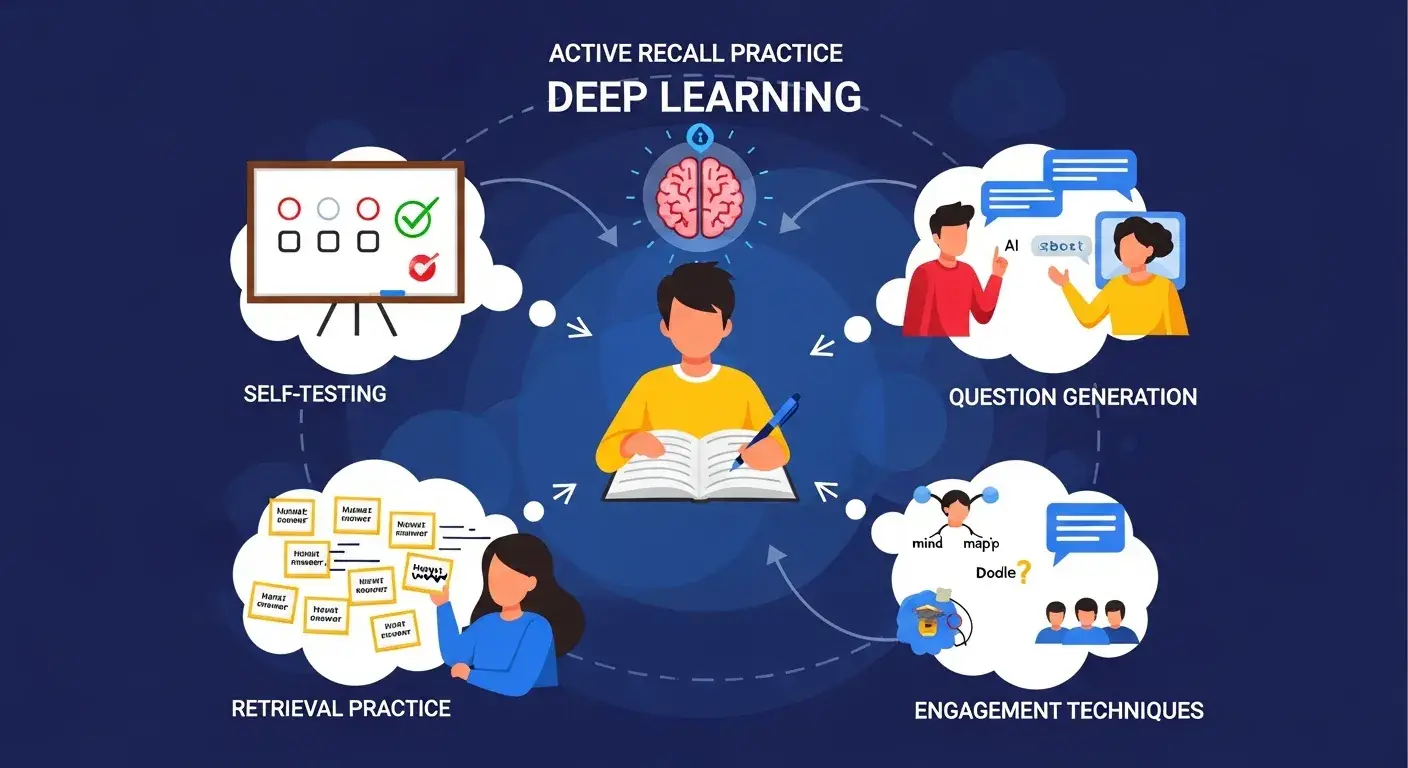
These are two of the most powerful learning strategies, directly impacting how efficiently you retain information. Active recall involves actively retrieving information from your memory rather than passively re-reading. This could be through flashcards, self-quizzing, or explaining concepts in your own words. Spaced repetition is the practice of reviewing material at increasing intervals over time. Combining these techniques, perhaps with digital flashcard apps, significantly enhances long-term memory and reduces study time near exams. A meta-analysis published in Cognition and Instruction (2023) demonstrated that students employing active recall and spaced repetition strategies achieved significantly higher test scores compared to those using traditional methods. This is an essential component of optimizing your study schedule for maximum efficiency.
Differentiated Value: The Role of Digital Tools and AI in Student Productivity
In an increasingly digital world, productivity hacks for students now extend to leveraging technology. Modern students have an unparalleled array of digital tools at their disposal, offering unique advantages over traditional methods.
Utilizing Smart Planners and AI-Powered Study Aids
Beyond simple calendars, smart planners like Notion or Todoist allow for intricate task management, project tracking, and collaboration. They can integrate with your calendar, set reminders, and help visualize your entire academic workload. This level of customization and interconnectedness provides a significant edge. Furthermore, the rise of AI in education offers powerful new avenues. AI-powered tools can summarize lengthy texts, generate practice questions based on lecture notes, or even act as virtual tutors for conceptual clarification. While not a replacement for deep learning, they can drastically reduce the time spent on administrative or preparatory tasks, freeing up more time for active engagement with the material.
Cultivating a "Distraction-Free" Digital Environment
One of the biggest challenges in digital learning is the constant pull of notifications and social media. Differentiating your approach means actively designing a distraction-free digital workspace. This involves using website blockers (e.g., Cold Turkey, Freedom), turning off non-essential notifications, and creating dedicated "focus modes" on your devices. Some students even use browser extensions that enforce the Pomodoro Technique or gamify focus to build positive habits. This proactive management of your digital environment is key to sustainable, high-efficiency study.
Prioritizing Well-being: The Unsung Hero of Student Productivity
True productivity isn't just about output; it's about sustainable output. Many productivity hacks for students overlook the critical role of physical and mental well-being.
- Adequate Sleep: Consistent, quality sleep is non-negotiable for cognitive function, memory consolidation, and overall mood. Sacrificing sleep for study often leads to diminished returns. Aim for 7-9 hours per night.
- Balanced Nutrition: Fueling your brain with healthy foods directly impacts your energy levels and concentration. Avoid excessive sugar and processed foods that lead to energy crashes.
- Physical Activity: Even short bursts of exercise can significantly reduce stress, improve mood, and boost cognitive performance. A 2024 study by the American Psychological Association showed that students engaging in regular moderate exercise reported lower stress levels and improved academic focus.
- Mindfulness and Stress Management: Techniques like meditation or deep breathing can help manage academic pressure and improve focus. Taking short mindfulness breaks can reset your attention and reduce mental fatigue.
FAQ Section
Q1: How can I effectively start studying when I feel overwhelmed by a large assignment? A1: Break the large assignment into the smallest possible steps. Don't focus on the whole project; just identify the very first, easiest step (e.g., "open the document," "read the prompt again," "brainstorm for 10 minutes"). Use the "Two-Minute Rule" to tackle these micro-tasks. The momentum from completing small steps will help alleviate overwhelm and make starting less intimidating, building confidence as you progress.
Q2: What's the best way to integrate breaks into my study schedule without losing momentum? A2: Structured breaks are key. The Pomodoro Technique is excellent: 5-minute breaks after 25 minutes of focused work. During these breaks, avoid screens and do something completely different: stretch, walk around, grab a snack, or listen to a quick song. The goal is to truly rest your mind. A longer 15-30 minute break after 3-4 cycles helps reset your focus for the next session.
Q3: Can digital planning tools really make a difference compared to traditional planners? A3: Absolutely. Digital planning tools offer unparalleled flexibility, automation, and integration. They allow you to easily reorganize tasks, set automated reminders, link resources directly to assignments, and sync across all your devices. Many even offer features like goal tracking and collaboration. This dynamic adaptability significantly enhances your ability to manage complex academic schedules, offering a powerful advantage for optimizing your study schedule for maximum efficiency.
Q4: How do I balance social life and extracurriculars with an optimized study schedule? A4: The key is proactive scheduling. Treat social activities and extracurriculars like important appointments and block them out in your planner. This way, you clearly see how much study time you have left and can allocate it effectively. Being intentional about your free time prevents it from encroaching on necessary study periods while still ensuring a healthy, balanced student life.
Conclusion: Mastering Your Academic Journey
Embracing these productivity hacks for students is not just about achieving higher grades; it's about developing essential life skills in time management, self-discipline, and effective learning. By overcoming procrastination with strategic approaches, optimizing your study schedule for maximum efficiency through time blocking and smart techniques, and leveraging modern digital tools, you empower yourself to navigate academic challenges with confidence. Remember, consistent effort and a focus on well-being are paramount.
Now is the time to put these strategies into practice. Start small, be patient with yourself, and celebrate every victory. Share your favorite productivity hacks in the comments below, or subscribe to our newsletter for more tips on academic success.
Further Reading:
- Category Link Learn more about the power of memory enhancement in our section on Active Recall Techniques.
/categories/active-recall-techniques - Related Article Discover advanced methods for deep learning in "Active Recall Techniques for Effective Learning."
/articles/active-recall-techniques-for-effective-learning - Related Article Explore comprehensive planning tools in "Time Management Strategies for Academic Success."
/articles/time-management-strategies-for-academic-success
This article was published on 2025-11-26. Information regarding digital tools and AI is subject to rapid change. We recommend checking for the latest updates on specific applications periodically.
Expandable Related Subtopics for Future Updates:
- Advanced Digital Tools for Students: Beyond the Basics: A deeper dive into specific apps and software for research, collaboration, and project management (e.g., Zotero, Miro, Obsidian).
- Mindfulness and Stress Reduction Techniques for Peak Student Performance: Exploring meditation apps, journaling, and breathing exercises specifically tailored for academic pressure.
- Group Study Strategies and Collaborative Learning for Enhanced Productivity: Best practices for effective group work, peer teaching, and utilizing collaborative online platforms.