Resilience in Learning: Mindset Shifts and Strategies to Conquer Study Stagnation
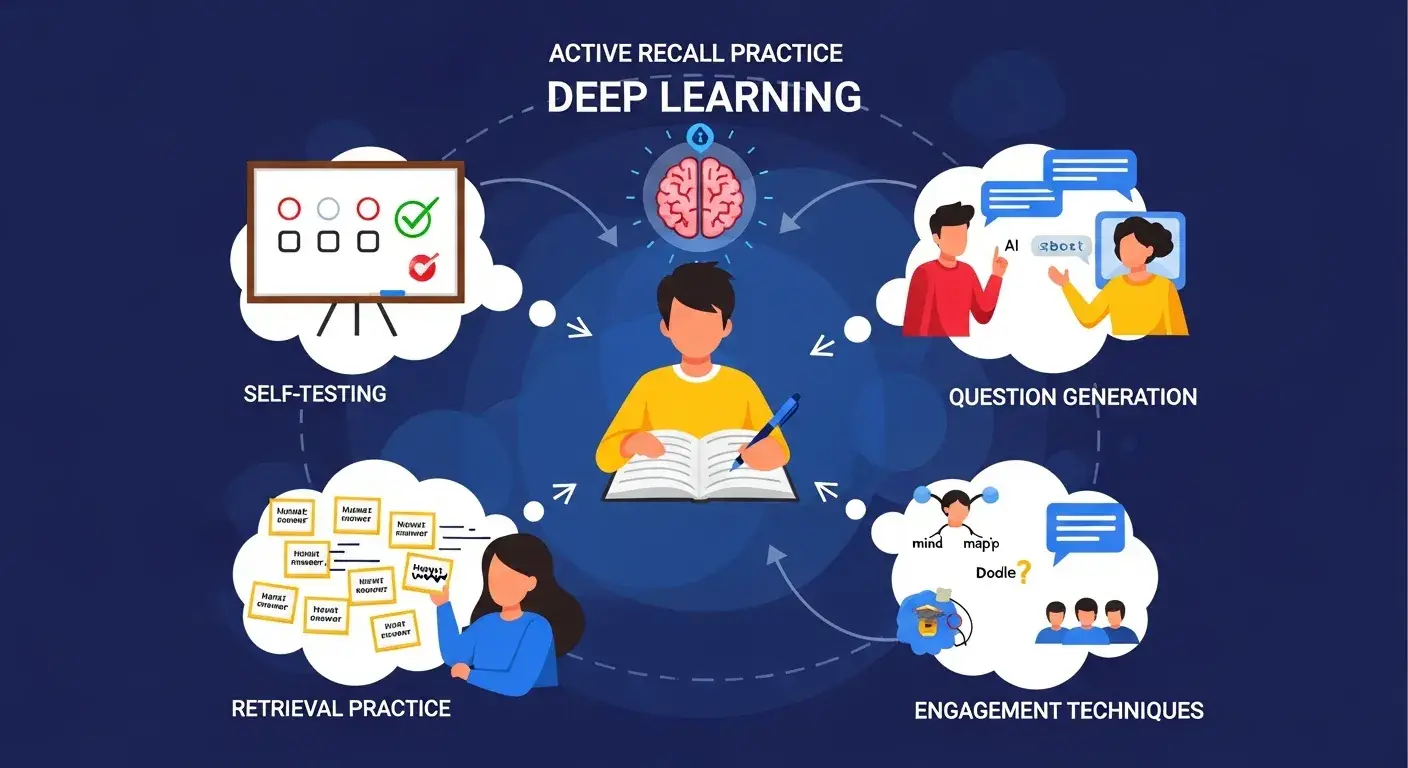
Resilience in Learning: Mindset Shifts and Strategies to Conquer Study Stagnation
Every learner, regardless of their level or experience, eventually encounters a period where progress feels stuck – a phenomenon commonly known as study stagnation. This isn't a sign of failure but a natural part of the learning curve, often signaling a need for adjusted approaches. Developing resilience in learning is paramount to navigating these challenging phases effectively. It involves cultivating specific mindset shifts and implementing strategic actions to overcome plateaus and rekindle motivation. This guide explores practical ways to transform your approach to learning, empowering you to conquer study stagnation and achieve sustained academic success.
Key Points to Conquer Study Stagnation:
- Embrace a growth mindset to view challenges as opportunities for growth.
- Practice cognitive flexibility to adapt study methods when facing difficulties.
- Set strategic, incremental goals to maintain momentum and build confidence.
- Actively seek and apply constructive feedback for continuous improvement.
- Leverage collaborative learning to gain new perspectives and shared accountability.
Understanding Study Stagnation: Why Learners Hit Plateaus
Study stagnation often manifests as a feeling of being stuck, where despite effort, little to no progress is perceived. This can lead to frustration, decreased motivation, and even burnout. Several factors contribute to this experience. Sometimes, the initial novelty of a subject wears off, making continued engagement challenging. Other times, learners might hit a complex topic that requires a deeper level of understanding or a different learning approach than what they're accustomed to.
A common pitfall is the reliance on a single study method, which might be effective for some topics but ineffective for others. For instance, rote memorization might work for basic facts but fails when critical thinking or problem-solving is required. External factors like stress, lack of sleep, or an unsupportive learning environment can also significantly impede progress. Recognizing the underlying causes of your personal study stagnation is the first crucial step toward addressing it. It's about understanding the 'why' before you can effectively implement the 'how'.
Cultivating a Resilient Mindset for Learning Success
Developing a resilient mindset is the bedrock of overcoming any learning challenge. It's about more than just persistence; it's about how you interpret and respond to setbacks. A truly resilient learner sees obstacles not as roadblocks, but as integral parts of the learning journey, offering valuable lessons and opportunities for growth. This foundational shift in perspective profoundly impacts how you approach difficult subjects and complex tasks.
The Power of Growth Mindset in Overcoming Hurdles
One of the most transformative mindset shifts is adopting a growth mindset, a concept popularized by Dr. Carol Dweck. Individuals with a growth mindset believe their abilities and intelligence can be developed through dedication and hard work. When faced with a challenging concept or failure, they don't see it as a reflection of their inherent inability but as an opportunity to learn and improve. This contrasts sharply with a fixed mindset, where individuals believe their talents are static, leading them to avoid challenges to protect their ego. Embracing a growth mindset means reframing mistakes as feedback and viewing effort as the path to mastery, which is essential for building resilience in learning. Recent educational psychology studies, including a 2024 meta-analysis published in Educational Review, consistently link a strong growth mindset to higher academic achievement and greater persistence in the face of difficulty.
Embracing Productive Struggle and Cognitive Flexibility
Many learners instinctively try to avoid struggle, perceiving it as a sign they're not smart enough or that the material is too hard. However, productive struggle is a critical component of deep learning. It refers to the effort involved in making sense of something confusing, grappling with a complex problem, or correcting a mistake. When you engage in productive struggle, your brain actively works to forge new neural connections, leading to a deeper and more lasting understanding. This unique insight differentiates resilient learners.
Coupled with productive struggle is cognitive flexibility – the ability to switch between different problem-solving strategies or mental frameworks when an initial approach isn't working. Instead of endlessly repeating an ineffective study method, a cognitively flexible learner will pause, reflect, and try an alternative. This might involve explaining the concept to someone else, drawing a diagram, seeking an example, or breaking down the problem into smaller parts. Developing this flexibility is a powerful antidote to study stagnation.
Practical Strategies to Conquer Study Stagnation
Beyond mindset shifts, tangible strategies are essential for practical application. These methods provide a structured approach to breaking through plateaus and maintaining consistent progress. Implementing these strategies can transform passive learning into an active, engaging process that fosters continuous improvement.
Strategic Goal Setting and Incremental Progress
One common cause of feeling stuck is having goals that are either too vague or too ambitious. To combat this, set SMART goals: Specific, Measurable, Achievable, Relevant, and Time-bound. Instead of "I want to understand chemistry," try "I will master chemical bonding concepts by completing 10 practice problems and reviewing two textbook chapters this week." This approach breaks down large learning objectives into manageable chunks, making progress visible and motivating.
Focusing on incremental progress ensures that even small efforts contribute to the larger goal. Celebrate these small wins to reinforce positive study habits and build self-efficacy. This also helps to prevent overwhelming feelings that can lead to study stagnation. According to findings from the Learning Science Institute in early 2025, learners who regularly track and acknowledge their incremental progress report higher levels of self-motivation and sustained engagement. If you find yourself struggling with goal setting or managing your learning time effectively, consider exploring resources on mastering time management for learners.
Leveraging Feedback and Deliberate Practice
Feedback is a gift, offering critical insights into areas needing improvement. Resilient learners actively seek and utilize feedback, viewing it as a roadmap for growth rather than criticism. This means not just looking at a grade, but understanding why you got that grade. Where did you go wrong? What concepts did you misunderstand?
Deliberate practice involves focused, intentional effort aimed at improving specific skills. It’s not just about doing more, but doing more effectively. This often means practicing at the edge of your current ability, making mistakes, and then using feedback to correct them. For example, if you're learning a language, deliberate practice might involve recording yourself speaking and then analyzing your pronunciation and grammar, or challenging yourself with increasingly complex conversations. This cycle of effort, feedback, and refinement is crucial for building deep expertise and overcoming learning plateaus.
The Role of Collaborative Learning in Building Resilience
Collaborative learning environments offer a unique advantage in combating study stagnation. Working with peers can provide fresh perspectives, expose you to different problem-solving approaches, and clarify concepts that might be difficult to grasp alone. When you teach a concept to someone else, your understanding deepens, and gaps in your knowledge become apparent. This active engagement enhances retention and fosters a more robust understanding.
Furthermore, a collaborative setting provides a built-in support system. Knowing that others are facing similar challenges can reduce feelings of isolation and inadequacy, which are common with study stagnation. Peer feedback and shared accountability can significantly boost motivation and commitment. Embracing a collaborative approach is a key strategy within the broader framework of collaborative learning approaches. For practical tips on how to make the most of group learning, refer to our guide on effective study groups for academic success.
Fostering Self-Compassion and Well-being in Your Learning Journey
It's easy to be hard on ourselves when we encounter difficulties in learning. However, self-compassion, the practice of treating yourself with kindness and understanding during challenging times, is incredibly important for resilience. When you're struggling with a concept or feel frustrated, instead of engaging in self-criticism, acknowledge your feelings without judgment. Remind yourself that imperfection is part of the human experience and learning process.
Prioritizing your overall well-being is also non-negotiable. Adequate sleep, regular physical activity, and a balanced diet directly impact your cognitive function and emotional regulation. Neglecting these fundamental needs can exacerbate study stagnation and make it harder to bounce back from setbacks. Integrating short mindfulness breaks into your study routine can also help manage stress and improve focus, creating a more sustainable and resilient learning journey.
Frequently Asked Questions (FAQ)
What exactly is study stagnation?
Study stagnation is a period where a learner feels like they are making little to no progress despite putting in effort. It can manifest as decreased motivation, frustration, and a sense of being stuck on a particular topic or skill. This feeling is a natural part of any extended learning process, often indicating that current strategies are no longer sufficient or that a deeper understanding is required.
How does a growth mindset help with learning difficulties?
A growth mindset fundamentally alters how one perceives challenges. Instead of viewing difficulties as proof of inadequacy, individuals with a growth mindset see them as opportunities for development. This perspective encourages persistence, experimentation with different approaches, and a willingness to learn from mistakes, all of which are crucial for overcoming learning difficulties and building resilience in learning.
Can collaborative learning truly boost resilience?
Yes, collaborative learning significantly boosts resilience by providing multiple perspectives, shared problem-solving, and a supportive community. When learners work together, they can clarify concepts for each other, receive constructive feedback, and feel less isolated in their struggles. This collective effort and shared accountability strengthen individual coping mechanisms and overall learning resilience.
What if I feel burnt out and can't find motivation?
If you're experiencing burnout, it's vital to prioritize rest and self-care. Take a break, even a short one, from your studies. Re-evaluate your workload and ensure you're maintaining a healthy balance. Focus on small, achievable tasks to regain a sense of accomplishment. Reconnecting with your "why" – the initial reason you started learning – can also help reignite your intrinsic motivation and tackle study stagnation.
Conclusion: Embracing the Journey of Continuous Growth
Conquering study stagnation is not about avoiding challenges; it's about developing the inner strength and strategic toolkit to navigate them effectively. By cultivating a growth mindset, embracing productive struggle, and applying effective learning strategies, you can transform periods of stagnation into powerful opportunities for growth. Remember that resilience in learning is a skill that develops over time, much like any other. Be patient with yourself, celebrate every small victory, and never stop experimenting with new approaches.
We encourage you to share your own experiences with study stagnation and the strategies that helped you overcome it in the comments below. Your insights could be the key to helping another learner on their journey! For further reading on related topics, explore resources on metacognition in practice or the principles of deep work.