Scientific Memory Boosters: Unlock Your Brain's Full Potential for Long-Term Learning and Recall
Scientific Memory Boosters: Unlock Your Brain's Full Potential for Long-Term Learning and Recall
Our memory is the bedrock of learning, understanding, and personal growth. Yet, many of us struggle with recalling information effectively, whether for academic success, professional development, or simply remembering daily tasks. The good news is that memory isn't a fixed trait; it's a dynamic system that can be significantly enhanced. This article delves into scientific memory boosters, revealing evidence-based strategies to unlock your brain's full potential for long-term learning and recall. We'll explore the neuroscience behind effective memory and provide actionable techniques you can integrate into your daily life. Prepare to transform the way you learn and remember, leveraging the power of cognitive science.
Key Points:
- Neuroplasticity is Key: Understand how your brain can rewire itself for better memory.
- Active Recall & Spaced Repetition: Master the most effective study techniques for retention.
- Holistic Brain Health: Discover the profound impact of sleep, nutrition, and exercise.
- Differentiated Strategies: Explore advanced techniques like neurofeedback and the gut-brain axis.
- Consistent Application: Learn how daily habits can lead to lasting memory improvement.
The Science Behind Long-Term Memory and Recall
Before diving into specific scientific memory boosters, it's crucial to understand the fascinating mechanisms underlying how our brains store and retrieve information. Memory isn't a single process but a complex interplay of various cognitive functions. By understanding these fundamentals, we can apply techniques that genuinely align with our brain's natural learning pathways.
Understanding Neuroplasticity and Synaptic Strength
At the heart of memory lies neuroplasticity, the brain's incredible ability to reorganize itself by forming new neural connections or strengthening existing ones. When you learn something new, specific neurons communicate more frequently, and their connections, or synapses, become stronger. This process is often referred to as "neurons that fire together, wire together." Enhanced synaptic strength directly translates to better memory formation and recall. It underscores the idea that our brains are not static, but constantly evolving. This adaptability is precisely what allows us to improve memory.
The Role of Memory Consolidation
Memory consolidation is the process by which temporary, volatile memories are transformed into more stable, long-term ones. This critical phase primarily occurs during sleep. During deep sleep, the brain replays and reinforces learned information, moving it from the hippocampus (a temporary storage area) to the cortex for permanent storage. Research from the University of California, Berkeley in 2023, highlighted the specific role of slow-wave sleep in clearing metabolic waste and strengthening neural connections crucial for memory. Adequate, quality sleep is therefore non-negotiable for effective memory enhancement. Without it, even the best learning strategies will struggle to yield lasting results.
Proven Scientific Memory Boosters for Enhanced Learning
Leveraging an understanding of how the brain works, we can adopt strategies specifically designed to optimize our memory. These scientific memory boosters are backed by extensive research and have been shown to significantly improve retention and recall.
Mastering Active Recall and Spaced Repetition
Perhaps the most potent combination for long-term learning, active recall and spaced repetition directly leverage how the brain consolidates information.
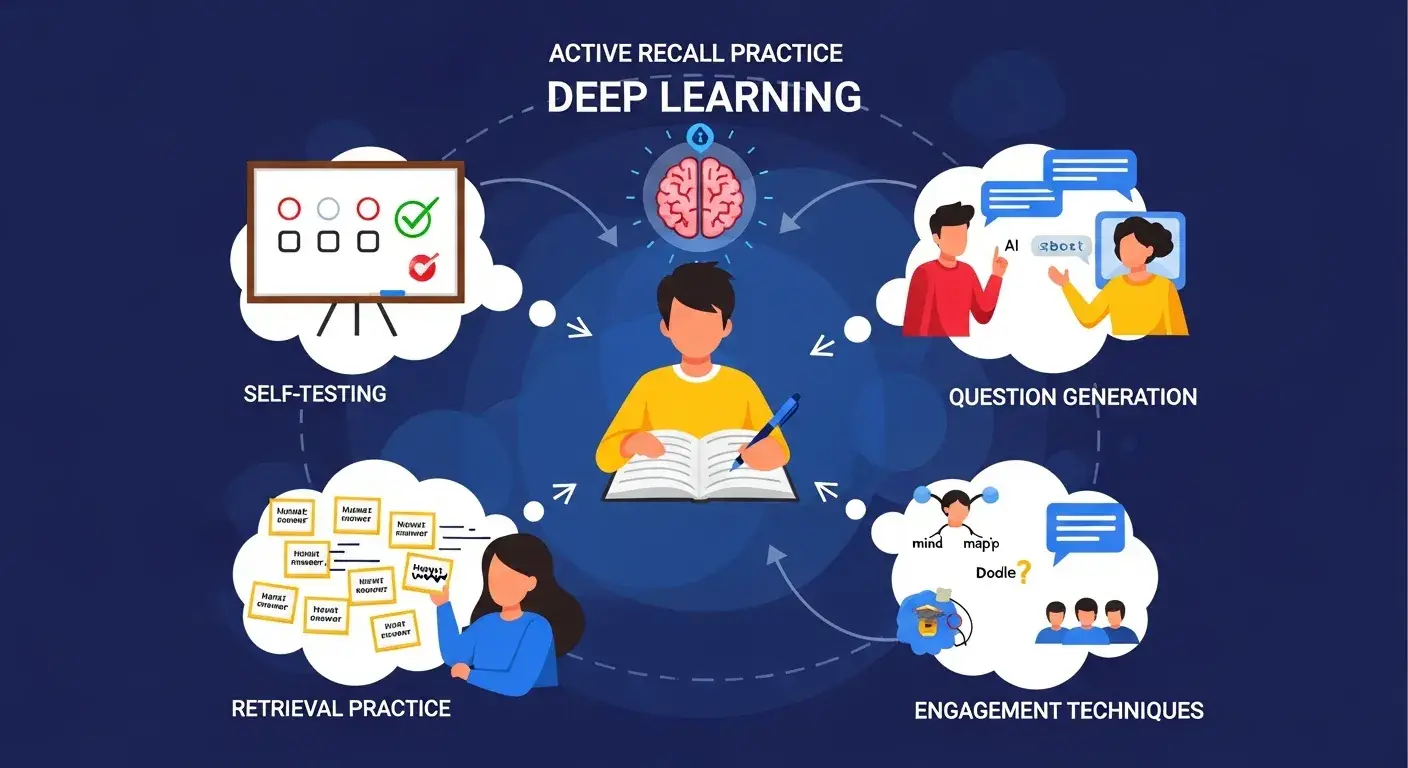
- Active Recall: Instead of passively rereading material, active recall involves retrieving information from memory without prompts. This could be done through flashcards, self-quizzing, or explaining concepts in your own words. The act of struggling to recall strengthens the memory trace. This effortful retrieval is far more effective than passive review.
- Spaced Repetition: This technique involves reviewing information at increasing intervals over time. It's based on the "forgetting curve," which demonstrates how memory naturally decays if not revisited. By strategically re-exposing yourself to information just as you're about to forget it, you interrupt the forgetting process and reinforce the memory. For a deeper dive into these powerful methods, explore our dedicated resources on Spaced Repetition Learning. Learn how to optimize your study habits with mastering active recall techniques.
The Power of Elaborative Rehearsal and Mnemonics
Beyond just repetition, how you encode information profoundly impacts recall.
- Elaborative Rehearsal: This involves connecting new information to existing knowledge or giving it meaning. Instead of just memorizing facts, try to understand why something is the way it is, relate it to personal experiences, or explain it to someone else. This creates a richer, more interconnected neural network, making the information easier to retrieve. A 2024 meta-analysis published in the Journal of Cognitive Psychology confirmed elaborative rehearsal's superior effectiveness over rote memorization.
- Mnemonics: These are memory aids that help organize and retrieve information. They include acronyms (e.g., ROY G BIV for colors), acrostics (e.g., "My Very Educated Mother Just Served Us Noodles" for planets), the method of loci (memory palace), and chunking. These techniques provide hooks for your brain to grab onto, especially for lists or sequential data.
Optimizing Your Brain Environment: Sleep, Nutrition, and Exercise
While specific study techniques are vital, the overall health of your brain plays an equally crucial role in memory function. These foundational elements act as universal scientific memory boosters.
- Sleep: As mentioned, sleep is paramount for memory consolidation. Aim for 7-9 hours of quality sleep per night. Going to bed and waking up at consistent times can significantly improve sleep architecture. Understanding the science of sleep and memory consolidation is crucial for any serious memory improvement efforts.
- Nutrition: What you eat directly impacts brain health. A diet rich in omega-3 fatty acids, antioxidants, and vitamins (like B vitamins and Vitamin D) supports cognitive function. Foods like fatty fish, berries, nuts, and leafy greens are particularly beneficial. Recent research, including a 2024 study in Frontiers in Neuroscience, suggests a strong link between the gut microbiome and cognitive function. Maintaining a diverse gut flora through fermented foods and fiber can surprisingly enhance memory and learning. This highlights a novel, often overlooked aspect of memory enhancement.
- Exercise: Regular physical activity increases blood flow to the brain, promoting neurogenesis (the growth of new brain cells) and improving synaptic plasticity. Even moderate exercise, like brisk walking for 30 minutes most days, can have a noticeable impact on memory and executive functions. Experts at the Brain Health Institute, in their 2023 findings, emphasized aerobic exercise as a powerful tool against age-related cognitive decline.
Harnessing Neurofeedback and Cognitive Training
Emerging technologies and specialized training offer cutting-edge avenues for memory enhancement. These represent sophisticated scientific memory boosters for those seeking advanced approaches.
- Neurofeedback: This technique trains individuals to self-regulate their brain activity by providing real-time feedback on their brainwaves. By learning to produce brainwave patterns associated with focus and relaxation, individuals can improve attention, memory, and cognitive flexibility. A 2025 review in Neurology Today highlighted promising results for neurofeedback in enhancing working memory and executive control, particularly in cases of cognitive mild impairment. This personalized approach offers a unique pathway for targeted brain optimization.
- Cognitive Training Apps and Games: While many apps promise brain improvement, evidence-based cognitive training programs focus on specific cognitive domains like working memory, attention, and processing speed. Look for programs developed with input from neuroscientists, often found in research settings, rather than generic brain games. These tools can help sharpen specific aspects of memory, making your overall recall more efficient.
Integrating Scientific Memory Boosters into Daily Life
The key to unlocking your brain's full potential lies in consistent application. Integrating these scientific memory boosters isn't about grand gestures, but about making small, sustainable changes to your routine.
- Schedule dedicated learning blocks: Incorporate active recall and spaced repetition into your study or work schedule.
- Prioritize sleep: Treat sleep as a non-negotiable part of your brain health regimen.
- Adopt a brain-healthy diet: Make conscious food choices that nourish your brain.
- Stay physically active: Find an exercise routine you enjoy and stick with it.
- Embrace curiosity: Continuously seek new knowledge and challenges to keep your brain engaged and plastic.
By weaving these practices into your daily life, you create an environment where your memory can thrive, leading to more efficient learning and more reliable recall.
Future Trends in Memory Enhancement: What's Next?
The field of cognitive neuroscience is rapidly advancing, bringing forth exciting new possibilities for memory enhancement. Beyond the current scientific memory boosters, we anticipate developments in areas such as personalized AI-driven learning platforms that adapt to individual cognitive profiles, further understanding the genetic predispositions for memory strengths and weaknesses, and even more sophisticated non-invasive brain stimulation techniques. These advancements promise an even more tailored and effective approach to maximizing our brain's potential.
Frequently Asked Questions (FAQ)
Q1: How long does it take to see results from scientific memory boosters?A1: The timeline for seeing results can vary widely based on the individual, the consistency of practice, and the specific techniques employed. While some improvements in focus and short-term recall might be noticeable within a few weeks of consistent active recall and spaced repetition, significant long-term memory gains and neuroplastic changes typically require several months of dedicated effort and adherence to a brain-healthy lifestyle. Patience and consistency are key.
Q2: Are there any natural supplements that truly act as memory boosters?A2: While many supplements claim to boost memory, scientific evidence for most is limited or inconclusive. Some, like Omega-3 fatty acids (DHA/EPA), creatine, and certain B vitamins, show promise in supporting overall brain health, particularly if you have a dietary deficiency. However, they are not magic pills and cannot replace the fundamental impact of lifestyle factors like sleep, diet, exercise, and active learning strategies. Always consult a healthcare professional before starting any new supplement regimen.
Q3: What role does emotional well-being play in memory recall?A3: Emotional well-being plays a critical role in memory. High levels of stress, anxiety, and depression can significantly impair memory formation and recall. Chronic stress, for example, can damage the hippocampus, a brain region vital for memory. Conversely, positive emotions can enhance memory, especially for emotionally charged events. Practicing mindfulness, managing stress, and maintaining strong social connections are important scientific memory boosters for optimal cognitive function.
Conclusion: Empowering Your Brain with Scientific Memory Boosters
Unlocking your brain's full potential for long-term learning and recall is an achievable goal, not a distant dream. By embracing scientific memory boosters like active recall, spaced repetition, and a holistic approach to brain health, you can significantly enhance your cognitive abilities. The power to improve your memory lies in consistent, evidence-based practices that align with how your brain naturally learns and consolidates information.
Start today by integrating these powerful strategies into your daily routine. Share your experiences in the comments below, or explore our other articles for more insights into optimizing your learning journey. Remember, a sharper memory isn't just about remembering facts; it's about enriching your life through continuous learning and deeper understanding. Consider exploring future topics like "The Role of Diet in Cognitive Health," "Advanced Neurofeedback for Memory," or "Personalized Memory Training Programs" to continue your journey of brain optimization.