Strategic Learning Methods: Enhance Comprehension and Skill Development
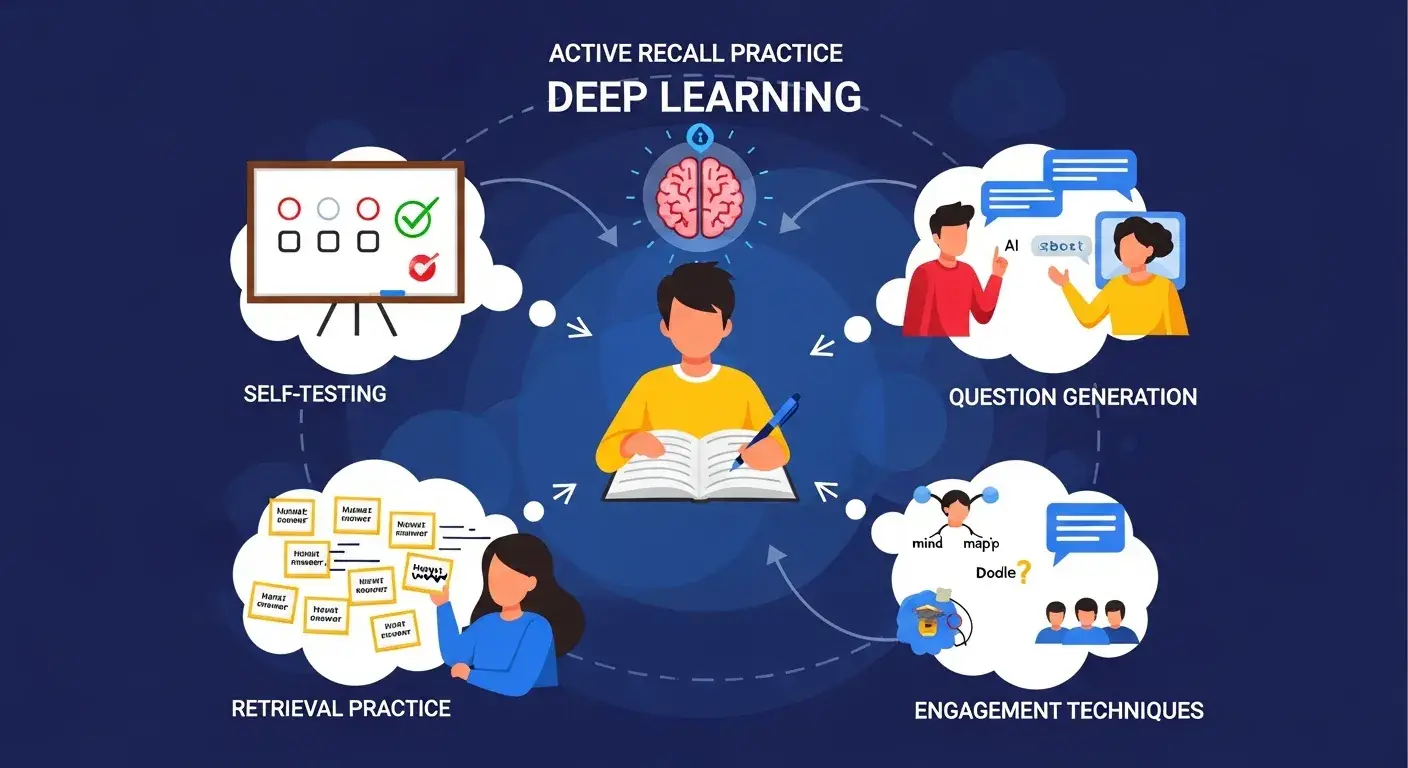
In today's rapidly evolving world, the ability to learn effectively is paramount. Whether you're a student, a professional seeking to upskill, or a lifelong learner, employing strategic learning methods can significantly boost your comprehension and accelerate skill development. Moving beyond rote memorization, strategic learning involves consciously choosing and applying techniques that align with your learning style and the subject matter, ensuring deeper understanding and long-term retention. This approach transforms learning from a passive reception of information into an active, engaging process.
This guide will delve into proven strategies to optimize your learning journey, making it more efficient and rewarding. By integrating these methods into your routine, you'll not only grasp complex concepts more easily but also build a robust foundation for acquiring new skills.
Key Points:
- Active Recall: Regularly test your knowledge without looking at notes.
- Spaced Repetition: Review information at increasing intervals.
- Elaboration: Connect new information to existing knowledge.
- Interleaving: Mix different subjects or skills during study sessions.
- Metacognition: Think about your own thinking and learning process.
Understanding Strategic Learning Methods
Strategic learning methods are conscious, purposeful approaches individuals use to acquire, process, and retain information and skills. Unlike incidental learning, which happens passively, strategic learning is intentional. It involves understanding how you learn best and selecting techniques that maximize your effectiveness. The core of strategic learning lies in making learning an active, rather than a passive, endeavor. This is crucial for anyone looking to genuinely enhance comprehension and foster robust skill development.
The Importance of Active Engagement in Learning
The most significant differentiator of strategic learning is its emphasis on active engagement. When you're actively involved, your brain makes stronger connections, leading to better comprehension and recall. Passive learning, such as simply reading a textbook or listening to a lecture without interaction, often results in superficial understanding and quick forgetting. By contrast, engaging with the material through methods like teaching it to someone else, applying it in practice, or actively questioning it, solidifies knowledge.
For instance, research published in the Journal of Educational Psychology (2024) highlights that students who actively used retrieval practice performed significantly better on subsequent assessments than those who relied solely on re-reading. This underscores the power of making your brain work to recall information.
Proven Strategic Learning Methods for Enhanced Comprehension
To truly enhance your comprehension and develop new skills, adopting a toolkit of strategic learning methods is essential. These techniques are backed by cognitive science and have been shown to dramatically improve learning outcomes.
1. Active Recall: Testing Yourself to Remember More
Active recall, also known as the testing effect, is perhaps one of the most powerful learning strategies. It involves forcing yourself to retrieve information from memory without any cues. Instead of passively rereading notes, you actively quiz yourself.
- How it works: After studying a topic, put away your notes and try to recall key concepts, definitions, or processes.
- Application: Use flashcards, create practice questions, or simply try to explain the material aloud to yourself.
- Benefit: This process not only identifies gaps in your knowledge but also strengthens the memory trace each time you successfully retrieve the information.
A study in Nature Human Behaviour (2025) demonstrated that even low-stakes testing, when used regularly, significantly boosts long-term retention compared to massed study sessions.
2. Spaced Repetition: Mastering Information Over Time
Spaced repetition is the practice of reviewing material at increasing intervals. Instead of cramming all your studying into one session, you revisit the information periodically.
- How it works: You review a piece of information shortly after learning it, then again a day later, then a few days later, a week later, and so on.
- Application: This can be managed manually or using spaced repetition software (SRS) like Anki or Quizlet.
- Benefit: This technique combats the forgetting curve by reinforcing memories when they are starting to fade, leading to more durable learning.
3. Elaboration: Making Connections for Deeper Understanding
Elaboration involves explaining concepts in your own words and connecting new information to what you already know. This process adds context and meaning, making the information more memorable.
- How it works: Ask yourself "why" and "how" questions about the material. Relate new concepts to personal experiences or to other subjects you've studied.
- Application: When learning about a historical event, think about how it might have influenced your own country's history. When learning a new programming concept, consider how it’s similar to or different from concepts you already understand.
- Benefit: Elaboration moves beyond surface-level memorization to a deeper, semantic understanding.
4. Interleaving: Mixing Subjects for Flexible Knowledge
Interleaving is the opposite of blocking, where you study one subject or topic extensively before moving to the next. With interleaving, you mix up different subjects or skills during a study session.
- How it works: Instead of studying math for two hours, then science for two hours, you might study math for 30 minutes, science for 30 minutes, then switch to another subject or skill.
- Application: When practicing math problems, mix different types of problems. When learning a new language, practice vocabulary, grammar, and pronunciation in the same session.
- Benefit: While it might feel more difficult in the short term, interleaving leads to more flexible and adaptable knowledge, allowing you to better discern which strategy to apply in different situations. This is a key differentiator in developing true mastery.
5. Metacognition: Thinking About Your Thinking
Metacognition is the ability to reflect on your own thought processes and learning. It involves understanding your strengths and weaknesses as a learner and adapting your strategies accordingly.
- How it works: Before learning, plan your approach. During learning, monitor your comprehension. After learning, evaluate your success and identify areas for improvement.
- Application: Ask yourself: "What do I already know about this?", "Am I understanding this?", "What strategies are working best for me?".
- Benefit: Developing metacognitive skills empowers you to become a more independent and effective learner, capable of self-correction and continuous improvement.
Differentiated Value: Beyond the Basics of Strategic Learning
While the core strategies are powerful, several advanced or nuanced approaches offer unique advantages, setting apart effective learners.
The Power of "Feynman Technique" for True Comprehension
A highly effective method for ensuring deep comprehension, often overlooked, is the Feynman Technique. Named after Nobel Prize-winning physicist Richard Feynman, this approach involves explaining a concept as if you were teaching it to a child.
- Steps:
- Choose a concept you want to understand.
- Explain it in simple terms, as if to a child, writing down your explanation.
- Identify gaps or jargon in your explanation.
- Go back to the source material to fill those gaps and simplify further.
- Refine your explanation until it is clear, concise, and easy to understand.
This method forces you to simplify complex ideas, uncovering areas where your understanding is superficial. It's an unparalleled tool for checking if you truly grasp a subject versus just recognizing it. According to industry experts in cognitive science, this technique is invaluable for fostering genuine expertise.
Embracing Deliberate Practice for Skill Mastery
While "practice makes perfect" is a common saying, deliberate practice is what truly leads to mastery, especially in skill development. It's not just about repetition; it's about focused, intentional effort aimed at improving specific weaknesses.
- Key elements:
- Clear Goals: Focus on a specific aspect of the skill you want to improve.
- Intense Focus: Eliminate distractions and fully concentrate on the task.
- Immediate Feedback: Seek constructive criticism and analyze your performance.
- Repetition and Refinement: Work on weaknesses until they become strengths, then move to the next challenge.
For example, a musician practicing deliberate practice might isolate a difficult passage, slow it down, focus on precise finger movements, and then gradually increase the tempo, all while actively listening for errors and correcting them. This is a far cry from simply playing through a piece repeatedly. This approach, as detailed by performance psychologist Anders Ericsson, is a cornerstone of elite performance across various domains.
Leveraging Technology and Environment for Strategic Learning
Your learning environment and the tools you use can significantly amplify the effectiveness of your strategic learning methods.
Optimizing Your Study Environment
- Minimize Distractions: Find a quiet space where you can concentrate without interruptions. Turn off notifications on your devices.
- Organize Your Space: A clutter-free environment can lead to a clutter-free mind.
- Incorporate Natural Light: Studies suggest that natural light can improve alertness and mood, aiding concentration.
Utilizing Learning Tools
- Digital Note-Taking Apps: Tools like Evernote or OneNote can help organize notes, tag information, and sync across devices, aiding recall and review.
- Mind-Mapping Software: Visual tools like Miro or Coggle can help you elaborate on concepts and see connections between ideas.
- Learning Management Systems (LMS): Many educational platforms offer integrated tools for spaced repetition, practice quizzes, and progress tracking.
Overcoming Learning Plateaus with Strategic Approaches
It's common to hit learning plateaus – periods where progress seems to stall. Strategic learning methods can help you break through these barriers.
- Vary Your Methods: If you've been relying on one technique, try another. For example, if you've been focused on reading, try explaining concepts aloud or teaching them.
- Seek Feedback: Ask mentors, peers, or instructors for input on where you can improve. This external perspective is invaluable.
- Analyze Your Mistakes: Instead of getting discouraged by errors, see them as opportunities to learn. What led to the mistake? How can you avoid it next time?
- Set New Challenges: Push yourself slightly beyond your current comfort zone.
Frequently Asked Questions about Strategic Learning
Q1: How do I know which strategic learning method is best for me? A1: Experimentation is key. Try different methods like active recall, spaced repetition, and elaboration. Pay attention to which ones yield the best results for different subjects and tasks. Your preferred method might also evolve as you gain experience.
Q2: Is it possible to use too many strategic learning methods at once? A2: While it's beneficial to have a diverse toolkit, overwhelming yourself with too many new techniques simultaneously can be counterproductive. Focus on mastering one or two methods at a time before integrating more.
Q3: How long does it take to see results from strategic learning methods? A3: Results can vary, but you'll likely notice improvements in comprehension and retention within a few weeks of consistent application. Deeper skill development and mastery take longer but are more sustainable with these strategies.
Q4: Can these methods be applied to both academic and professional learning? A4: Absolutely. Strategic learning methods are universally applicable. They are designed to enhance comprehension and skill development regardless of whether you are studying for an exam, learning a new software, or mastering a complex job duty.
Conclusion: Your Path to Enhanced Learning and Skill Mastery
Embracing strategic learning methods is not just about studying smarter; it's about learning more effectively and developing a lifelong capacity for growth. By actively engaging with material, employing techniques like active recall and spaced repetition, and developing your metacognitive awareness, you can significantly enhance your comprehension and accelerate your skill development. Remember to leverage tools, optimize your environment, and be patient with yourself as you integrate these powerful strategies.
What are your favorite strategic learning methods? Share your experiences in the comments below!
For readers seeking to deepen their understanding of effective learning, exploring articles on effective study habits for students or techniques for accelerated skill acquisition would be highly beneficial.
We encourage you to subscribe to our newsletter for more insights into optimizing your learning journey and to share this article with anyone who can benefit from these transformative approaches.