Strategic Study Planning: A Comprehensive Guide to Long-Term Exam Preparation Success
Strategic Study Planning: A Comprehensive Guide to Long-Term Exam Preparation Success
Embarking on a journey of long-term exam preparation can seem daunting, but with a robust strategic study planning approach, sustained academic success is not just possible, but highly probable. This comprehensive guide empowers you with the insights and tools to design an effective study regimen that not only covers content thoroughly but also fosters deep understanding and retention over months, not just weeks. We’ll delve into metacognitive strategies, time management, and personalized learning techniques crucial for excelling in major exams. By transforming passive learning into an active, self-regulated process, you'll build confidence and resilience, making your path to long-term exam preparation success clear and achievable.
Key Points for Strategic Study Planning
- Early Start & Goal Setting: Initiate planning well in advance with clear, measurable objectives.
- Metacognitive Approach: Actively monitor and adjust your learning strategies.
- Spaced Repetition & Active Recall: Integrate these powerful techniques for lasting memory.
- Personalized Study Schedules: Create flexible plans tailored to your unique learning pace.
- Regular Self-Assessment: Continuously evaluate progress and identify areas for improvement.
Why Strategic Study Planning is Essential for Long-Term Exam Preparation
Effective strategic study planning moves beyond cramming and delves into cultivating a sustainable learning habit. It’s about building a robust framework that supports your cognitive processes over extended periods, making information stick and recall effortless. This proactive approach minimizes stress, prevents burnout, and ensures you approach exams with confidence, not anxiety. A well-structured plan helps you break down massive amounts of information into manageable chunks, allowing for progressive mastery and consistent reinforcement. It’s the cornerstone of achieving excellence in any academic pursuit requiring sustained effort.
Planning strategically also involves understanding how you learn best. Are you a visual learner, an auditory processor, or do you thrive with hands-on practice? Incorporating these personal insights into your exam preparation strategies can dramatically boost efficiency and engagement. This personalized touch transforms generic advice into a powerful, tailor-made blueprint for your academic journey.
Setting Foundational Goals for Sustained Academic Success
The first step in any successful strategic study planning endeavor is defining clear, measurable, and achievable goals. Begin by understanding the scope of your exams and the required depth of knowledge. Break down your ultimate objective – passing an exam with a certain grade – into smaller, actionable milestones. This could involve mastering specific chapters weekly or completing practice questions daily.
- Identify Core Subjects and Topics: List all subjects and topics the exam will cover. Prioritize them based on weightage and your current proficiency.
- Define Learning Objectives: For each topic, articulate what you need to understand and be able to do. Use action verbs like "explain," "analyze," or "solve."
- Establish a Timeline: Work backward from the exam date. Allocate time for each topic, including buffer periods for unforeseen delays or more challenging content. This long-term learning schedule is your roadmap.
For instance, if you have six months until a major exam, allocate the first three months to initial content mastery, the next two to intensive review and practice, and the final month to comprehensive mock exams and fine-tuning. This structured approach underpins all effective study techniques.
Mastering Metacognitive Study Techniques for Deeper Learning
Metacognition, often described as "thinking about thinking," is a cornerstone of strategic study planning. It involves your awareness and understanding of your own thought processes and your ability to regulate them. Applying metacognition to your studies means actively monitoring your comprehension, evaluating the effectiveness of your study methods, and making adjustments as needed. This self-regulation is critical for long-term exam preparation success.
- Plan: Before you begin studying a topic, ask yourself: What do I already know about this? What do I need to learn? How will I learn it? (e.g., "I'll read the chapter, then summarize it in my own words").
- Monitor: As you study, continuously check your understanding. Ask: Am I grasping this concept? Am I getting stuck? What could I do differently? This can involve self-quizzing or explaining concepts aloud. Research published in the Journal of Educational Psychology in 2024 highlighted that students who actively monitor their comprehension during study sessions perform significantly better on subsequent tests.
- Evaluate: After a study session, reflect on its effectiveness. Did my chosen method work? Did I achieve my learning objective? What should I do next time to improve? This ongoing feedback loop helps refine your personalized study schedule.
Differentiation Point 1: Integrating Adaptive Learning Principles
Modern strategic study planning can benefit significantly from principles found in adaptive learning. While dedicated AI tools might not be accessible to everyone, you can adopt a similar mindset. Continuously adjust your study plan based on your performance in practice tests and self-assessments. If you consistently struggle with a particular topic, allocate more time to it. If you master another quickly, reduce its dedicated review time. This dynamic adjustment prevents stagnation and ensures your effort is always directed where it's most needed. It’s a proactive form of metacognitive self-regulation, ensuring your plan remains optimized for your evolving needs.
Leveraging Proven Study Methods: Spaced Repetition and Active Recall
Two of the most powerful and evidence-based effective study techniques for long-term retention are spaced repetition and active recall. Integrating these into your strategic study planning is non-negotiable for anyone aiming for long-term exam preparation success.
- Spaced Repetition: This technique involves reviewing information at increasing intervals over time. Instead of cramming, you revisit material multiple times, but with longer gaps between each review.
- How to Implement: After initial learning, review the material the next day, then three days later, then a week later, two weeks later, and so on. Tools like flashcard apps (e.g., Anki) are built on this principle.
- Benefits: It capitalizes on the "spacing effect," where learning is more effective when study sessions are spaced out rather than crammed together. This helps transfer information from short-term to long-term memory.
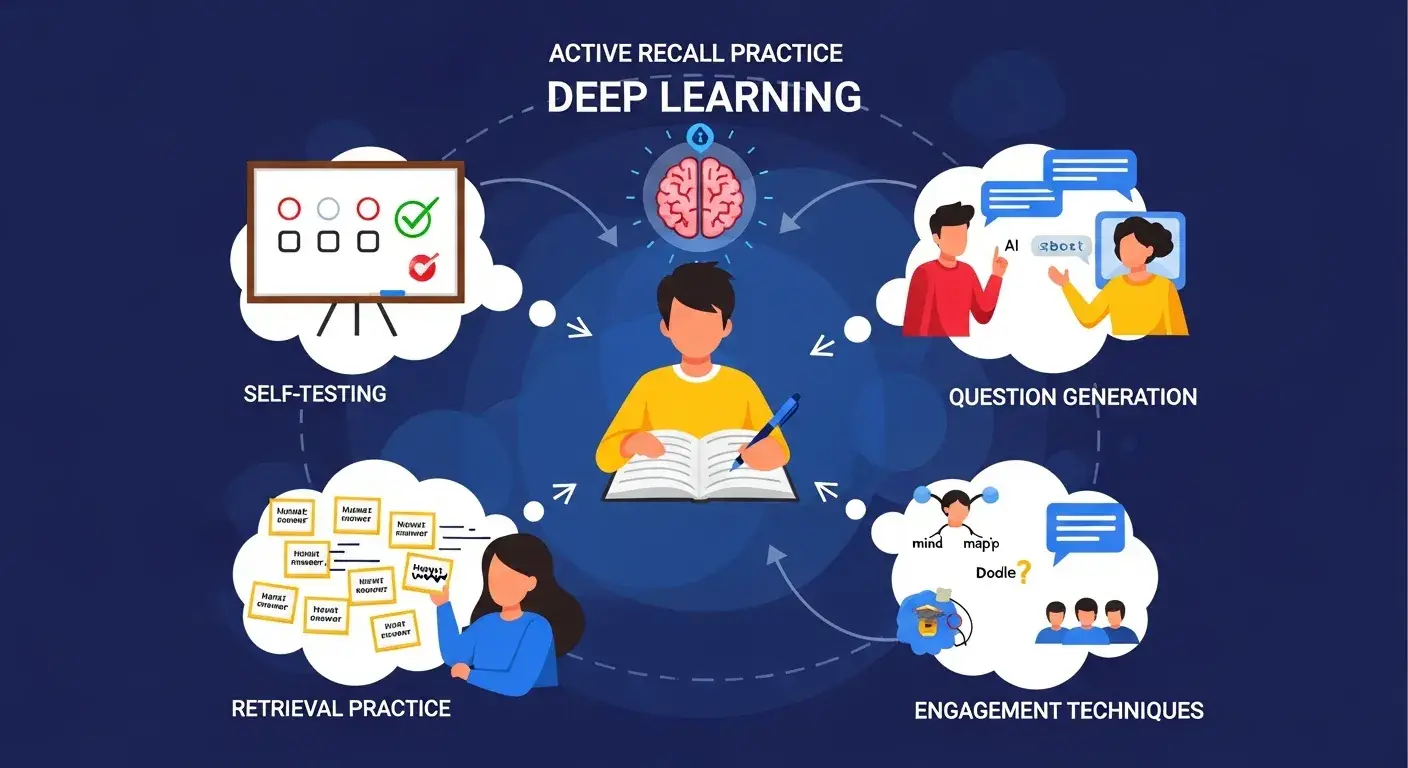
- Active Recall: Rather than passively rereading notes, active recall forces you to retrieve information from memory without external cues.
- How to Implement:
- Self-Quizzing: After reading a section, close your book and try to explain the main points aloud or write them down.
- Flashcards: Use flashcards to test yourself on definitions, concepts, and formulas.
- Practice Questions: Work through past papers or textbook questions without looking at the answers until you’ve attempted them.
- Benefits: It strengthens memory retrieval pathways, making it easier to recall information during exams. It also highlights gaps in your understanding, guiding your subsequent study efforts. This strategy is critical for deep understanding, not just surface-level memorization.
- How to Implement:
These methods are not merely techniques; they are fundamental principles of cognitive science that drive true academic success.
Crafting a Flexible and Personalized Study Schedule
A rigid study schedule often leads to frustration and abandonment. Your strategic study planning should prioritize flexibility and personalization. A schedule needs to adapt to your life, not the other way around.
- Identify Your Peak Productivity Times: Are you a morning person or a night owl? Schedule your most challenging study tasks during these times when your focus is highest.
- Incorporate Breaks and Rest: Regular breaks, adequate sleep, and leisure activities are not luxuries; they are vital components of long-term learning. Overworking leads to diminished returns and burnout.
- Allocate Time for Different Task Types: Balance active learning (practice problems, essay writing) with passive learning (reading, watching lectures).
- Review and Revise Regularly: Dedicate specific slots in your schedule for spaced repetition reviews. Don't wait until the last minute to revisit old material.
- Build in Contingency Time: Life happens. Leave some buffer time in your schedule each week to accommodate unexpected events or to spend extra time on particularly difficult topics. This prevents your entire plan from derailing.
Differentiation Point 2: Proactive Stress Management Integration
One often overlooked aspect of strategic study planning for major exams is the proactive integration of stress management. Long-term preparation inherently brings pressure. Incorporate daily mindfulness exercises, short bursts of physical activity, or dedicated time for hobbies into your schedule from day one. According to findings presented at the International Conference on Learning Sciences (2023), students who proactively managed stress through regular breaks and self-care practices showed higher levels of sustained motivation and lower rates of burnout over multi-month study periods. Viewing these as non-negotiable parts of your schedule, rather than optional add-ons, is crucial for enduring academic performance. This is particularly relevant for students navigating demanding study loads. For more in-depth strategies on maintaining well-being, consider exploring resources on preventing burnout during exam prep. /articles/preventing-burnout-during-exam-prep
Monitoring Progress and Adapting Your Strategy
A key aspect of strategic study planning is continuous self-assessment and adaptation. You can't improve what you don't measure.
- Regular Self-Testing: Don't just do practice problems; time yourself and simulate exam conditions. This builds familiarity and reduces anxiety.
- Analyze Performance: After each test or practice session, meticulously review your answers. Understand why you made mistakes, not just what the correct answer is. Categorize errors (e.g., conceptual misunderstanding, careless error, time management issue).
- Adjust Your Study Plan: Based on your performance analysis, refine your schedule and study methods. Are you spending too much time on easy topics? Do you need more practice with a specific question type? This iterative process ensures your plan remains optimized.
- Seek Feedback: If possible, discuss your practice work with peers, tutors, or instructors. An external perspective can reveal blind spots in your learning. For more advanced techniques on improving retention, you might find valuable insights in mastering active recall techniques for better retention.
/articles/mastering-active-recall-techniques-for-better-retentionThis continuous feedback loop is a hallmark of metacognitive study techniques.
Internal Linking Strategy
- Category Link: To explore more about how your thought processes can enhance learning, visit our Metacognitive Study Techniques category.
- Related Article 1: For more in-depth strategies on maintaining well-being, consider exploring resources on preventing burnout during exam prep.
- Related Article 2: This continuous feedback loop is a hallmark of metacognitive study techniques. To delve deeper into optimizing memory, you might find valuable insights in mastering active recall techniques for better retention.
Frequently Asked Questions (FAQ)
Q: How far in advance should I start strategic study planning for a major exam? A: Ideally, you should begin your strategic study planning as soon as you know the exam date, or even at the start of your course. For major exams with extensive content, starting 3-6 months in advance is highly recommended. This allows ample time for comprehensive content coverage, spaced repetition, practice, and buffer periods, significantly reducing last-minute stress and enhancing deep learning and retention, which are vital for long-term success.
Q: What if I fall behind on my personalized study schedule? A: It's common to fall behind occasionally. The key is flexibility, not rigidity. First, avoid panic. Review your schedule and identify realistic adjustments. You might need to temporarily reallocate time from less critical topics or extend a study session slightly. Crucially, learn from why you fell behind – was it poor time estimation, unexpected events, or a particularly difficult topic? Use this insight to refine your future planning and expectations.
Q: How can I stay motivated during long-term exam preparation? A: Maintaining motivation over months requires a multi-faceted approach. Set small, achievable weekly goals and reward yourself upon completion. Regularly remind yourself of your ultimate academic goals and the benefits of achieving them. Integrate engaging study methods like group discussions or teaching concepts to others. Remember to prioritize self-care, breaks, and activities that recharge you. Tracking progress visually can also provide a significant motivational boost.
Q: Is it okay to change my study methods mid-way through my strategic study plan? A: Absolutely! Changing study methods is a sign of effective metacognition and adaptability. If you discover a technique isn't working as well as anticipated, or you learn about a more effective strategy (like integrating more active recall), don't hesitate to adjust. Your plan should be a living document, evolving with your understanding of your own learning process. The goal is effectiveness, and sometimes that means trying new approaches to optimize your exam preparation strategies.
Conclusion: Your Path to Long-Term Academic Excellence
Embracing strategic study planning is not just about passing an exam; it's about cultivating a mindset for lifelong learning and academic excellence. By integrating metacognitive practices, leveraging evidence-based study techniques like spaced repetition and active recall, and maintaining a flexible, personalized schedule, you lay the groundwork for long-term exam preparation success. Remember that consistency, self-awareness, and adaptability are your most powerful allies. Start early, stay persistent, and trust the process.
Ready to transform your study habits? Share your biggest study planning challenge in the comments below! We'd love to hear from you. For further exploration of advanced learning strategies and to stay updated with the latest educational insights, consider subscribing to our newsletter.
Extended Reading & Future Topics:
- The Role of Nutrition and Exercise in Sustained Cognitive Performance: How lifestyle impacts long-term study endurance.
- Utilizing Digital Tools for Enhanced Strategic Study Planning: A guide to apps and software for organization, spaced repetition, and active recall.
- Group Study Dynamics: Collaborative Approaches to Long-Term Preparation: Best practices for effective peer learning and accountability.