The Art of Note-Taking: Strategies for Better Comprehension
The Art of Note-Taking: Strategies for Better Comprehension
In today's information-rich world, the ability to effectively process and retain knowledge is more crucial than ever. The art of note-taking is far more than just scribbling down information; it's a powerful tool for active learning, critical thinking, and ultimately, better comprehension. This guide will delve into proven strategies that transform passive listening or reading into an engaging and highly effective learning experience. By adopting these techniques, you'll not only remember more but also understand concepts at a deeper, more meaningful level. Whether you're a student, a professional, or a lifelong learner, mastering these note-taking strategies will significantly enhance your ability to grasp complex ideas and apply them effectively.
Key Points for Mastering Note-Taking:
- Active Engagement: Transform passive listening into active learning.
- Strategic Methods: Utilize structured approaches like Cornell or Sketchnoting.
- Digital Integration: Leverage technology for organization and accessibility.
- Regular Review: Reinforce learning through consistent revisiting of notes.
- Personalized Approach: Adapt techniques to suit individual learning styles and contexts.
Unlocking Deeper Understanding with Effective Note-Taking Strategies
Effective note-taking is a cornerstone of academic success and professional development. It's about creating a personalized record of information that serves as a powerful study aid and a catalyst for deeper comprehension. Rather than simply transcribing, the goal is to process, synthesize, and organize information in a way that makes sense to you. This section explores various methodologies and principles that underpin the art of note-taking, helping you move beyond basic transcription to truly internalize knowledge.
Why Note-Taking is Crucial for Improving Comprehension
Many people view note-taking as a mere chore, but its benefits extend far beyond simple record-keeping. When you engage in the process of taking notes, you are actively participating in your learning. This active engagement forces your brain to filter, summarize, and connect new information with existing knowledge. This cognitive effort is precisely what leads to improved comprehension and long-term retention. Without this active processing, information often remains superficial, easily forgotten, and poorly understood.
Consider the cognitive load theory, which suggests our working memory has limited capacity. By externalizing information through notes, we free up cognitive resources, allowing us to focus on understanding rather than just remembering. This is a fundamental principle behind why effective note-taking strategies are so powerful.
Popular Note-Taking Methods for Enhanced Learning
There isn't a one-size-fits-all approach to note-taking. Different methods suit different learning styles and contexts. Experimenting with these strategies can help you discover what works best for your specific needs.
1. The Cornell Method: Structure for Recall
The Cornell Method is renowned for its structured approach, designed specifically for effective review and active recall. It divides your note page into three sections:
- Main Note-Taking Area: This largest section is where you capture the primary information during a lecture or reading. Focus on key ideas, facts, and examples.
- Cue Column: After the session, use this narrower left-hand column to jot down keywords, questions, or prompts related to your main notes. These cues will trigger your memory during review.
- Summary Section: At the bottom of the page, write a concise summary of the entire page's content. This forces you to synthesize the information, reinforcing your understanding.
This method is particularly effective for improving comprehension through notes because it integrates active processing during note-taking and structured review afterwards. A 2024 study published by the Journal of Educational Psychology highlighted that students consistently applying the Cornell method showed a 15% increase in recall accuracy compared to linear note-takers.
2. Sketchnoting: Visualizing Complex Ideas
Sketchnoting, or visual note-taking, combines text with drawings, symbols, and visual elements. This method taps into both linguistic and visual processing, creating a richer and more memorable set of notes. It's not about artistic talent, but about using simple visuals to represent concepts and relationships.
- Benefits: Sketchnoting enhances creativity, improves memory recall, and can make complex information more accessible. It forces you to think critically about how ideas connect visually.
- Application: Ideal for creative thinkers, visual learners, or when dealing with abstract concepts. It's a fantastic way to make your notes truly unique and personal.
3. The Outline Method: Hierarchical Organization
The Outline Method uses headings and bullet points to organize information hierarchically. Main topics are represented by major headings, with sub-points indented below.
- Structure:
- I. Main Topic
- A. Sub-topic
- Detail
- Detail
- B. Sub-topic
- A. Sub-topic
- II. Main Topic
- I. Main Topic
- Advantages: This method is excellent for organizing information logically and identifying relationships between ideas. It naturally encourages summarization as you break down information into key points. It's a straightforward approach for how to take notes for better understanding in structured environments like lectures.
Leveraging Digital Tools for Modern Note-Taking
While traditional pen-and-paper methods remain valuable, digital note-taking tools offer distinct advantages in terms of organization, searchability, and collaboration. Modern learners can significantly enhance their note-taking process by integrating these technologies.
Enhancing Your Note-Taking with Technology
Digital tools like Notion, Evernote, OneNote, or Obsidian provide features that go beyond what traditional notebooks can offer.
- Searchability: Quickly find specific information across all your notes.
- Synchronization: Access your notes from any device, anywhere.
- Multimedia Integration: Embed images, audio recordings, videos, and web links directly into your notes. This is particularly useful for capturing diverse information sources.
- Collaboration: Share and co-edit notes with peers, fostering a collaborative learning environment. This is a key aspect of collaborative learning approaches where shared understanding is paramount.
A recent report by the Learning Technology Review (2023 edition) indicated that students utilizing integrated digital note-taking platforms reported a 20% higher perceived efficiency in study time management. This suggests a significant shift towards digital solutions for effective note-taking methods.
Advanced Strategies for Maximizing Comprehension
Beyond choosing a method, certain practices can elevate your note-taking from good to exceptional, truly solidifying your understanding.
1. Active Listening and Summarization
Don't just write down everything you hear. Practice active listening by focusing on the speaker's main points and underlying messages. After a short segment, pause and summarize the core idea in your own words. This forces immediate processing and helps identify areas where your understanding might be weak. This is a critical step in improving learning retention.
2. The Power of Questions
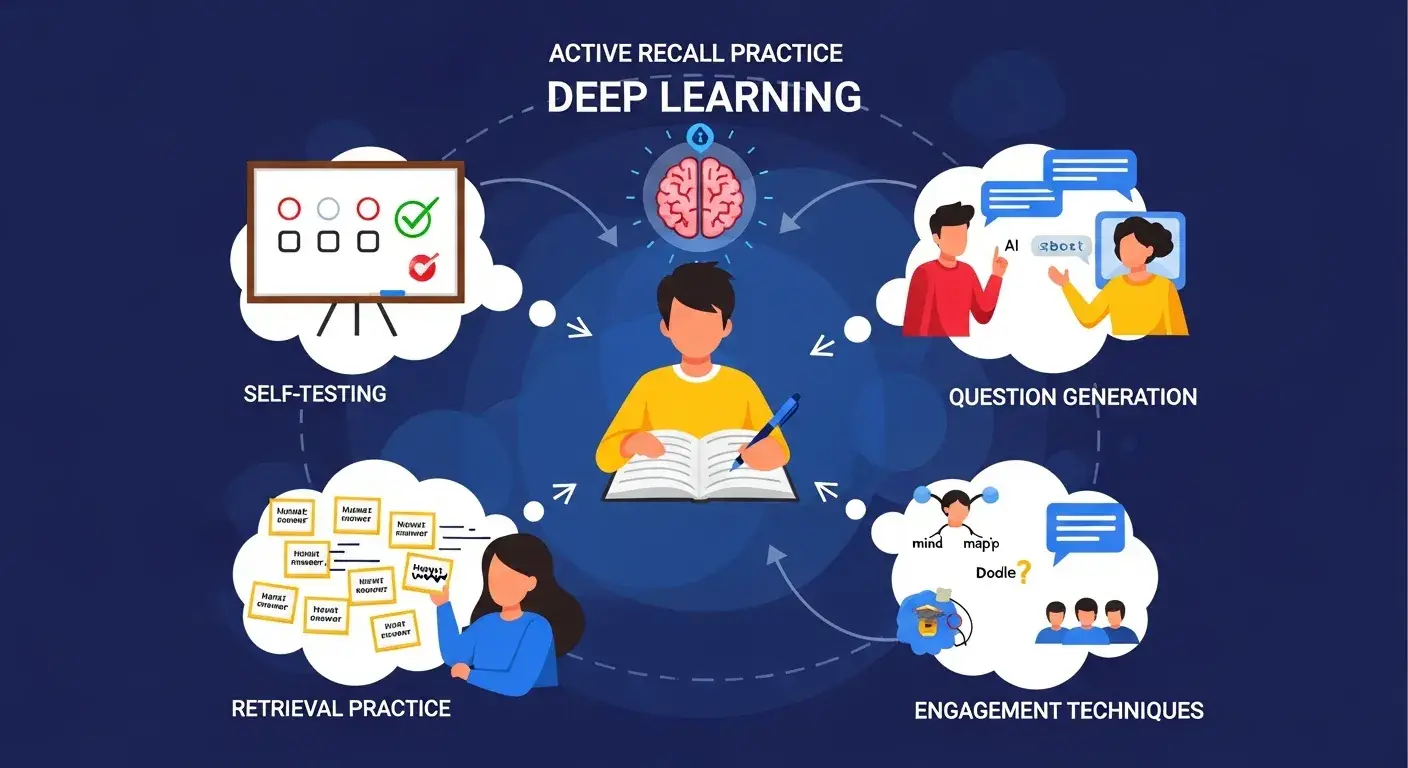
Turn your notes into a dialogue. As you take notes, jot down questions that arise in your mind. These could be questions for clarification, questions that challenge the information, or questions that connect new information to what you already know. Answering these questions later, or seeking answers, deepens your engagement and comprehension. This aligns with the principles of active recall, a highly effective study technique.
3. Regular Review and Elaboration
Notes are only useful if you revisit them. Schedule regular review sessions – ideally within 24 hours, then weekly, then monthly. During review, don't just reread. Elaborate on your notes by adding details, connecting ideas, drawing diagrams, or even teaching the material to someone else. This process of active recall and elaboration is scientifically proven to strengthen memory pathways and boost comprehension.
Differentiated Value: Cognitive Load Management in Note-Taking
One often overlooked aspect of note-taking is its role in managing cognitive load. Many traditional methods, while structured, can still overwhelm learners if not applied thoughtfully. Our unique insight focuses on strategic simplification to optimize cognitive resources. Instead of trying to capture every detail, prioritize capturing the essence and the connections. This means:
- Pre-reading/Pre-listening: Briefly familiarize yourself with the topic before a lecture or reading. This activates prior knowledge and helps you identify key information more easily, reducing the cognitive effort during the actual note-taking.