The Power of Elaboration: Connecting New Information
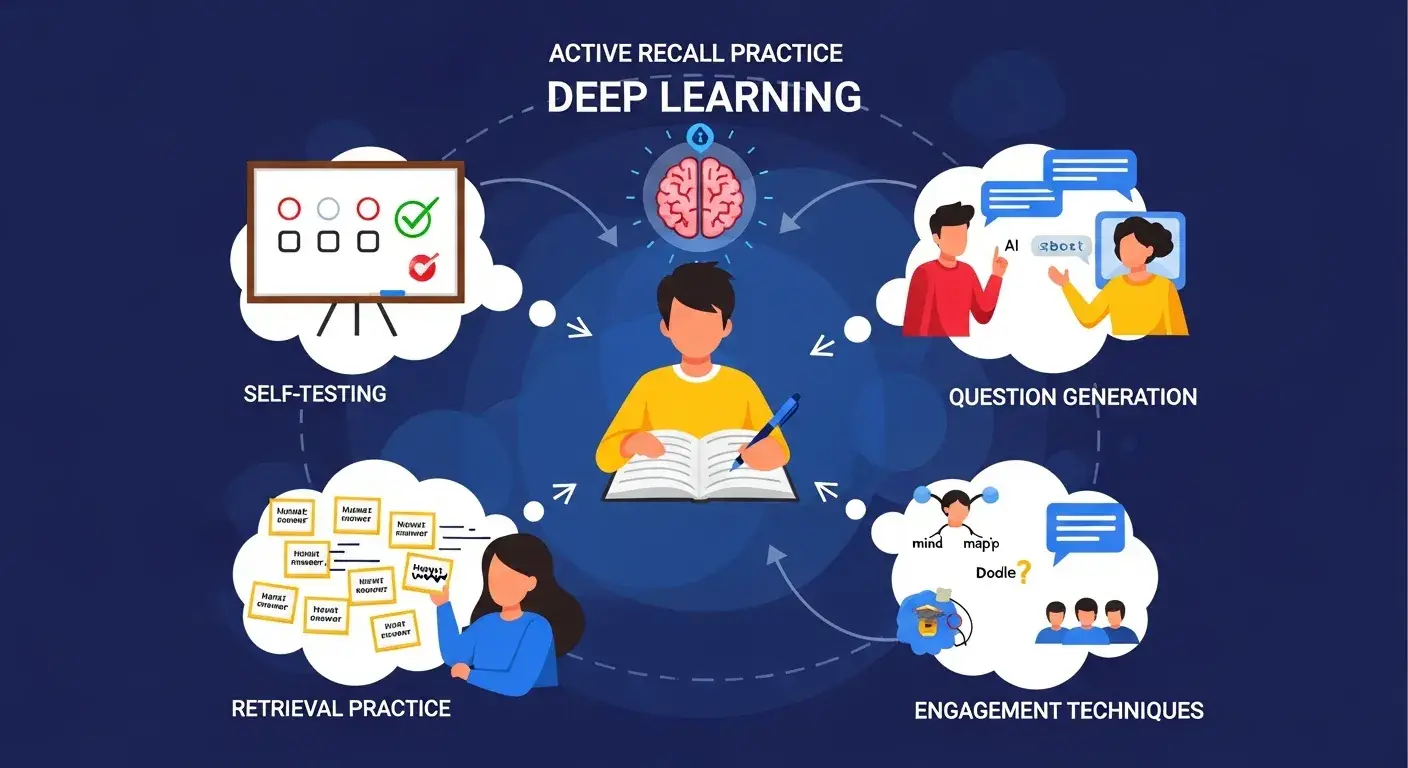
The journey of learning is not merely about consuming new facts; it's about integrating them into the vast network of what you already know. This process, known as elaboration, is a cornerstone of effective learning and long-term memory retention. It transforms passive reception into active engagement, ensuring that new concepts stick and become readily accessible. By actively seeking connections, asking "why," and relating new data to personal experiences, you unlock the power of elaboration: connecting new information in a meaningful way. This article will explore the cognitive science behind elaboration and provide actionable strategies to enhance your learning process.
Key Points:
- Elaboration is an active learning strategy that links new information to existing knowledge.
- It significantly improves memory retention and deep conceptual understanding.
- Techniques include asking "why" questions, creating analogies, and teaching others.
- Visual tools like mind maps are powerful aids for elaborative learning.
- Mastering elaboration enhances critical thinking and problem-solving skills.
Understanding the Power of Elaboration in Learning
Elaboration is more than just reviewing material; it's about deep processing of information. When you elaborate, you don't just memorize; you understand. This cognitive strategy involves expanding on new concepts by connecting them to prior knowledge, personal experiences, or other related ideas. It’s like building a robust mental web where each new piece of information has multiple anchors, making it less likely to be forgotten. This active engagement with the material is what truly drives learning.
The effectiveness of elaboration stems from how our brains store and retrieve information. Our memories are not isolated files but interconnected networks. The more connections a new piece of information has, the more pathways there are to retrieve it later. This makes connecting new information not just easier to recall, but also more deeply understood and applicable in various contexts.
The Cognitive Science Behind Elaborative Rehearsal
At its core, elaborative rehearsal is a superior alternative to rote memorization. Rote learning keeps information in short-term memory, often leading to rapid forgetting. Elaboration, however, pushes information into long-term memory by creating rich, meaningful associations. This process leverages our existing cognitive schemas – mental frameworks that organize and interpret information. When new data fits into an existing schema, it's more easily absorbed and retained.
Research in cognitive psychology consistently highlights the benefits of this approach. For instance, a study published in Psychological Science in 2024 demonstrated that learners who actively generated explanations for new concepts showed significantly better recall and transfer of knowledge compared to those who simply reread material. This underscores the brain's preference for meaningful engagement over passive consumption. The brain actively seeks patterns and connections, and elaboration capitalizes on this natural tendency.
Practical Strategies for Connecting New Information
Implementing elaborative strategies doesn't require complex tools; it primarily demands a shift in mindset towards active engagement. Here are several effective techniques to harness the power of elaboration in your studies and daily learning. These methods are designed to help you integrate new knowledge seamlessly.
Ask "Why" and "How" Questions
One of the simplest yet most powerful elaborative techniques is to constantly question the material. Instead of just accepting a fact, ask:
- Why is this true?
- How does this work?
- What are the implications of this?
- When would this principle apply?
For example, if learning about photosynthesis, don't just memorize the steps. Ask why plants need sunlight, how chlorophyll captures energy, and what would happen if a key component were missing. This deep inquiry forces your brain to build bridges between the new concept and your existing understanding of biology, chemistry, and even environmental science. This active questioning is a hallmark of strong critical thinking.
Visualize and Mind Map Complex Concepts
Visual learning is an incredibly potent form of elaboration, especially for those who benefit from seeing relationships. Creating visual representations like mind maps, diagrams, or flowcharts helps you literally map out the connections between different pieces of information. This aligns perfectly with the principles of Mind Mapping and Visual Learning. For instance, when learning about a historical event, you could create a mind map showing causes, key figures, consequences, and related contemporary events.
A unique insight from recent educational technology trends, highlighted in a 2023 report by the Journal of Educational Technology & Society, suggests that digital mind mapping tools can enhance elaborative processes by allowing dynamic linking and multimedia integration. These tools enable learners to create radial maps, where a central concept branches out into sub-concepts, each with its own elaborations, images, and notes. This structured visual approach makes connecting new information more intuitive and comprehensive.
Teach the Material to Someone Else
There's an old adage: "To teach is to learn twice." When you prepare to explain a concept to another person, you are forced to organize your thoughts, identify gaps in your understanding, and articulate the information clearly and concisely. This act of teaching is a highly effective form of elaboration. You're not just recalling facts; you're actively constructing a coherent narrative, which solidifies your own comprehension.
Even if you don't have a willing student, you can explain the concept aloud to yourself, a pet, or even an imaginary audience. The process of verbalizing the information helps to reinforce the neural pathways associated with that knowledge. This technique is often cited as a top strategy for improving learning through elaboration.
Integrate New Data with Existing Schemas
Our brains are constantly trying to make sense of the world by fitting new experiences into existing mental models or "schemas." When you encounter new information, consciously try to link it to something you already know. This could be a personal experience, a previously learned concept, or even a fictional story. For example, if you're learning about a new economic theory, consider how it relates to current events or historical patterns you've studied.
This strategy is about building a robust "knowledge network." The more connections you make, the stronger and more resilient your understanding becomes. For instance, if learning about different types of energy, relate them to the energy sources used in your home or car. This personal connection makes the abstract concrete and enhances memory retention.
Benefits of Mastering Elaborative Learning Techniques
The consistent application of elaboration yields significant long-term benefits beyond simple memorization. It fundamentally changes how you interact with information, leading to a richer and more adaptable knowledge base.
- Improved Memory Retention: By creating multiple retrieval cues, elaboration makes it easier to recall information when needed. This is a core benefit of deep learning.
- Enhanced Critical Thinking: The act of asking "why" and "how" fosters analytical skills and encourages a deeper understanding of cause-and-effect relationships.
- Deeper Conceptual Understanding: Elaboration moves beyond surface-level facts, allowing you to grasp the underlying principles and nuances of complex subjects.
- Faster Problem-Solving: A well-connected knowledge base enables you to draw upon a wider range of information to tackle new challenges and innovate solutions.
Overcoming Challenges in Deep Learning
While the benefits of elaboration are clear, adopting these strategies can sometimes feel challenging, especially when dealing with highly complex or unfamiliar subjects. Initially, it might seem slower than rote memorization. However, the initial investment in deeper processing pays off exponentially in long-term retention and application. I've personally found that pushing through the initial cognitive load of truly understanding a new concept, rather than just skimming it, leads to a much more satisfying and lasting grasp of the material. It's about shifting from a "quantity of information" mindset