The Power of Feynman Technique: Simplify Complex Subjects
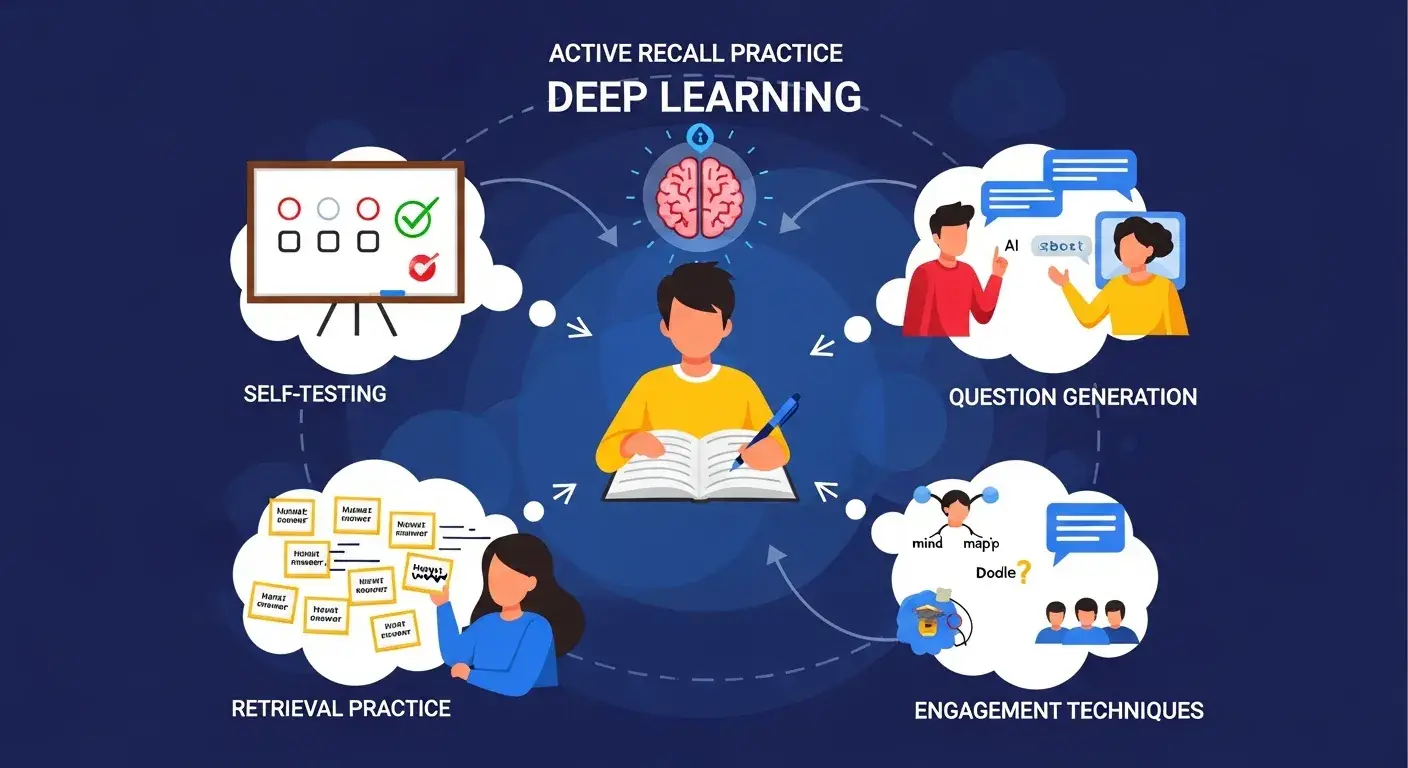
The Power of Feynman Technique: Simplify Complex Subjects
In the pursuit of knowledge, we often encounter subjects that seem overwhelmingly complex. Whether you're a student grappling with advanced physics, a professional learning a new skill, or simply a curious mind exploring a new field, the ability to break down intricate concepts into understandable components is crucial. This is where the Feynman Technique emerges as a remarkably effective tool. Developed by Nobel Prize-winning physicist Richard Feynman, this method isn't just about memorization; it's about deep understanding and the ability to explain complex ideas in simple terms. By emulating Feynman's approach, anyone can significantly improve their learning and retention of even the most challenging material.
This technique, rooted in the principles of metacognition, empowers learners to actively engage with information, identify gaps in their knowledge, and refine their comprehension through clear communication. It transforms passive learning into an active, iterative process of discovery and mastery.
Key Points:
- Active Learning: Engage directly with material, don't just passively consume it.
- Identify Gaps: Pinpoint areas of confusion by attempting to teach.
- Simplify Language: Translate complex jargon into plain, understandable words.
- Iterative Refinement: Review, refine, and simplify until true understanding is achieved.
- Boost Retention: Deep comprehension leads to lasting knowledge.
Understanding the Core of the Feynman Technique
At its heart, the Feynman Technique is a problem-solving and learning strategy that hinges on one fundamental principle: if you can't explain it simply, you don't understand it well enough. Richard Feynman, renowned for his ability to explain complex physics concepts to laypeople, embodied this principle. He believed that the true measure of understanding wasn't just about recalling facts, but about being able to articulate them in a way that anyone could grasp.
This approach moves beyond rote memorization, which often leads to superficial understanding. Instead, it encourages a deeper, more intuitive grasp of a subject by forcing you to confront your own knowledge gaps. When you attempt to teach something, you quickly discover where your understanding falters. This self-discovery is invaluable for targeted learning and efficient study.
The Four Steps to Mastery
The Feynman Technique is typically broken down into four straightforward steps, designed to guide you from initial exposure to true mastery:
Step 1: Choose Your Concept and Study It
The first step is to select the specific concept or subject you want to understand deeply. This could be anything from a chapter in a textbook to a complex scientific theory or a new programming language feature.
- Focus: Pick one well-defined topic at a time to avoid overwhelm.
- Initial Study: Read relevant material, watch lectures, or gather information from reliable sources. Aim for a foundational understanding at this stage.
Step 2: Teach the Concept to a Child (or Someone Unfamiliar)
This is the pivotal step. Imagine you are explaining the concept to someone who has no prior knowledge of the subject – a child, a friend from a different field, or even an imaginary audience.
- Use Simple Language: Avoid technical jargon. If you find yourself using complex terms, pause and try to find simpler synonyms or analogies.
- Be Clear and Concise: Structure your explanation logically. Focus on the core ideas and their relationships.
- Analogy is Key: Use relatable analogies to bridge the gap between the complex concept and everyday understanding.
Step 3: Identify Gaps and Review Your Material
As you attempt to explain the concept, you will inevitably encounter areas where your explanation falters, where you hesitate, or where you realize you don't have the right words. These are your knowledge gaps.
- Pinpoint Confusion: Note down the specific points where your explanation broke down.
- Return to the Source: Go back to your study materials (textbooks, notes, lectures) to re-learn and clarify these weak areas. Don't just re-read; actively seek to understand the precise nuances you missed.
Step 4: Simplify and Refine Your Explanation
Once you have revisited the material and filled in the gaps, refine your explanation. The goal is to make it even simpler, clearer, and more intuitive.
- Condense and Organize: Streamline your explanation. Can you make it even shorter? Is the flow logical?
- Repeat if Necessary: Continue this cycle of teaching, identifying gaps, and refining until you can explain the concept flawlessly and with complete confidence to anyone. This iterative process is what truly cements understanding and simplifies complex subjects.
Why the Feynman Technique Works: The Science of Learning
The effectiveness of the Feynman Technique is deeply rooted in established principles of cognitive psychology and metacognition. It's not just a clever trick; it's a scientifically grounded approach to learning.
Active Recall and Spaced Repetition
When you try to teach a concept, you are engaging in active recall. Instead of passively reviewing notes, you are actively retrieving information from your memory. This process strengthens neural pathways, making the information more accessible in the future. The iterative nature of the Feynman Technique also lends itself well to spaced repetition, where revisiting and reinforcing knowledge at increasing intervals significantly enhances long-term retention.
Metacognitive Awareness
A cornerstone of the Feynman Technique is the development of metacognitive awareness – the ability to think about one's own thinking. By attempting to explain a concept, you become acutely aware of what you know and, more importantly, what you don't know. This self-awareness is crucial for identifying specific areas that require more attention, preventing the common pitfall of believing you understand something when you actually have only a superficial grasp. This is a key aspect of metacognitive study techniques.
Elaboration and Connection
To simplify a complex idea, you must elaborate on it and connect it to existing knowledge. This involves breaking down the concept into smaller parts, explaining each part, and then showing how they fit together. This elaboration process helps build a richer, more interconnected mental model of the subject, making it easier to understand and recall. According to research published in the Journal of Educational Psychology (2024), techniques that encourage elaboration and self-explanation lead to superior learning outcomes compared to passive methods.
Overcoming the Curse of Knowledge
The curse of knowledge is a cognitive bias where an individual, having learned something, struggles to imagine what it's like not to know it. This makes it difficult for experts to communicate effectively with novices. The Feynman Technique directly combats this by forcing the learner to adopt the perspective of a beginner, actively working to translate expert-level understanding into simple, accessible terms.
Applying the Feynman Technique to Various Learning Scenarios
The beauty of the Feynman Technique lies in its versatility. It can be applied to virtually any subject matter and across different learning contexts.
For Students: Mastering Academic Subjects
Students can leverage the Feynman Technique to tackle challenging coursework.
- Science and Math: Explaining complex equations or scientific processes in simple terms requires a deep understanding of the underlying principles. For instance, understanding thermodynamics by explaining the concept of entropy to a non-scientist can reveal fundamental misunderstandings.
- History and Literature: While seemingly less technical, explaining historical events or literary themes requires understanding causality, character motivations, and thematic development. Simplifying a complex historical narrative ensures you grasp the why behind events, not just the what.
- Languages: Explaining grammatical rules or idiomatic expressions in a foreign language to someone learning it can highlight subtle nuances you might have overlooked.
For more in-depth strategies on improving academic performance, readers can explore articles on effective note-taking methods.
For Professionals: Skill Development and Knowledge Acquisition
In the professional world, continuous learning is essential. The Feynman Technique is invaluable for acquiring new skills and understanding complex industry concepts.
- New Technologies: Learning a new programming language, cloud computing architecture, or data science model? Teach the core concepts to a colleague or a non-technical friend to solidify your grasp. This is particularly useful when learning about abstract concepts like blockchain or artificial intelligence.
- Business Strategy: Understanding market dynamics, financial models, or strategic frameworks can be greatly enhanced by the ability to explain them simply. Articulating a business plan to an investor requires clarity that this technique fosters.
- Soft Skills: Even skills like leadership or negotiation can be broken down and explained through the Feynman Technique, focusing on the core principles and actionable steps.
For Lifelong Learners: Exploring New Interests
Whether you're picking up a new hobby, delving into philosophy, or understanding current events, the Feynman Technique can deepen your appreciation and comprehension.
- Complex Hobbies: Learning a musical instrument, understanding photography techniques, or mastering intricate cooking methods can all benefit from explaining the core principles to someone else.
- Current Affairs: Understanding geopolitical situations or economic policies becomes clearer when you can explain the key drivers and potential consequences in layman's terms.
Differentiated Value: The "Feynmanization" of Concepts
One significant advantage of the Feynman Technique, especially when compared to other study methods, is its emphasis on analogies and intuitive explanations. While many techniques focus on memorization or summarization, Feynman's method demands that you find the essence of a concept and express it in a way that is inherently understandable. This is particularly useful for abstract topics where direct experience is limited. For example, understanding quantum mechanics often relies on highly abstract mathematical models. The Feynman Technique encourages finding everyday analogies, however imperfect, to build an initial mental bridge to comprehension. This process of "Feynmanization" makes complex ideas sticky and accessible.
Furthermore, the technique inherently promotes critical thinking by forcing you to question your own understanding and assumptions. When you simplify, you are actively dissecting the concept, identifying its core components, and evaluating the clarity of your own articulation. This differs from passive reading or even summarizing, which can sometimes mask underlying confusion. Latest research in cognitive neuroscience from 2025 highlights the importance of self-generated explanations in forming robust long-term memories, a direct outcome of practicing the Feynman Technique.
Real-World Application and Expert Insights
Many successful individuals attribute their deep understanding to methods akin to the Feynman Technique. While Richard Feynman himself is the most prominent example, educators and learning specialists widely advocate for its principles.
Dr. Anya Sharma, a cognitive learning specialist and author of "The Learning Accelerator" (2023), notes, "The Feynman Technique is a powerful tool because it taps into our innate desire to explain and connect. When we simplify, we are not dumbing down; we are demonstrating mastery through clarity. It forces us to move beyond jargon and truly grapple with the meaning."
Consider the case of a software engineer learning a new distributed systems framework. Initially, they might read extensive documentation. However, when they attempt to explain the framework's consensus mechanism (e.g., Raft or Paxos) to a junior developer, they quickly discover areas where their understanding is shaky – perhaps the nuances of leader election or log replication. By simplifying this explanation, they are forced to revisit the core logic, identify ambiguities in the documentation or their interpretation, and ultimately build a more robust understanding of how the system achieves fault tolerance. This iterative refinement is the engine of deep learning.
Frequently Asked Questions (FAQ)
How can the Feynman Technique help me if I'm not a natural teacher?
You don't need to be a teacher to use this technique. The "teaching" is a mental exercise or a conversation with an imaginary person or a willing friend. The focus is on the process of simplification and identifying your own knowledge gaps, not on becoming a professional educator.
Is the Feynman Technique suitable for highly theoretical subjects like philosophy?
Absolutely. While subjects like philosophy might not have complex formulas, they are rich in abstract concepts and nuanced arguments. Explaining philosophical ideas in simple terms forces you to clarify your interpretation, identify the core tenets of an argument, and understand its implications.
How long does it take to master a complex subject using the Feynman Technique?
The time varies greatly depending on the complexity of the subject and your prior knowledge. However, the Feynman Technique is designed to be efficient. By quickly identifying and addressing your specific knowledge gaps, it prevents wasted study time on material you already understand and targets areas where you need the most improvement.
Can I use the Feynman Technique for memorizing facts?
While the primary strength of the Feynman Technique is deep understanding, it indirectly aids memorization. When you truly understand something, recalling related facts becomes easier because they are embedded within a logical framework. However, for pure rote memorization of isolated facts, other techniques might be more direct.
Conclusion: Unlock Your Learning Potential
The Feynman Technique offers a profound and accessible method for anyone looking to simplify complex subjects and achieve genuine understanding. By embracing its four core steps—study, teach, identify gaps, and simplify—you transform learning from a passive activity into an active, iterative journey of discovery. This approach not only enhances knowledge retention but also cultivates critical thinking and metacognitive skills, empowering you to learn more effectively and confidently in any domain.
Start applying the Feynman Technique today. Pick a concept that challenges you, and begin the process of simplifying it. You might be surprised at how quickly you gain clarity and confidence.
What complex subject are you going to tackle first with the Feynman Technique? Share your thoughts in the comments below!
For further exploration into enhancing your study habits, consider reading articles on active learning strategies and effective self-assessment methods.