Transforming Your Notes into Powerful Study Tools: Advanced Strategies for Active Recall and Exam Preparation
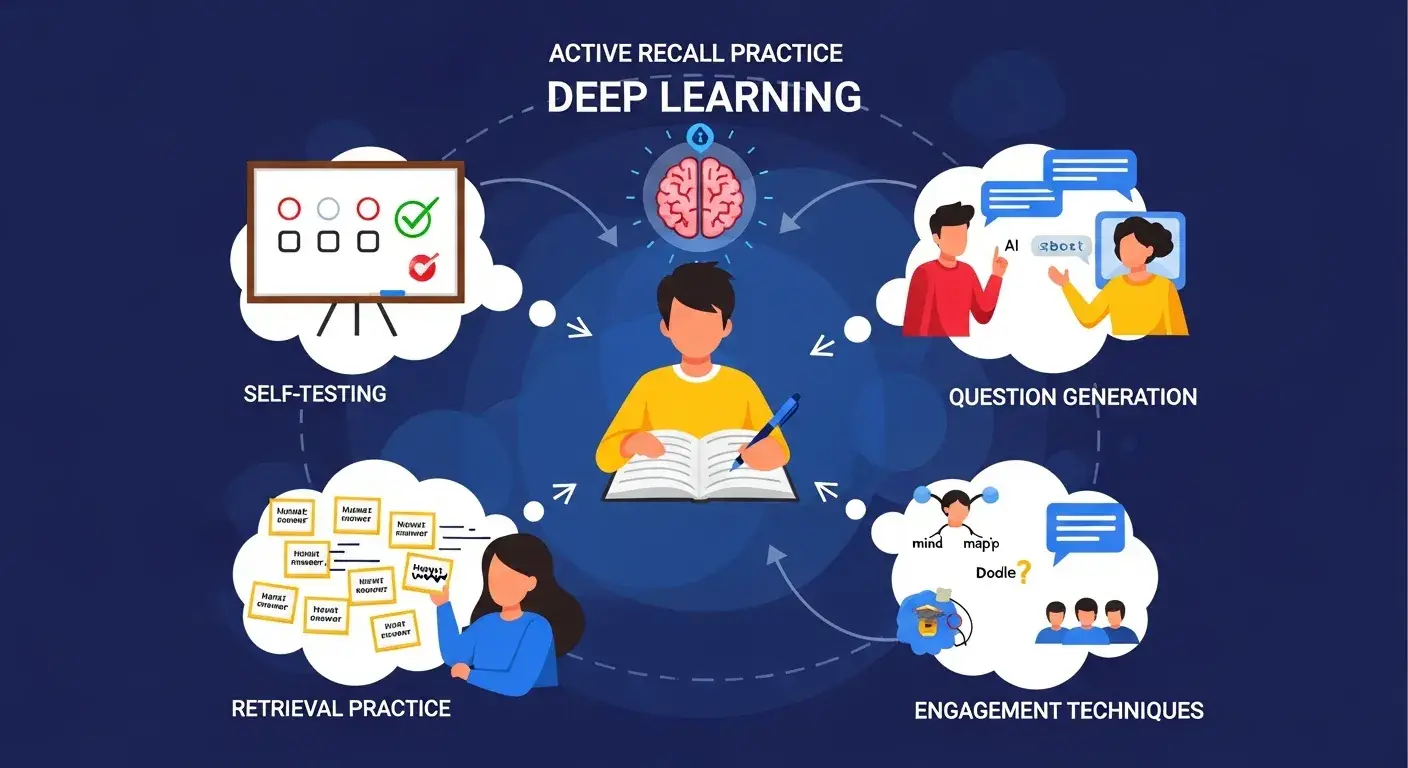
Transforming Your Notes into Powerful Study Tools: Advanced Strategies for Active Recall and Exam Preparation
Are your notes merely a collection of information, or are they dynamic instruments designed to enhance your learning? Many students diligently take notes but fail to leverage their full potential for deeper understanding and retention. This article delves into transforming your notes into powerful study tools, moving beyond passive review to embrace advanced strategies like active recall and sophisticated exam preparation techniques. By applying these methods, you can dramatically improve your memory, comprehension, and ultimately, your academic performance. Let's unlock the true power hidden within your handwritten or digital records.
Key Points for Maximizing Your Study Notes:
- Embrace Active Recall: Turn passive review into retrieval practice for stronger memory.
- Implement Spaced Repetition: Strategically review material to combat the forgetting curve.
- Utilize Varied Formats: Convert notes into flashcards, mind maps, or summary questions.
- Leverage Collaborative Learning: Enhance notes with insights from study partners.
- Integrate Digital Tools: Streamline note organization and active recall with technology.
The Foundation of Effective Note Transformation: Active Recall Techniques
The journey of transforming your notes into powerful study tools begins with a fundamental shift from re-reading to active recall. Active recall, or retrieval practice, is a learning strategy where you actively try to remember information from your memory, rather than passively reviewing it. This process strengthens neural pathways, making it easier to retrieve information later, especially during exams.
Mastering Active Recall for Deeper Learning
Implementing active recall means constantly quizzing yourself on the material you've noted. Instead of just reading your lecture notes or textbook summaries, you should be asking questions and trying to answer them without looking at the answers. This method forces your brain to work harder, leading to more robust memory encoding.
Converting Notes into Active Recall Prompts
One of the most effective strategies for active recall involves restructuring your notes. Here's how you can do it:
- Turn Headings into Questions: If a section of your notes is titled "Causes of the French Revolution," rewrite it as "What were the primary causes of the French Revolution?"
- Create Question-Answer Pairs: For every key concept or fact in your notes, formulate a question that requires you to recall that specific piece of information. Write the answer on the back of a flashcard or below a toggle in digital notes.
- Summarize Without Looking: After studying a chapter or a lecture's worth of notes, close your notebook and try to write down everything you remember about the topic. Compare your summary to your original notes afterward to identify gaps. This self-assessment is crucial for identifying areas needing more attention.
This approach is supported by a 2023 meta-analysis published in Educational Psychology Review, which found that retrieval practice consistently outperforms re-reading across various learning contexts, enhancing both immediate and long-term retention.
Advanced Strategies for Exam Preparation Using Transformed Notes
Beyond basic active recall, several advanced techniques can significantly boost your exam preparation strategies when leveraging your transformed notes. These strategies incorporate principles of cognitive science, ensuring your study time is as efficient and impactful as possible.
Integrating Spaced Repetition into Your Study Routine
Spaced repetition is a powerful technique that involves reviewing information at increasing intervals over time. This method directly combats the forgetting curve, ensuring that difficult concepts are revisited more frequently than those you've mastered. When applied to your transformed notes, spaced repetition becomes an incredibly efficient study tool.
Consider these methods for implementing spaced repetition:
- Flashcard Systems: Use physical or digital flashcard apps (like Anki or Quizlet). These tools often have built-in algorithms that manage review schedules based on your recall performance.
- Review Calendars: Manually schedule review sessions for specific topics in your planner. For example, review new notes the next day, then three days later, then a week later, and so on.
Utilizing Collaborative Learning Approaches with Enhanced Notes
Here's where collaborative learning approaches truly shine as a differentiator. While individual active recall is potent, engaging with peers to transform and test notes adds another layer of learning and accountability. This is a unique insight that often gets overlooked by students.
- Note-Sharing and Enhancement: Share your actively transformed notes (e.g., question-based outlines or mind maps) with study group members. Discuss and refine each other's questions and answers, challenging assumptions and clarifying ambiguities. This not only enhances individual notes but also builds a collective understanding.
- Group Retrieval Practice: Conduct group quizzing sessions using your transformed notes. Each member takes turns asking questions derived from their notes, fostering a dynamic environment for boosting memory with study notes and identifying common areas of confusion. A 2024 study on peer learning in academic settings highlighted that collaborative quizzing leads to deeper processing and stronger memory traces than individual study, especially when notes are pre-structured for recall.
Leveraging Digital Tools for Note Transformation and Study
The digital age offers innovative ways to enhance your note-taking and study processes. Integrating technology can streamline organization and facilitate active recall, making your notes truly powerful study tools.
- AI-Powered Summarization and Question Generation: Newer tools are emerging that can analyze your digital notes and automatically generate summary questions or even quizzes. This saves significant time in the initial transformation phase, allowing you to focus more on the actual retrieval practice.
- Concept Mapping Software: Tools like XMind or Miro allow you to visually organize complex information from your notes into interactive mind maps. These maps serve as excellent active recall prompts, as you try to reconstruct the entire map from memory. This visual strategy helps in understanding relationships between concepts.
For more in-depth strategies on initial note-taking, explore our article on /articles/effective-note-taking-strategies-for-deeper-understanding.
Optimizing Study Sessions and Maximizing Retention
Transforming your notes into powerful study tools isn't just about the notes themselves; it's also about optimizing how you use them in your study sessions. Effective integration means strategizing your study time around these active methods.
Structured Review Sessions for Exam Success
Plan your study sessions with specific goals related to active recall. Instead of simply allocating "study time," schedule "active recall time" or "concept mapping time."
- Identify Weak Spots: Use your transformed notes and self-quizzing results to pinpoint areas where your recall is weak. Dedicate more time to these topics, perhaps by creating additional flashcards or seeking further clarification. This targeted approach is more efficient than generic review.
- Interleaving Different Subjects: Instead of dedicating an entire study block to one subject, interleave different subjects or topics. For example, switch from reviewing chemistry notes to history notes. This method, supported by cognitive science, helps improve discrimination between concepts and enhances long-term retention.
For mastering the science behind retention, consider reviewing our guide on /articles/mastering-spaced-repetition-for-long-term-memory-retention.
Beyond Memorization: Applying Knowledge
Ultimately, the goal of transforming your notes into powerful study tools is not just memorization, but the ability to apply knowledge. Your transformed notes should prepare you for application-based questions, not just factual recall.
- Practice Problem Solving: Use your notes to work through practice problems or past exam questions. If your notes are structured as questions, try to answer how a concept applies in a novel scenario. This cultivates critical thinking skills.
- Teach the Material: One of the most effective ways to solidify your understanding is to teach the material to someone else. Use your transformed notes as a guide, explaining concepts and answering questions. This form of retrieval practice, known as the Protégé Effect, significantly deepens your own learning.
Frequently Asked Questions
What is active recall and why is it effective?
Active recall is a learning technique where you deliberately retrieve information from memory, such as quizzing yourself or summarizing topics without looking at notes. It's highly effective because the act of retrieval strengthens memory traces, making the information more accessible in the future. This effortful process leads to deeper learning and better long-term retention compared to passive re-reading.
How can I integrate digital tools into my note transformation process?
Digital tools can significantly enhance your process. Use apps like Anki for flashcards and spaced repetition, Notion or Obsidian for creating linked, question-based notes, and concept mapping software like XMind for visual organization. Some AI-powered tools can even generate summaries or quizzes from your existing digital notes, saving time and optimizing study sessions with notes.
Is transforming notes more beneficial than simply re-reading them?
Absolutely. Research consistently shows that transforming notes into active recall prompts and engaging in retrieval practice is far more beneficial than passive re-reading. Re-reading often creates an illusion of knowing, while active recall forces your brain to retrieve and reconstruct information, leading to stronger, more durable memories. It's a fundamental shift from passive input to active engagement with the material.
How often should I review my transformed notes for exam preparation?
The ideal review frequency depends on the difficulty of the material and your familiarity with it. Implementing a spaced repetition schedule is key. Generally, review new material within 24 hours, then again in 3 days, 7 days, 14 days, and 30 days. Digital flashcard apps can automate this schedule for you, ensuring you revisit information at optimal intervals to combat the forgetting curve.
Conclusion
Transforming your notes into powerful study tools is a game-changer for academic success. By moving from passive consumption to active engagement through techniques like active recall, spaced repetition, and collaborative learning, you equip yourself with strategies that foster deep understanding and robust memory retention. These advanced methods ensure your exam preparation strategies are not just efficient but truly effective.
Start implementing these strategies today and witness a significant improvement in your learning outcomes. Share your experiences in the comments below, or join a study group to apply these collaborative learning approaches together. For further exploration of related topics and to enhance your overall learning ecosystem, check out our collaborative learning resources at /categories/collaborative-learning-approaches.
Further Reading and Future Expansion:
- Developing Metacognitive Skills for Enhanced Learning: Understanding how you learn best.
- The Role of Sleep and Nutrition in Memory Consolidation: Optimizing your physical state for study.
- Advanced Digital Workflow for Research and Note Synthesis: Streamlining large-scale information processing.
This article was last updated on November 26, 2025. Information regarding learning methodologies and digital tools is rapidly evolving; we recommend revisiting these concepts periodically for the latest advancements.