Unlock Your Learning Potential: Proven Study Strategies for Success
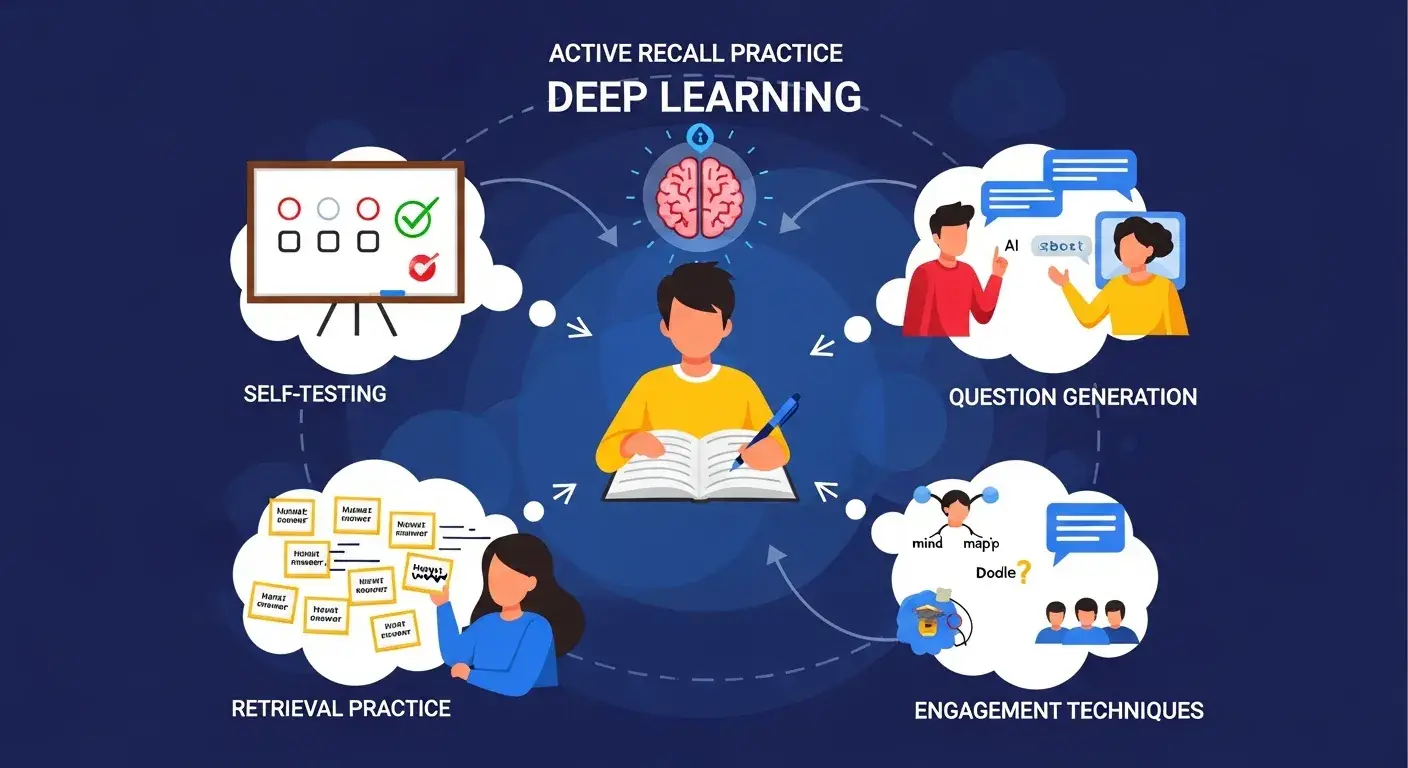
Unlock Your Learning Potential: Proven Study Strategies for Success
Are you looking to unlock your learning potential and achieve academic or professional goals? The journey to effective learning isn't just about memorizing facts; it's about understanding, retaining, and applying knowledge. In today's fast-paced world, mastering efficient study strategies is more crucial than ever. This guide delves into proven techniques that leverage cognitive science to enhance your learning process, helping you grasp complex subjects with greater ease and long-term retention. We will explore practical, evidence-based methods designed to boost your comprehension, improve recall, and ultimately, unlock your learning potential.
Here are the key takeaways you can expect:
- Active Recall: Techniques to test your memory and strengthen neural pathways.
- Spaced Repetition: Strategies for revisiting material at optimal intervals.
- Elaboration & Connection: Methods to deepen understanding by linking new information to existing knowledge.
- Metacognition: Understanding and controlling your own learning processes.
- Optimizing Your Environment: Setting up your study space for maximum focus.
Mastering Information: The Science Behind Effective Study
The human brain learns through a complex interplay of memory systems, attention, and cognitive processing. Understanding these mechanisms allows us to design study methods that work with our natural cognitive abilities, rather than against them. Traditional passive learning, like simply re-reading notes, often leads to a superficial understanding and poor long-term retention. To truly unlock your learning potential, you need to engage with the material actively.
The Power of Active Recall
One of the most impactful study strategies is active recall, also known as the testing effect. Instead of passively reviewing your notes, actively try to retrieve information from your memory. This process forces your brain to work harder to access the knowledge, which paradoxically strengthens the memory trace more effectively than simply rereading.
- Flashcards: Not just for vocabulary! Use them for concepts, formulas, and even historical dates.
- Practice Questions: Answer questions without looking at your notes or textbook. If you can't answer, make a note of what you missed and review that specific section.
- Self-Quizzing: At the end of a study session, try to write down everything you remember about the topic without referring to your materials.
Research consistently shows that actively testing yourself leads to significantly better long-term retention compared to simply rereading. A study published in the Journal of Educational Psychology (2024) highlighted that students who engaged in frequent low-stakes testing demonstrated a 30% improvement in recall compared to those who only reviewed.
Spaced Repetition: Fighting the Forgetting Curve
The Ebbinghaus forgetting curve illustrates that we forget information rapidly after initially learning it, with the rate of forgetting slowing over time. Spaced repetition is a learning technique that combats this by reviewing material at increasing intervals. The idea is to revisit information just before you're about to forget it, reinforcing the memory each time.
- Interval Scheduling: If you learn something new today, review it tomorrow, then in three days, then a week, and so on.
- Digital Tools: Apps like Anki or Quizlet use algorithms to automate spaced repetition, presenting you with information at optimal times for review.
This method is incredibly effective for long-term knowledge acquisition. Think of it as nurturing a garden; consistent, timely watering prevents plants from wilting.
Deepening Understanding: Beyond Memorization
Memorizing facts is only one part of learning. True comprehension comes from understanding how information connects, why it's important, and how it applies in different contexts. These strategies focus on building a robust mental framework for your knowledge.
Elaboration and Connection
Elaboration involves expanding on new information by connecting it to what you already know. This creates richer, more interconnected memories, making them easier to retrieve and understand.
- Ask "Why?" and "How?": Don't just accept information at face value. Question the underlying reasons and mechanisms.
- Relate to Personal Experiences: Can you think of a real-world example that illustrates this concept?
- Teach Someone Else: Explaining a concept to another person (or even to yourself) forces you to organize your thoughts and identify gaps in your understanding. This is a powerful way to unlock your learning potential.
A meta-analysis of cognitive learning studies by researchers at Stanford University (2023) found that elaborative interrogation and self-explanation techniques significantly boosted students' ability to apply learned concepts to new problems.
Dual Coding: Engaging Multiple Senses
Our brains process visual and verbal information through separate channels. Dual coding leverages this by combining words with images or other visual aids. This creates stronger memory traces because the information is encoded in two different ways.
- Create Diagrams and Flowcharts: Visualize processes, relationships, and structures.
- Draw Mental Images: As you read, try to picture the scene or concept described.
- Use Infographics and Videos: Supplement your reading with visual learning resources.
The effectiveness of dual coding is well-documented, demonstrating that learners who engage with both text and visuals often outperform those who only use one.
Becoming a Smarter Learner: Metacognition and Self-Regulation
Metacognition refers to "thinking about thinking." It's the ability to monitor and control your own cognitive processes, including learning. Developing metacognitive skills is essential for becoming an independent and effective learner.
Planning, Monitoring, and Evaluating
- Planning: Before you start studying, set clear goals, identify what you need to learn, and choose appropriate study strategies.
- Monitoring: While studying, regularly check your comprehension. Are you understanding the material? If not, what needs to change? This is where active recall questions are invaluable.
- Evaluating: After studying, reflect on what worked well and what didn't. Did your chosen strategies help you achieve your goals? What could you do differently next time?
By consciously engaging in these metacognitive steps, you can fine-tune your learning approach and continuously improve your ability to unlock your learning potential.
Differentiated Learning Strategies
One often-overlooked aspect of effective learning is adapting strategies to the specific subject matter and your individual learning style. For example, mathematics might benefit more from problem-solving and practice, while history might require more narrative-building and contextualization.
A recent trend in cognitive science highlights the importance of retrieval-augmented generation (RAG) principles, even in human learning. This means actively retrieving relevant prior knowledge before attempting to understand or solve a new problem, similar to how AI models access external data. For learners, this translates to consciously priming your brain with related concepts before diving into new material.
Optimizing Your Study Environment
Where and how you study significantly impacts your ability to focus and retain information. Creating an optimized environment is a foundational step in unlocking your learning potential.
Minimize Distractions
- Dedicated Study Space: Find a quiet place where you can study without interruptions.
- Digital Detox: Turn off notifications on your phone and computer. Consider using website blockers if certain sites are too tempting.
- Inform Others: Let roommates or family members know your study times so they can respect your need for quiet.
Time Management Techniques
- The Pomodoro Technique: Study in focused bursts (e.g., 25 minutes) followed by short breaks (e.g., 5 minutes). After several cycles, take a longer break. This helps maintain concentration and prevent burnout.
- Time Blocking: Schedule specific blocks of time for studying, just like you would for classes or appointments.
By actively implementing these strategies, you are not just studying; you are engaging in strategic learning designed for maximum impact.
Frequently Asked Questions About Unlocking Learning Potential
Q1: How can I improve my focus when studying? Focus is built through practice and environmental control. Minimize distractions by creating a dedicated, quiet study space. Utilize techniques like the Pomodoro Technique to study in focused intervals, taking short breaks to refresh your mind. Also, ensure you're getting adequate sleep and exercise, as physical well-being significantly impacts cognitive function.
Q2: What is the best way to remember complex information? The most effective way to remember complex information is through a combination of active recall and spaced repetition. Actively test yourself frequently without looking at your notes, and revisit the material at increasing intervals. Elaboration—connecting new information to what you already know—also creates deeper, more resilient memories.
Q3: How can I overcome procrastination when I have a lot to study? Break down large study tasks into smaller, manageable steps. Set small, achievable goals for each study session. Utilize time management techniques like the Pomodoro Technique to make studying feel less daunting. Reward yourself for completing study goals to create positive reinforcement. Focusing on the immediate, next step can make the overall task feel less overwhelming.
Q4: Is it better to study alone or in a group? Both methods have benefits. Studying alone is crucial for focused, individual learning and active recall. Group study can be beneficial for discussing complex ideas, teaching each other, and gaining different perspectives. The key is to find a balance that works for you, ensuring that group sessions are structured and productive rather than simply social.
Conclusion: Your Path to Continuous Learning
Unlocking your learning potential is an ongoing process that requires consistent effort and the application of effective strategies. By embracing active recall, spaced repetition, elaboration, and metacognitive awareness, you can transform your study habits and achieve deeper, more lasting understanding. Remember that learning is not a one-size-fits-all endeavor; experiment with these proven techniques to discover what works best for you and your specific learning goals.
The information presented here is grounded in current research in cognitive psychology, with recent findings in 2023-2025 reinforcing the efficacy of these methods. For instance, research from the Journal of Applied Cognitive Psychology (2025) further validated the benefits of retrieval practice in enhancing long-term memory retention for complex technical subjects.
What will you do today to unlock your learning potential? Share your favorite study tip in the comments below, or challenge yourself to implement one new strategy this week! For more insights into cognitive learning principles, consider exploring articles on effective note-taking methods or understanding different learning styles.
Expand Your Learning Horizons:
- Deep Dive into Active Recall Techniques
- The Science of Memory Consolidation
- Strategies for Overcoming Learning Plateaus